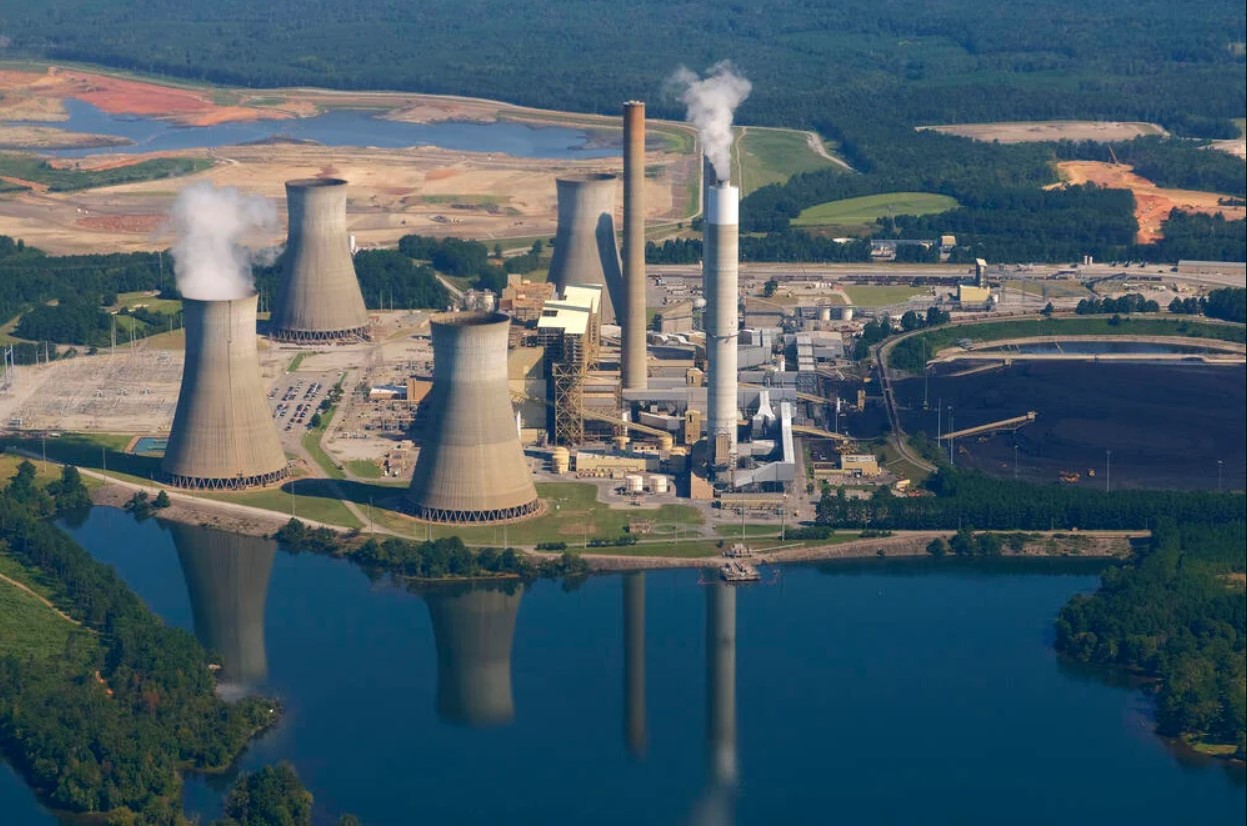
The Brown family lived in their Coweta County, Georgia home for over two decades. Then Georgia Power arrived with a choice that wasn’t really a choice. Sell voluntarily, or face eminent domain — the legal mechanism that lets a state-authorized utility take your property with compensation. The reason? A new high-voltage transmission line cutting through their land, part of a larger system designed to deliver nearly 10,000 megawatts of new capacity. According to a Georgia Public Service Commission fact sheet cited in recent reporting, about 80% of that load is earmarked for AI data centers. Not hospitals. Not schools. Data centers.
Sell or We’ll Take It: How Georgia Power Is Clearing the Path
The utility says it prefers negotiation, but the threat of forced seizure looms over every conversation.
Georgia Power says it prefers negotiated purchases over forced seizure, and that the new infrastructure will primarily power data centers, with roughly 20–30% serving other residential and commercial customers. Fair enough on paper. But when the alternative is a legal battle against one of the state’s largest corporations, “negotiation” does a lot of heavy lifting. More than 330 parcels are targeted, with 20–30 homes slated for full demolition. The Brown family ultimately reached a confidential agreement, its terms undisclosed.
“We don’t have a choice in this. They are going to be expanding power lines… Why? For the data centers. All of this is for the data centers.” — Ansley Brown, Coweta County resident, via CBS News
Her mother framed it more directly — describing the situation as “a billion-dollar company stealing land from smaller people” who cannot afford a prolonged legal fight. When one of the state’s largest utilities holds eminent domain authority, a two-decade family home becomes a line item in an infrastructure budget.
Georgia Isn’t Alone: The Backlash Building Nationwide
Moratoriums, protests, and outright bans are spreading as communities refuse to quietly absorb AI’s infrastructure costs.
Resistance to data center expansion has surged across the country. Several states have moved to limit new facilities:
- New York became the first state to impose a statewide moratorium on facilities drawing 50 megawatts or more.
- Maine has moved in the same direction.
- Oklahoma has moved in the same direction.
This backlash has the energy of a neighborhood zoning meeting that somehow scaled all the way to national infrastructure policy.
“AI’s benefits accrue to a handful of corporations, but the risks — higher bills, water stress, and loss of homes — are dumped on local residents.” — Community organizer, via The Guardian
Georgia Power calls this grid modernization. Residents call it something less polished. What happens in Coweta County is a preview — if you pay a power bill anywhere in America, this fight is already heading your way. The scale of AI infrastructure investment driving this demand shows no signs of slowing, while regulatory pushback against Big Tech continues to build on multiple fronts.