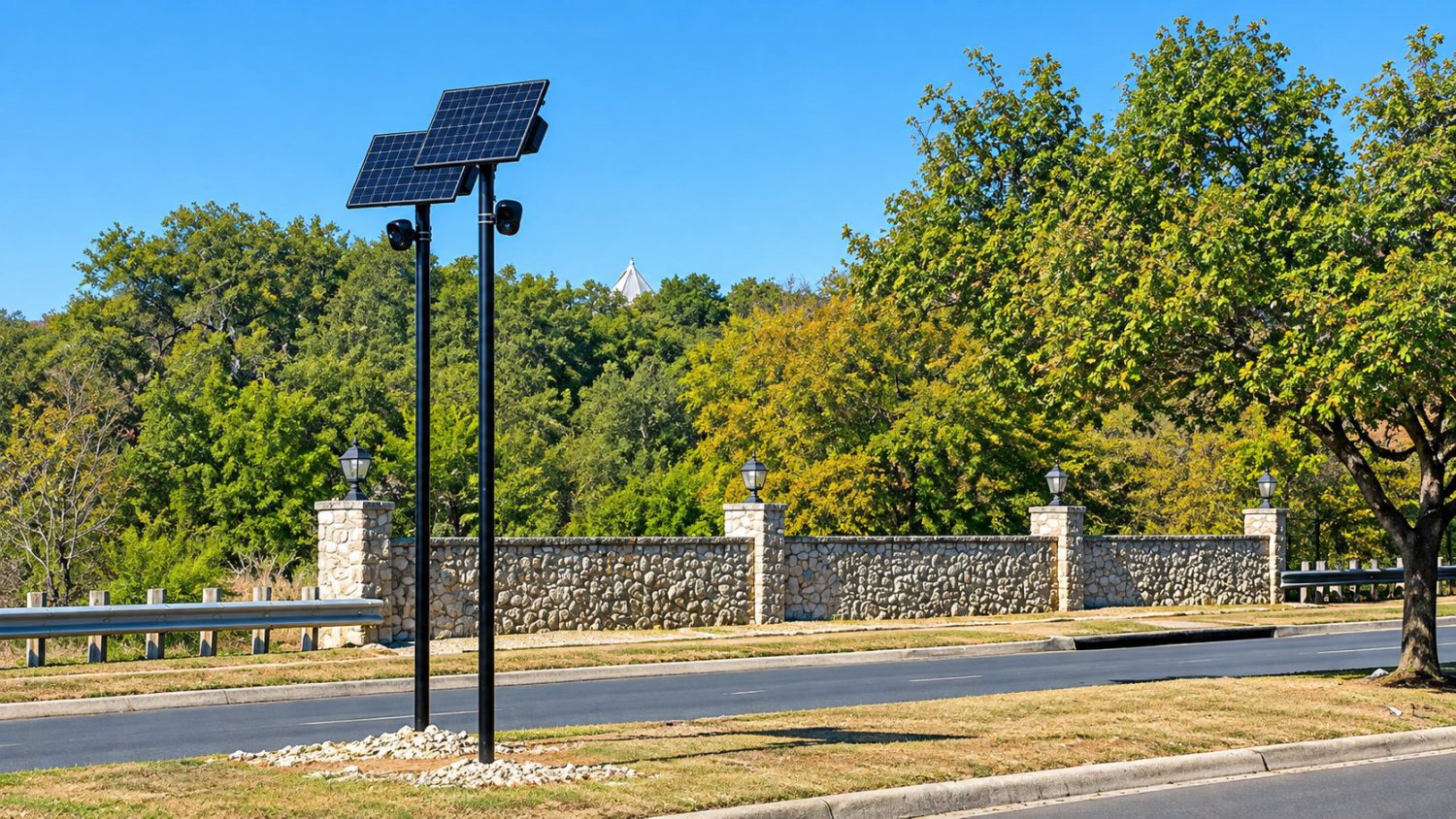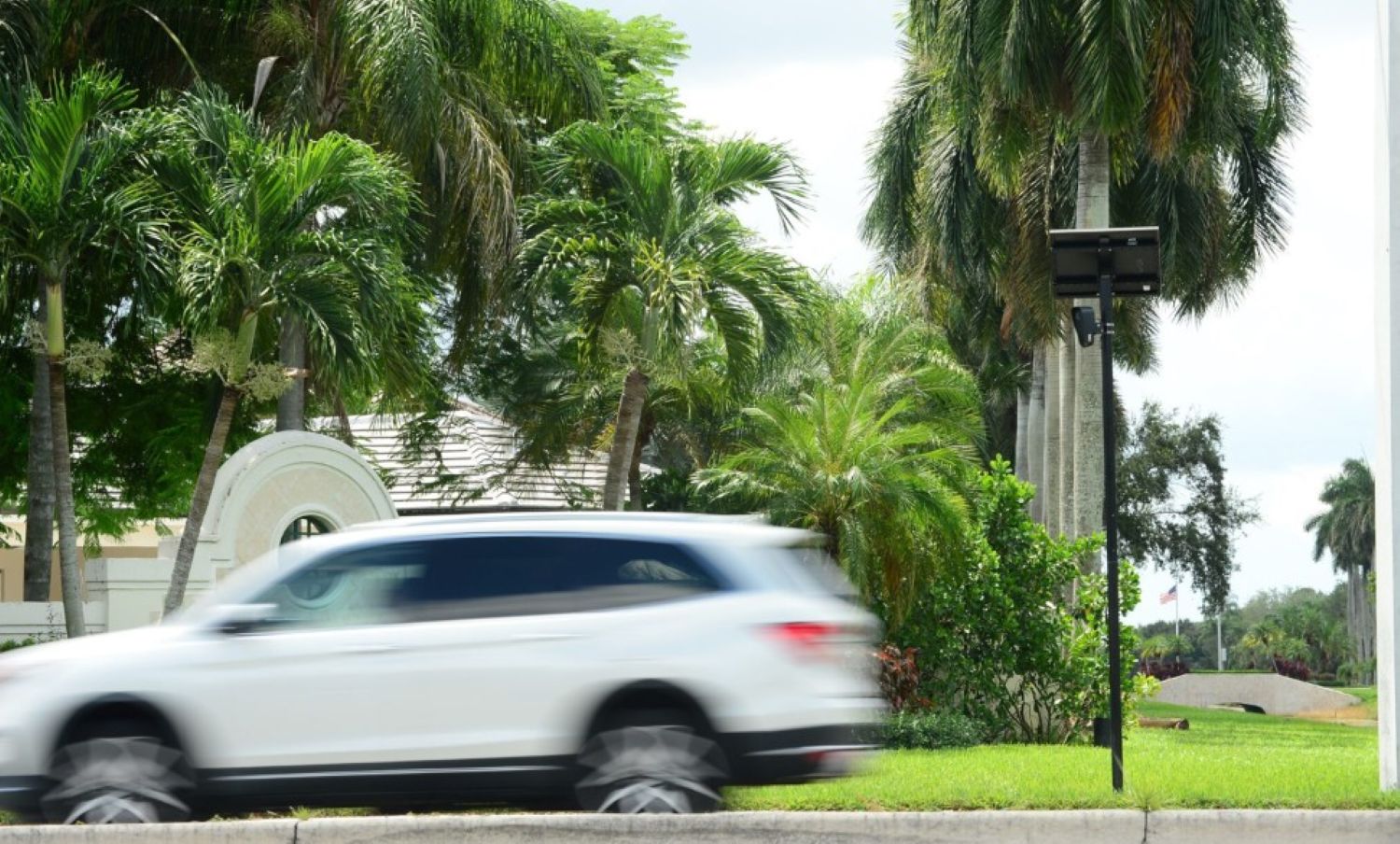
A reporter visited a residential street in Fort Pierce and found a removal notice still stapled to a utility pole. The camera that prompted it was already gone, and it remains unclear who removed it or when.
St. Lucie County believed it had 52 Flock Safety cameras on county roads. A review turned up 14 more with no permits. Three belong to the sheriff’s office, which has not explained why they lacked paperwork. The remaining 11 have no publicly identified owner, and county officials say they do not know whether those cameras are still collecting data or who can access what they already recorded.
A Network Big Enough to Lose Track Of
When Flock says it operates more than 120,000 cameras nationwide, the obvious question is whether anyone is keeping count.
Atlanta-based Flock Safety says it operates more than 120,000 cameras across the country. Each device photographs passing vehicles, logs license plates, and records time and location data in a searchable cloud database. Whoever controls the account controls the search, which is exactly why an unclaimed camera on a public road is a governance problem, not just a paperwork gap.
Florida’s Department of Transportation revoked ALPR permits on state highways in late August 2026, citing misuse and privacy concerns, and gave agencies 30 days to remove affected cameras. St. Lucie County commissioners went further, voting to remove Flock systems from all county-controlled rights-of-way and stop issuing new permits. Neither action covers private property or vehicle-mounted cameras.
Think of it as the surveillance equivalent of discovering your Airbnb has cameras the host forgot to mention, except the host operates at massive scale and the property is a public road you drive every day.
Why 11 unclaimed cameras are more than a permit technicality:
- Officials cannot confirm whether the cameras are active or dormant
- It is unclear what data they collected or which retention rules, if any, apply
- County officials say they do not know which accounts can search the recorded data
- Flock spokesperson Paris Lewbel said permitting rules vary by jurisdiction and are not always required; that answer does not identify the owner
- One camera was gone before reporters arrived, the removal notice still on the pole, with no explanation of who removed it or when
This Isn’t a One-County Glitch
A pattern of installations before paperwork has followed Flock across multiple states, according to local officials and independent investigations.
The incidents are documented across jurisdictions. In Cambridge, Massachusetts, Flock reportedly installed two cameras after the city had already deactivated its system, without the city’s knowledge. In Millcreek, Utah, officials found a Flock camera on city property; neither the city nor police could identify who installed it. On the John’s Pass Bridge near St. Petersburg in 2023, cameras went up without required FDOT approval, and a Flock employee removed them after regulators requested it. A 2024 Forbes investigation reported that Flock had installed cameras in multiple states without required permits, including Florida.
Lewbel said Flock had contacted St. Lucie County and was willing to review the cameras and resolve discrepancies. Coordinating with a county after the cameras are already running is the wrong sequence.
The misuse record sharpens the stakes. A Washington Post investigation found at least 50 law-enforcement officials nationwide accused of misusing Flock systems to track people in their personal lives, a pattern consistent with broader surveillance app overreach documented in other jurisdictions. In Fort Pierce, former officer Josepher Crutchfield was jailed after accessing the Flock database 382 times to monitor his former girlfriend while off duty.
That number, 382 off-duty database lookups, illustrates exactly what unaudited access enables.
The fix is not complicated. Require vendors to file public permit records before installation, not after. Require customer identity disclosure for any camera mounted on public property. Mandate auditable access logs so that officials can answer, with specifics, who searched what and when. Flock says it wants to work with local governments. That willingness needs to show up in the paperwork before the cameras go up, not after a county staffer finds 11 devices nobody will claim.