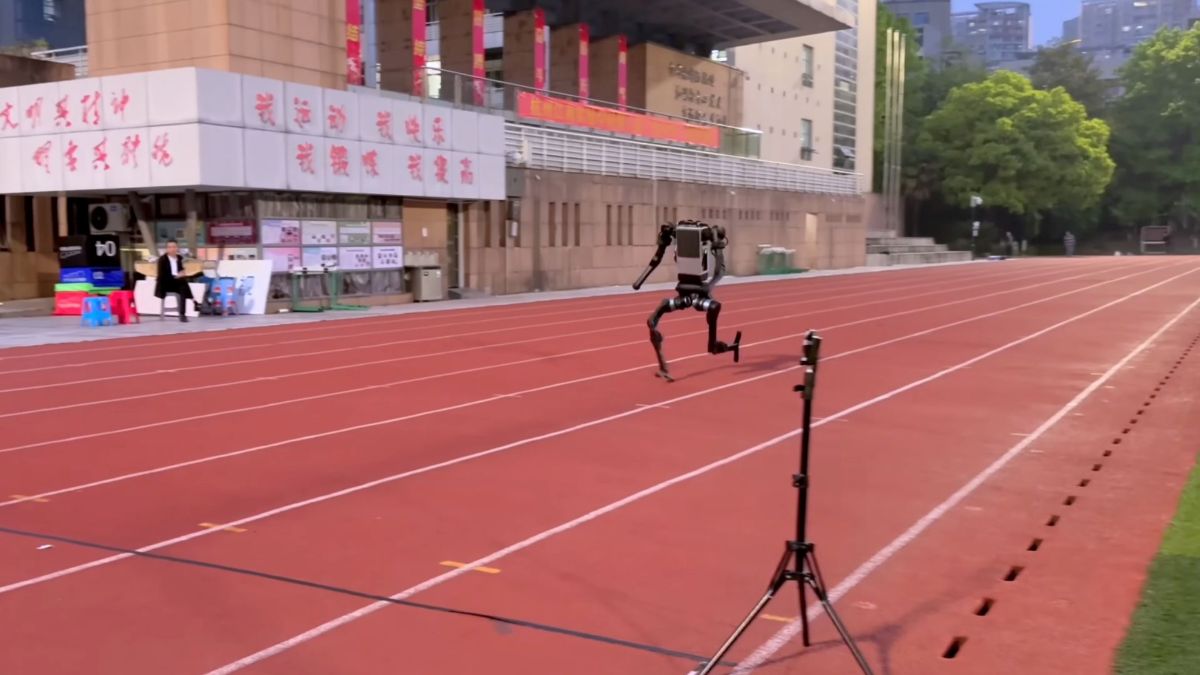
Your mental image of clunky, slow-moving robots just became obsolete. Chinese manufacturer Unitree Robotics claims its H1 humanoid robot achieved 10 meters per second—roughly 22.4 mph—during recent track testing. That’s fast enough to complete a 100-meter sprint in exactly 10 seconds, putting it within striking distance of Usain Bolt’s world record average of 10.44 m/s. Like watching your Toyota Camry suddenly keep pace with a Formula 1 car, this isn’t just an incremental improvement—it’s a fundamental shift in what machines can do.
From Walking to Olympic-Level Sprinting in 17 Months
The H1’s reported performance jumped 200% since early 2024, leaving Western competitors in the dust.
The speed leap defies typical robotics timelines. Unitree’s H1 supposedly managed just 3.3 m/s in March 2024—respectable jogging pace for humans. Seventeen months later, it’s reportedly approaching elite athlete territory. The 62-kilogram H1, built with human-like proportions and advanced joint motors, didn’t just incrementally improve—it allegedly tripled its capability through what robotics researchers suggest represents software and control logic breakthrough rather than hardware redesigns.
The Competition Race Is On
Multiple Chinese manufacturers claim similar milestones simultaneously, targeting global consumer markets.
Here’s where things get interesting for your wallet. The competitive landscape shows multiple Chinese companies announcing similar achievements within months of each other. MirrorMe Tech claims its Bolt robot also achieved 10 m/s earlier this year, creating a photo-finish scenario for bragging rights. But Unitree isn’t just collecting speed records—they’re reportedly planning to sell a consumer-grade R1 model for $4,000 through AliExpress, targeting North America and Europe. That pricing could make humanoid robots accessible beyond research labs and Silicon Valley startups.
Speed Doesn’t Equal Utility (Yet)
Sprinting robots still need to solve endurance, terrain navigation, and real-world task execution.
Before you start planning your robot butler’s track career, remember that peak sprint speed doesn’t translate directly to practical utility. Battery life, obstacle navigation, and graceful failure modes remain unsolved challenges for humanoid robotics. Your future robotic assistant might theoretically outrun you to the grocery store, but it still needs to figure out which avocados are ripe and navigate real-world obstacles without face-planting on the sidewalk.