



The Problem With Mopping
Mopping is a chore most people do badly. Not catastrophically, but badly enough that they do it less often than they should, with equipment that spreads as much grime as it removes. You fill a bucket, push dirty water around with a mop head that has seen better days, and call it done. The floor looks cleaner. That is about the best you can say.
I have been chasing a better answer for years. My household has a dog, hard floors throughout, and the kind of traffic that makes a clean floor a short-lived achievement. I tried a Tineco wet-dry cleaner and it worked, right up until the point where I cracked open the dirty water tank after a week of use. What I found in there was genuinely unpleasant: hair, fine grit, and residue from several cleaning sessions all sitting together in a tank connected to the machine by internal tubing. The roller started smelling. The whole thing became something I avoided rather than used.
The Dyson Clean+Wash Hygiene takes a different approach to the whole problem, and after several weeks of regular use, it has earned a permanent spot in my cleaning routine. My family likes it a lot. That is not a small thing.
What About Your Robot Vacuum?
Fair question, and worth addressing upfront. I run a Roborock Qrevo Flow 2, which I reviewed separately and rate highly. It is a genuinely capable machine that handles daily floor maintenance well. The issue is that no robot is going to be fast when you need a quick cleanup right now, and it cannot get under the counter overhang in my kitchen. For built-up grime that needs direct attention, you also want something you are actively guiding rather than leaving to its own devices.
The Dyson Clean+Wash Hygiene fills those gaps. It is a quick, in-the-moment solution for the spots the robot misses and the messes that need immediate attention. They are not competitors. They complement each other.
What Is It, and Where Does It Fit?
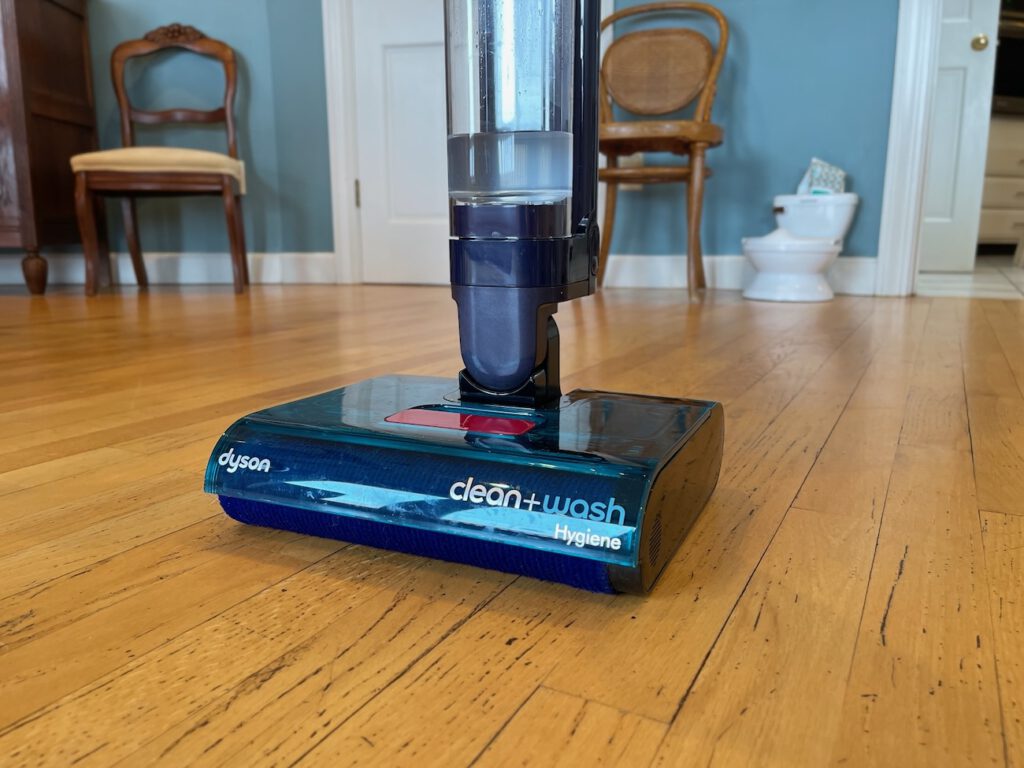
The Clean+Wash Hygiene is Dyson’s most capable dedicated wet floor cleaner. It handles hard floors only: tile, hardwood, laminate, vinyl, and sealed stone. Rather than suction, it uses a motorized microfiber roller with 84,000 densely packed filaments to pick up dry debris and pull liquid waste through capillary action. No filter, no internal dirty water pipes, no sludge buildup through the machine body. All waste stays contained in the floorhead.
Dyson now has three wet cleaners in its lineup, and knowing where each one sits matters before you spend $499.
The PencilWash ($349) is the entry point, launched March 2026. Ultra-slim, under five pounds, and built for quick jobs and smaller spaces. It has no self-clean cycle, a 30-minute runtime, and two power modes. You rinse the roller by hand after every use and air-dry it. It is a grab-and-go machine, not a whole-house solution.
The WashG1 ($399) weighs more at 10.5 pounds with a 35-minute runtime. Its self-clean cycle runs water over the dirty roller but cannot hot-air dry it. You have to remove the roller manually to dry it after each session, which is exactly where the sour smell that ruins wet cleaners typically starts.
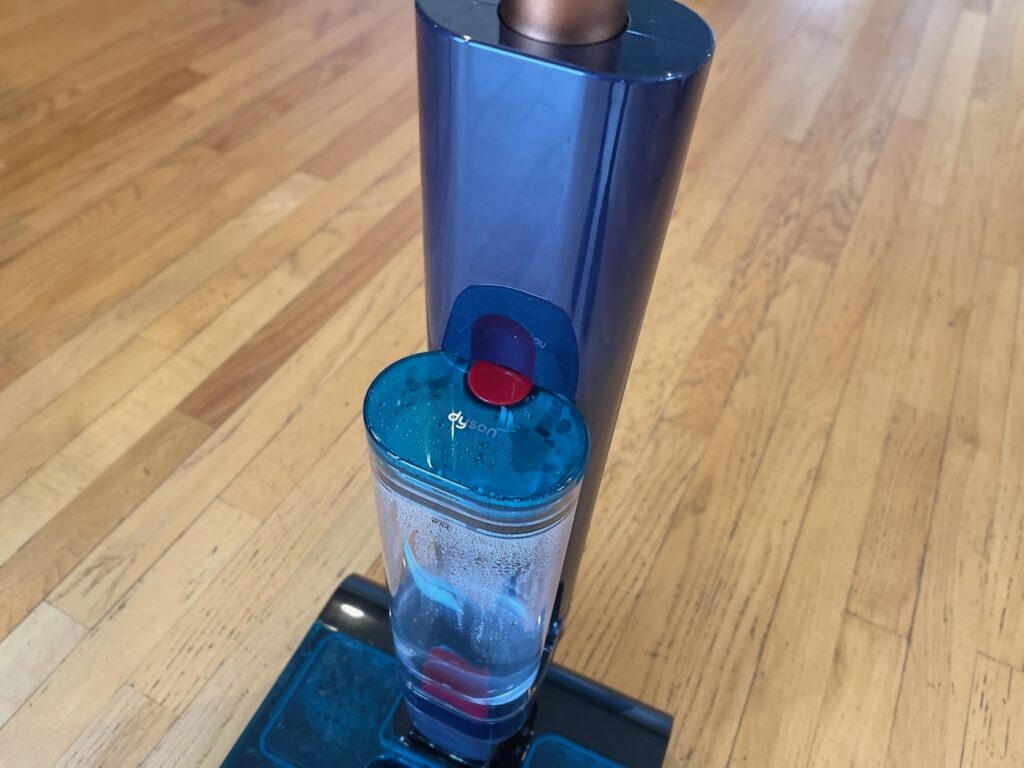
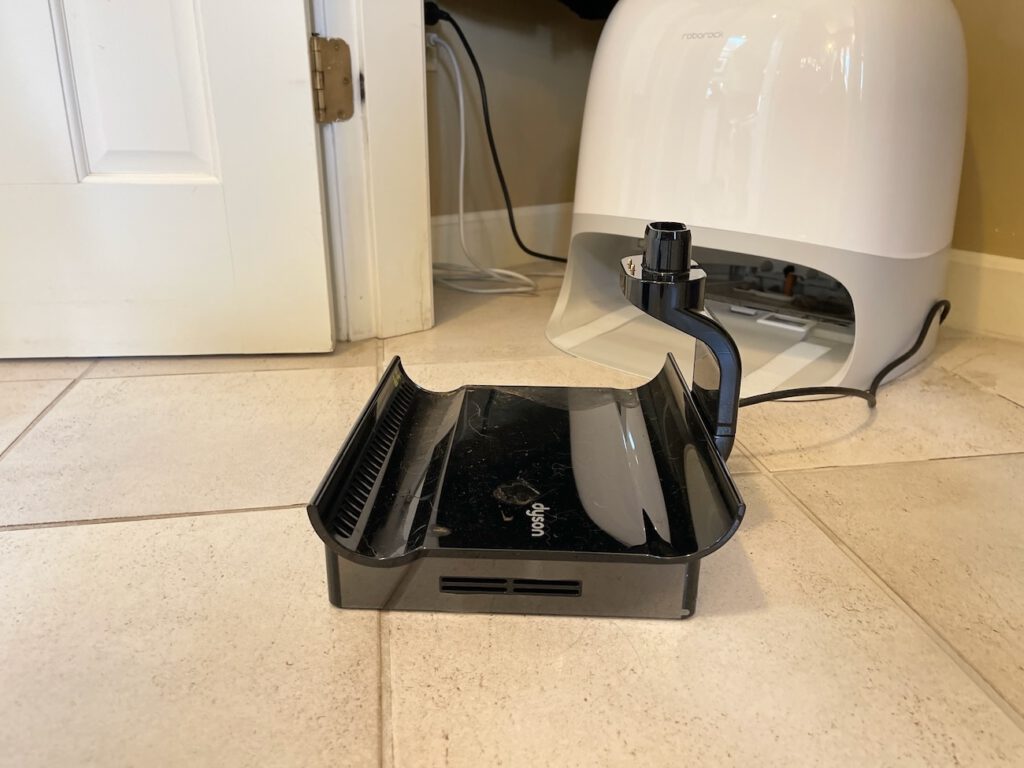
The Clean+Wash Hygiene ($499) is the one that gets it right. A 45-minute runtime. A dedicated 0.75-liter clean water tank that clips to the wand. A self-clean cycle backed by a hot-air drying dock running at 185 degrees Fahrenheit. Four power modes plus Max. An LCD screen tracking water levels, battery life, and maintenance prompts.
For existing Dyson households, the V15 Detect Submarine is worth a mention. Its mopping attachment shares the same core philosophy: dirty water contained in the floorhead, nothing traveling through the machine body. The difference is that the Submarine stores its clean water in the head too, limiting capacity, and has no self-clean cycle. You rinse and air-dry the roller manually after every single session. The PencilWash shares that same head-mounted tank design and that same manual maintenance requirement. The Clean+Wash Hygiene’s wand-mounted clean water tank is larger, easier to monitor, and the hot-air drying dock is what separates it from every other option in the Dyson lineup.
How It Compares to the Competition
The Tineco iFloor series is the most common point of comparison in this category. It has suction, a self-clean cycle, and costs less. It also runs dirty water through internal body-mounted tubing, which is where the trouble starts. Hair and fine debris accumulate in that tubing and the connected tank over time. The smell follows. If your experience with a wet floor cleaner has been a machine that eventually becomes something you avoid touching, there is a good chance internal dirty water routing is the reason. The Dyson’s waste-in-head system directly addresses that failure mode.
The Bissell CrossWave is the mass-market benchmark. Widely available and functional, it combines suction with a wet roller and a body-mounted dirty water system. It has a filter that needs regular washing and requires a proprietary cleaning formula. The Dyson’s filter-free design removes both of those ongoing maintenance requirements.
The Roborock Dyad is the closest competitor on design philosophy. It keeps dirty water separated, has a self-clean function, and offers competitive battery life. Where the Dyson pulls ahead is the hot-air drying dock, build quality, and roller filament density. For buyers who want most of the benefit at a lower price, the Dyad is worth a close look.
Design and Build
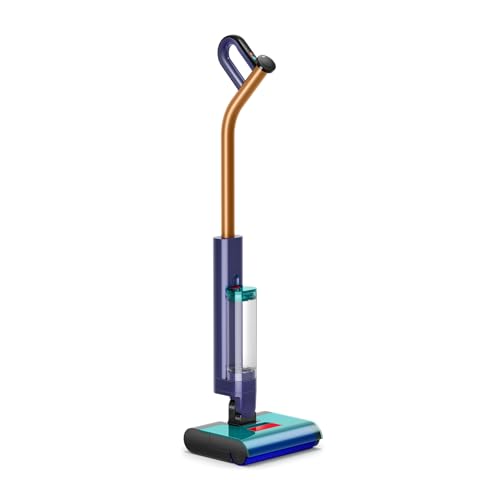
The Clean+Wash Hygiene is slim, well-balanced, and built to a quality level that is immediately obvious when you pick it up. The prussian blue and copper colorway is polished enough that leaving it on the dock in a hallway does not feel like a visual compromise. This is a premium product and it feels like one throughout.
It weighs 8.4 pounds, which is lighter than most true wet-dry vacuums but not weightless. For younger households it is easy to handle. Older users or those with limited mobility will notice the weight and the jostling required to seat it on the charging dock. Worth knowing before purchase.
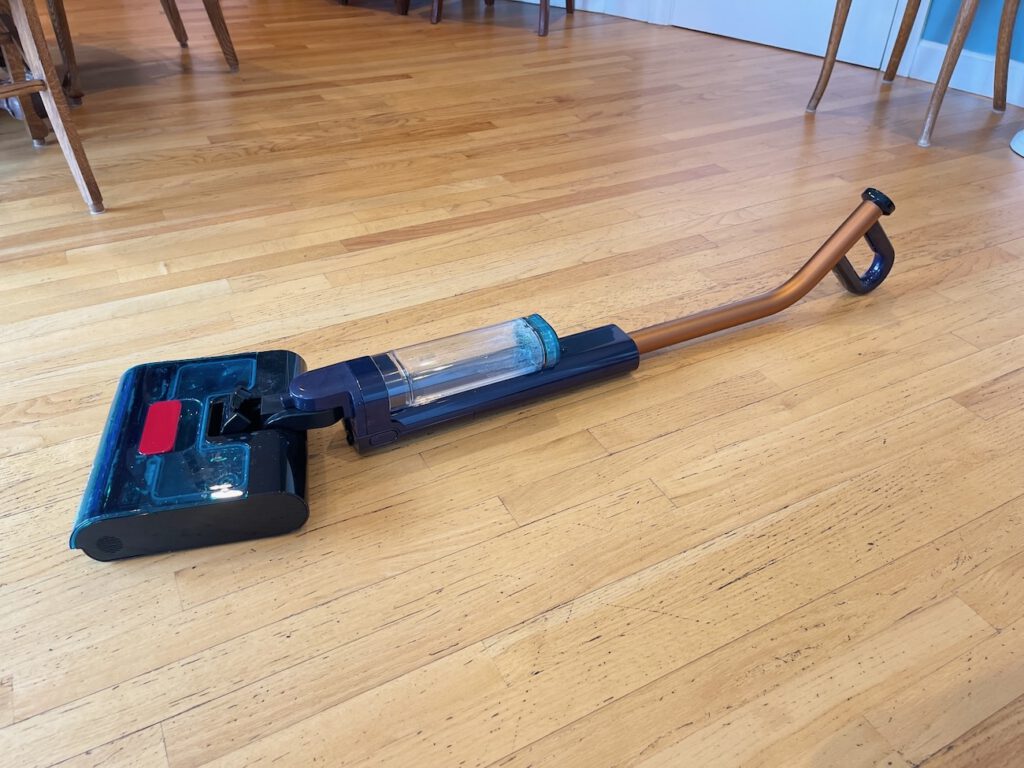
Two design details stand out as genuinely useful in practice. First, the handle goes completely flat to the floor and the head stays flush with the surface the entire time — it does not lift off. This means you can clean under counters and low furniture without stopping, angling, or pushing harder. It sounds like a small thing until you have used every other floor cleaner that cannot do it. Second, when you stand the machine upright and lock the handle back against the head, it turns off automatically. No hunting for a button, no accidentally leaving it running. Both details reflect the kind of engineering attention that makes a product feel finished rather than just functional.
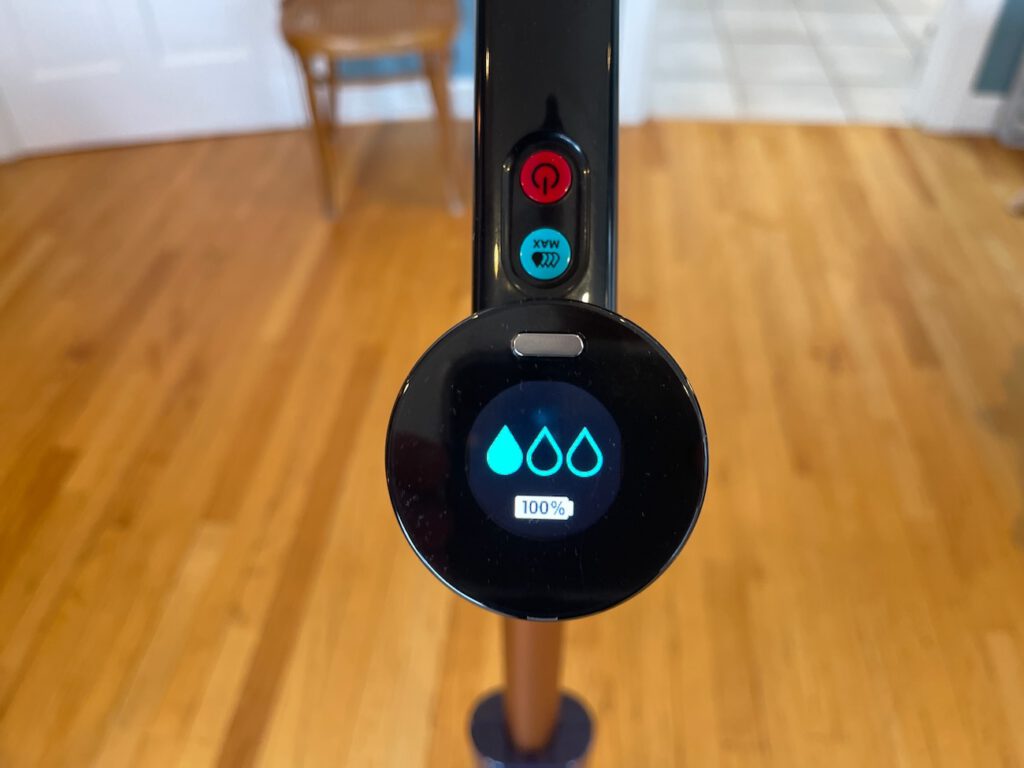
The LCD screen on the handle tracks hydration level, battery percentage, water tank status, and maintenance prompts in real time. Three hydration levels plus Max give real control over how much water hits the floor, and dialing down the hydration level extends your tank range significantly between refills. Setting two is the right daily driver for most households. The drying dock’s 30-minute hot-air cycle is effective and loud. Plan around it.
Cleaning Performance
On everyday messes the Clean+Wash Hygiene is excellent. Pet paw prints, kitchen grease, fine dust, grit, and general floor traffic disappear in a single pass across hardwood, laminate, and tile.
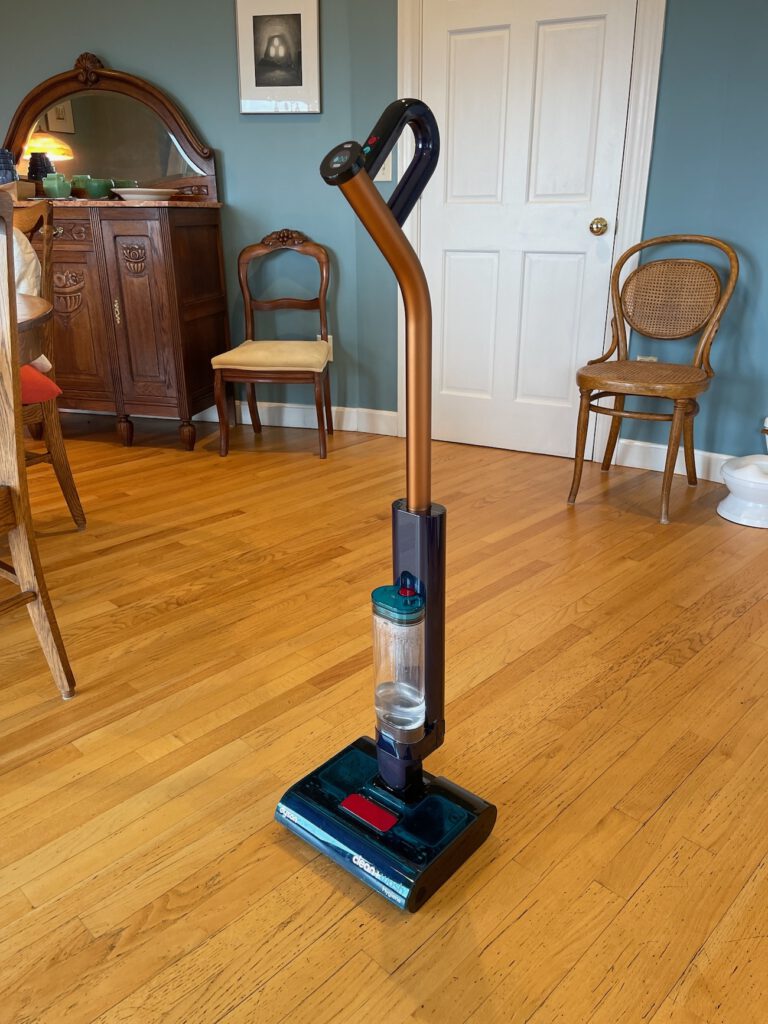
My home is around 2,600 square feet of hard floor. The battery can likely handle the full run in one charge, though I have not pushed it to empty in a single session to confirm. What I can confirm is that the water tank will need a refill somewhere in the middle if you are running on level two or three. This is actually worth understanding as a feature rather than a limitation: the LCD tells you in real time when a refill is coming, and you are in control of that trade-off.
I put the machine through a real test by cleaning up wet espresso grounds from our super-automatic machine. It handled them, but there was a catch. Even after running a self-clean cycle, some grounds had worked themselves into the roller and came out on the next cleaning session. If you run something like that through it, do a full clean cycle immediately after and physically check the roller and head for anything stuck in there before your next use. The self-clean cycle handles the roller well, but it is not a substitute for a visual check after a heavy mess.
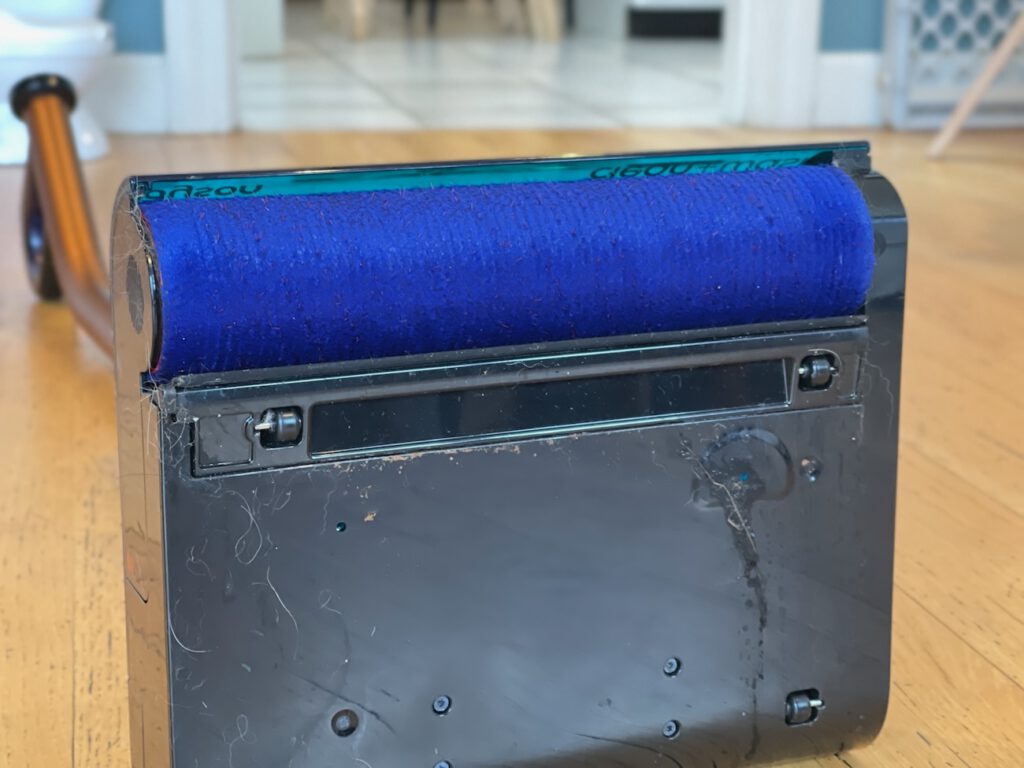
Dried Play-Doh is a weak spot. I pushed pieces around before the roller eventually grabbed them. This machine is optimized for wet and fine dry debris, not chunky solid objects. Pre-sweep anything large and hard before you run it.
One useful technique: most of the water comes out on the pull stroke, not the push. It took a couple of sessions to internalize that. Once you do, cleaning becomes noticeably more efficient.
The Head-Cleaning Process: The Honest Version
This is where most reviews either gloss over the details or make it sound worse than it is. The reality sits in the middle.
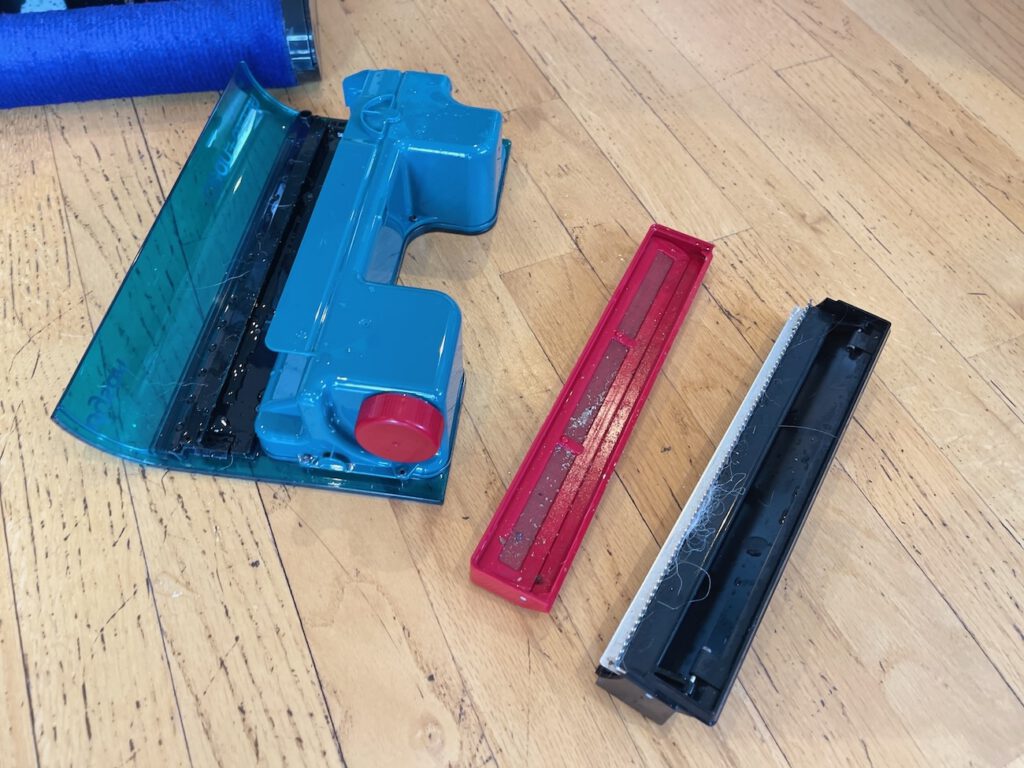
After every clean, Dyson recommends emptying both the clean and dirty water tanks and the debris tray. The debris tray removal is quick: lift the red lever, the tray and tank come out together, tap solids into a bin, rinse, done.
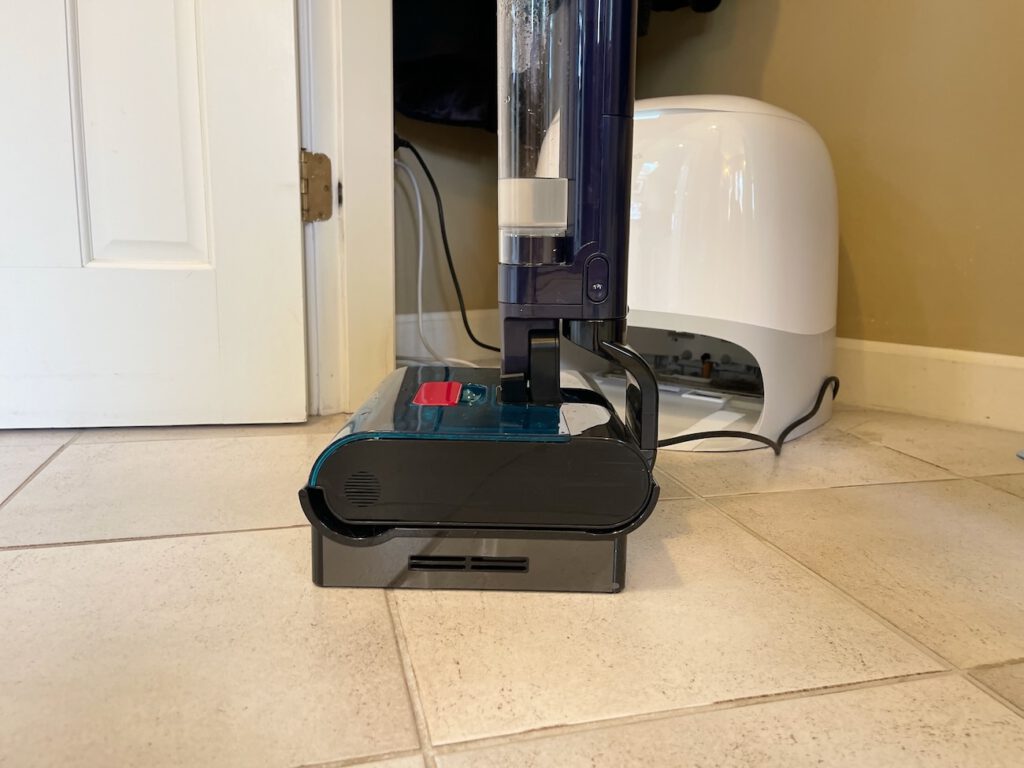
The deeper head clean is more involved. Remove the head, carry it to a sink because it will drip, then pull apart the two plastic filter pieces that fit together using friction. These pieces prevent sand and grit from entering the machine body. Rinse them, wipe the metal anti-tangle comb with a paper towel to clear hair, wash out the dirty tank interior, then reassemble by lining up two alignment dots and pressing the pieces back in. The self-clean cycle handles the roller. The hot-air dock handles drying. This manual step is for the filter assembly and is not an every-session requirement. Once per week or every several uses depending on how hard the machine works.
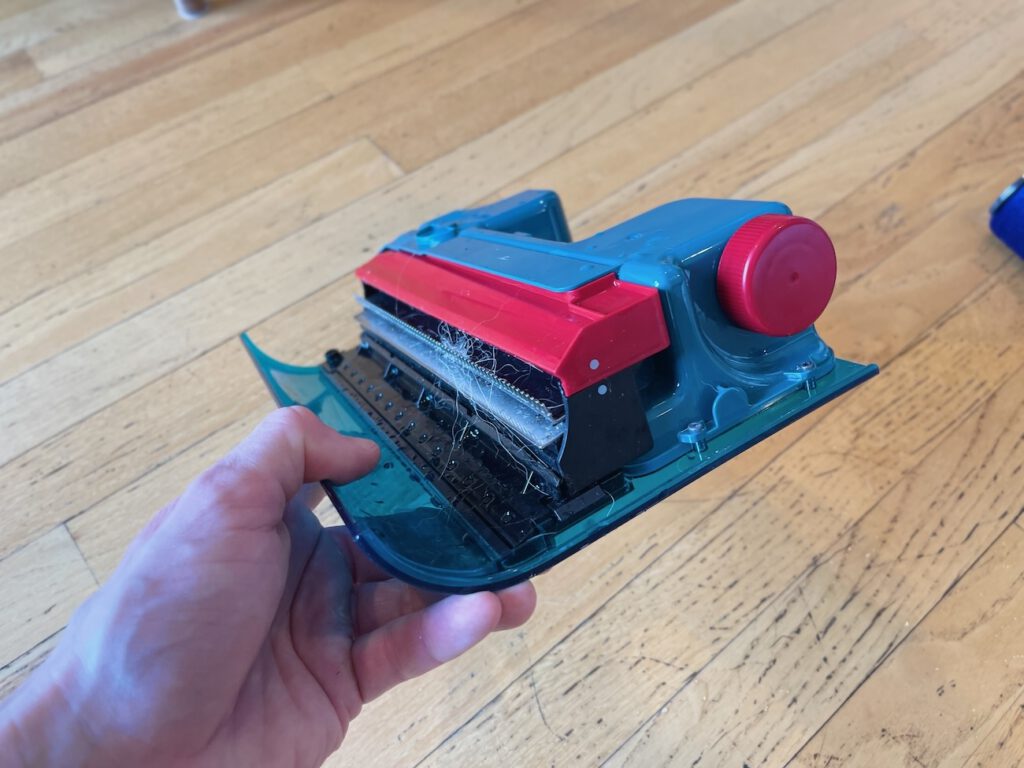
It is fiddly the first few times. After four or five sessions it takes under two minutes. Compared to digging around in an internal body tank or rinsing a roller under the faucet after every single use, the process is meaningfully cleaner overall.
The Cleaning Solution Question
The machine ships with a 500ml bottle of Dyson’s 02 Probiotic hard floor cleaning solution. A small plastic dosing cap is included and holds the recommended 20ml per tank fill. Keep that cap somewhere obvious. The bottle lasts a long time at that dilution.
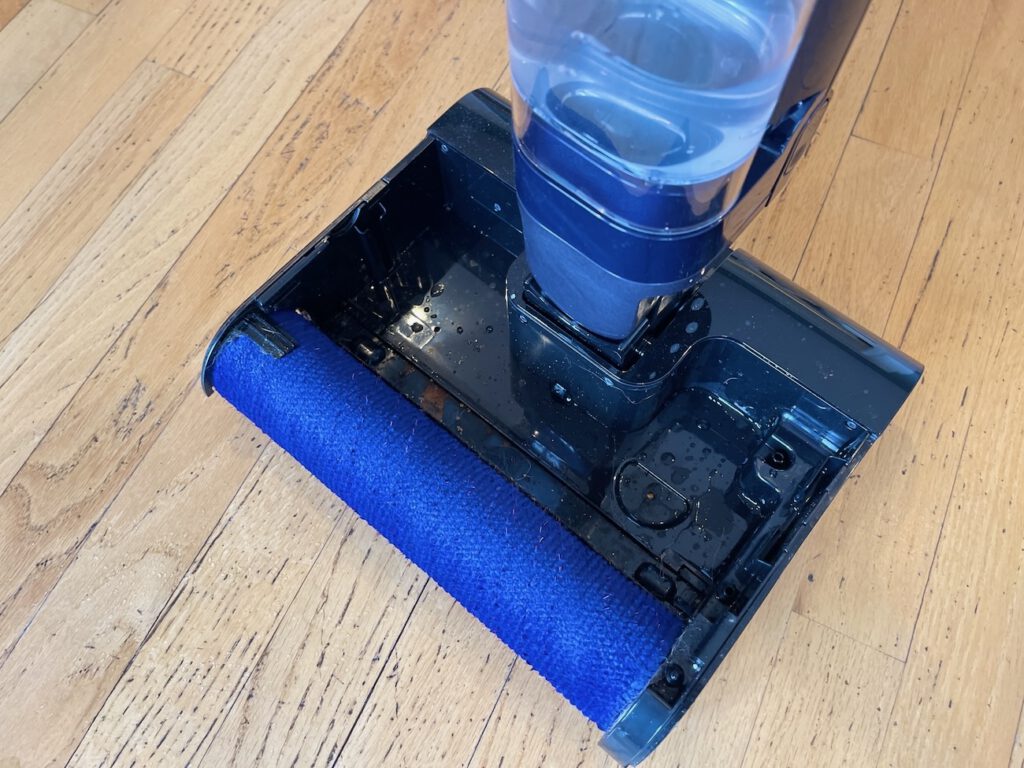
One thing worth knowing: the self-clean cycle also uses your clean water tank. Dyson’s owners guidance confirms you refill the tank before running the cycle, and you can add solution to that refill. In practice this means you are using solution on maintenance runs as well as cleaning sessions. Not a significant cost, but a real one if you are running the self-clean after every use.
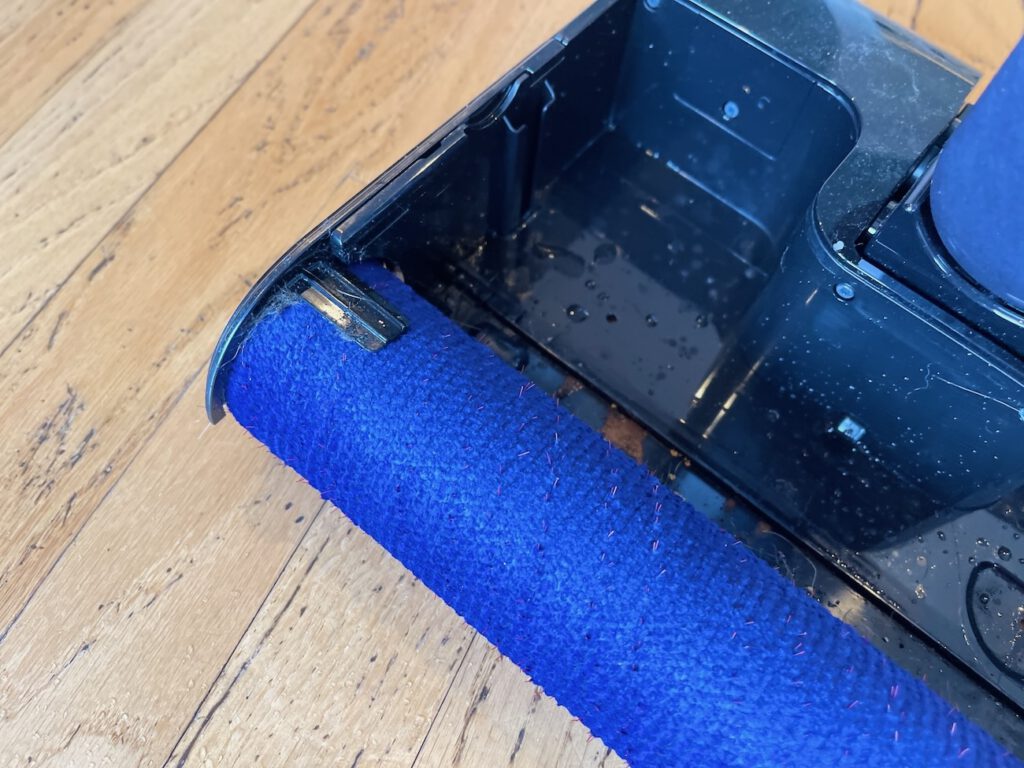
On third-party solutions: Dyson’s actual warranty documentation does not list cleaning solutions as a voiding condition. The warranty covers defects in materials and workmanship. Dyson recommends gentle, low-foaming household detergents as an alternative and specifically advises against bleach and high-foam formulas. Using a compatible floor cleaner you already own is fine. Using something harsh is not.
Battery Life and a Few Quirks
Battery life is strong. On setting two, a full downstairs cleaning session used roughly 35 percent of a charge. The 45-minute rated runtime is realistic for mixed-setting use, and for a home in the 2,600-square-foot range the battery should get you through in one go, though the water tank will need a refill before the battery does.
If the machine sits unused for five or more days, the roller needs about 30 seconds to re-absorb moisture before water distributes evenly. The first few passes feel dry. Keep going and it self-corrects.
Getting the machine back onto the charging dock takes a small amount of jostling. There is a male connector on the dock and a receiver on the machine, and they do not always seat on the first drop. Minor for most users. More noticeable for anyone with limited hand strength.
Who Should Buy It
The Clean+Wash Hygiene is built for households with pets, kids, or consistent hard floor traffic across 800 square feet or more. If you have a robot vacuum handling daily maintenance but find it misses the deeper clean or cannot reach key areas, this fills that gap precisely. If your current wet cleaner has started to smell or you have been avoiding maintenance because it is unpleasant, the Dyson’s head-contained waste system directly solves that problem.
It is not the right tool for every situation. Small apartments with light traffic are well served by the $349 PencilWash. Deep grout lines in ceramic tile need suction and a grout brush, not a roller cleaner. And if $499 requires genuine justification, the honest question is how often you actually mop now.
The comparison to a $40 mop is technically fair and practically wrong. The question is not whether a cheap mop cleans floors. It is whether you will consistently use it. For households where mopping gets skipped because the process is annoying, the Dyson earns its price in habit change alone.