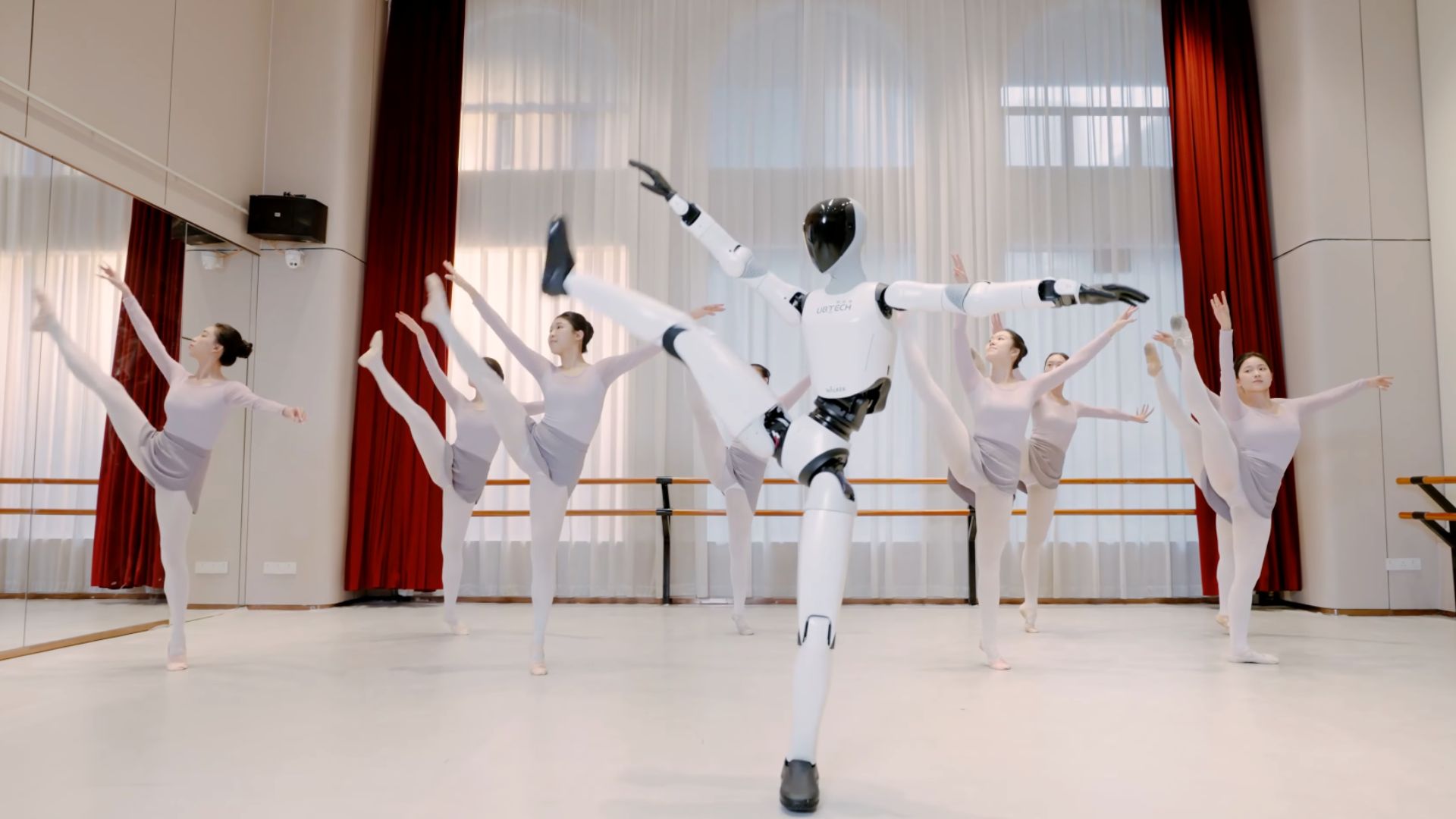
Swan Lake has never looked quite like this. UBTECH’s Walker C1 humanoid robot recently took the stage alongside human dancers at Chain Expo 2026, executing ballet choreography with the kind of fluid precision that would make Tchaikovsky do a double-take. But this wasn’t just another viral robotics stunt—it’s a calculated demonstration that China’s humanoid robots have evolved from lab curiosities into commercial workhorses ready for real-world deployment.
When Ballet Meets Business Logic
The choreography demands exactly what you’d want from a hotel concierge or airport guide: dynamic balance in crowded spaces, smooth coordination with humans in close proximity, and the ability to maintain composure under pressure. UBTECH’s Walker C1 nailed the waltz turns and arm movements without the stuttering or balance issues that plague lesser humanoids. According to UBTECH’s promotional material, this represents “a glimpse into the future of intelligent service robotics — where full-scale humanoids work, interact, and move alongside us in perfect harmony.”
The timing wasn’t coincidental. UBTECH earned the official exclusive humanoid robot partner designation for Chain Expo, positioning the Walker C1 as a next-generation commercial service platform designed for hotels, airports, shopping malls, and exhibition centers—environments where ballet-level grace actually matters.
The Numbers Behind the Spectacle
While competitors are still running pilot programs, UBTECH secured 800 million yuan (roughly $113 million) in orders throughout 2025. The customer list reads like a who’s who of Chinese manufacturing: BYD, Geely Auto, FAW-Volkswagen, and Foxconn are deploying these robots for factory floors and logistics operations. One standout deal involved a 250 million yuan ($35 million) order from a major Chinese company, signaling that industrial customers see robotics as production-ready, not experimental.
The company isn’t stopping there. Through a strategic partnership with Siemens Digital Industries Software, UBTECH plans to manufacture 10,000 humanoid units annually by 2026. For context, their Walker S2 model already has over 500 units operating in real-world applications, while the Walker C serves as an intelligent tour guide at Expo 2025 Osaka’s China Pavilion.
Beyond the Dance Floor
This ballet follows similar demonstrations from LimX Dynamics, suggesting Chinese robotics companies view artistic performance as both technical validation and cultural diplomacy. The Walker C1 inherits capabilities from its Walker C predecessor:
- U-SLAM navigation for autonomous movement
- Multilingual interaction powered by embodied AI models
- Walking speeds up to 3.7 mph
What’s missing are detailed Walker C1 specifications, but the real-world deployments speak louder than spec sheets. When robots can dance Swan Lake today and guide tourists tomorrow, the line between entertainment and utility disappears—exactly what UBTECH intended as this technological evolution continues.