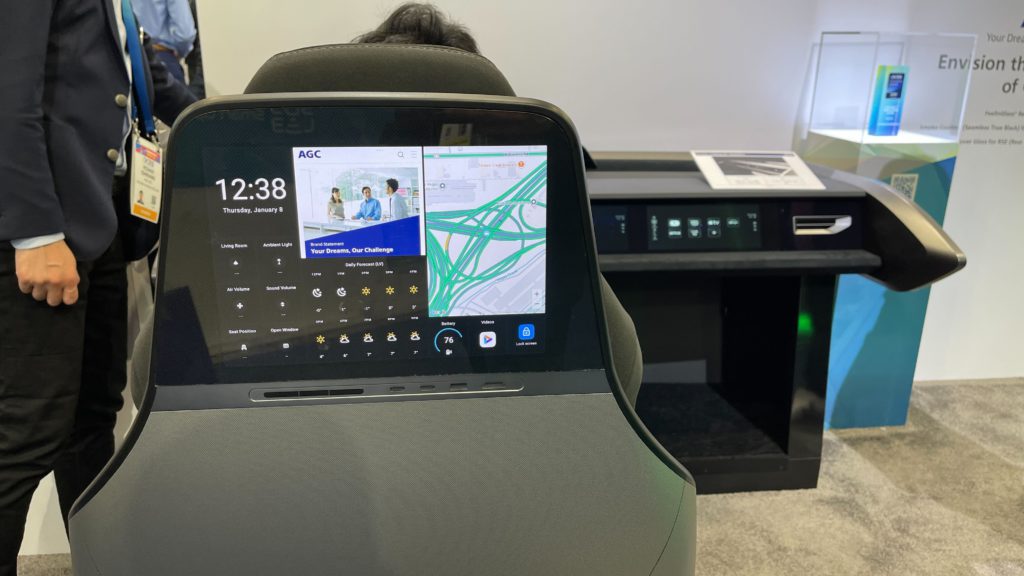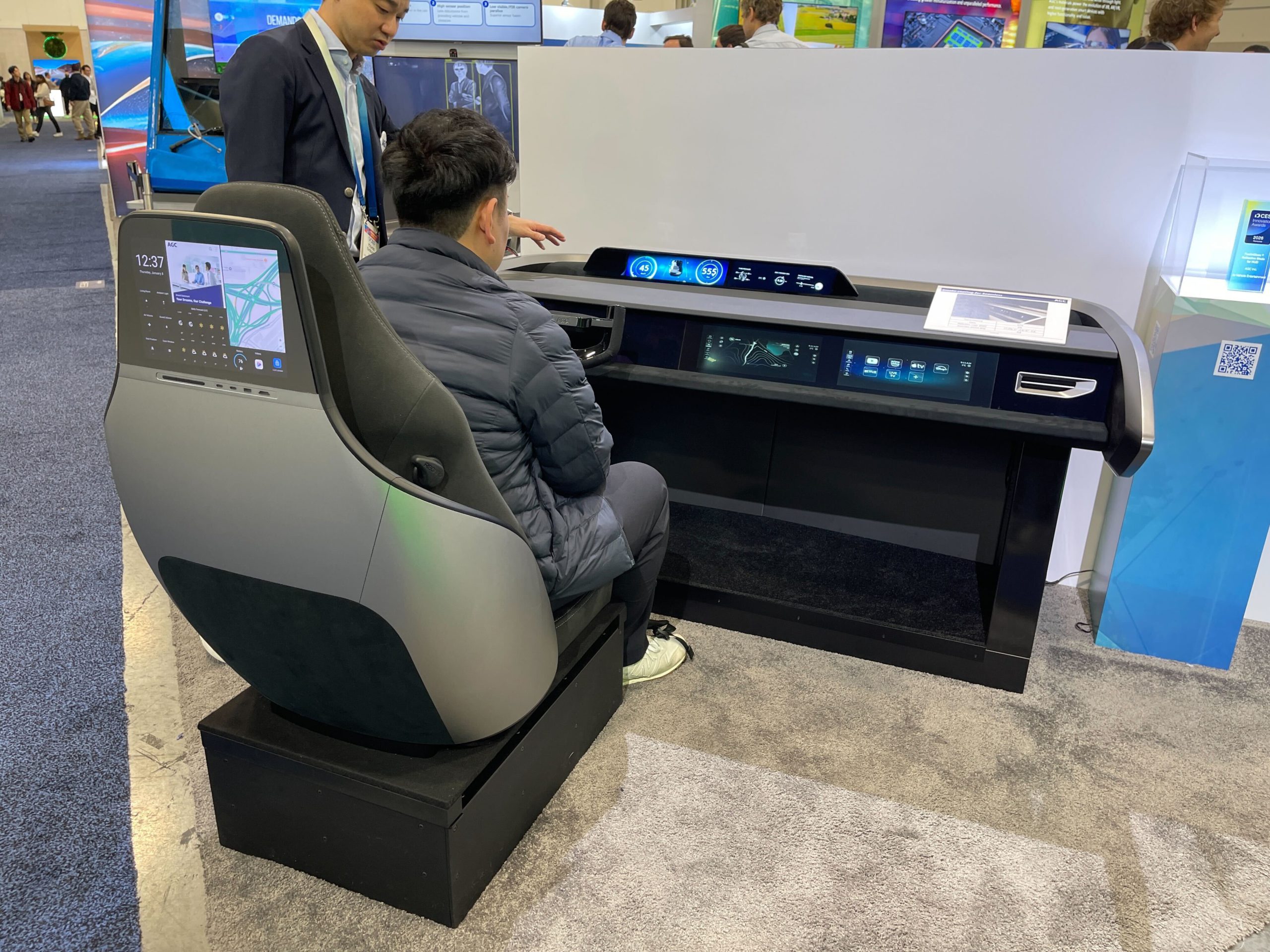
AGC’s Reflective Blade for HUD earned CES Innovation Awards 2026 Honoree status in the “In-Vehicle Entertainment” category—not for flashy features, but for fixing something genuinely annoying. You know that moment when your HUD navigation arrows vanish the second you put on polarized sunglasses? This free-standing glass module uses proprietary p-polarized reflective coating to maintain crisp visibility regardless of your eyewear choice. Think of it as the difference between a cheap LCD screen that disappears at certain angles versus an OLED that stays brilliant from anywhere.
Modular Design Breaks Windshield Dependency
Independent glass panel offers automakers more integration flexibility.
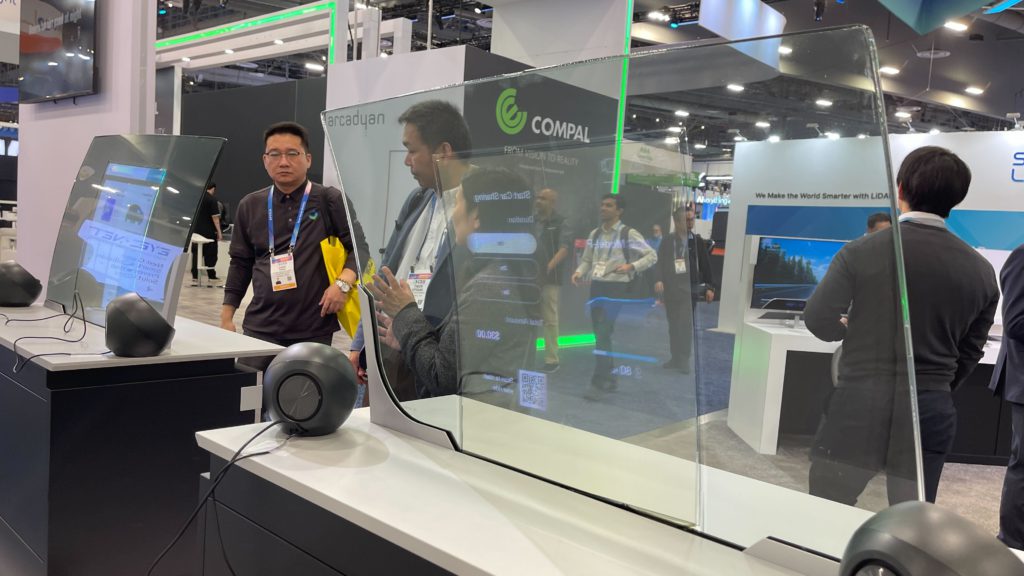
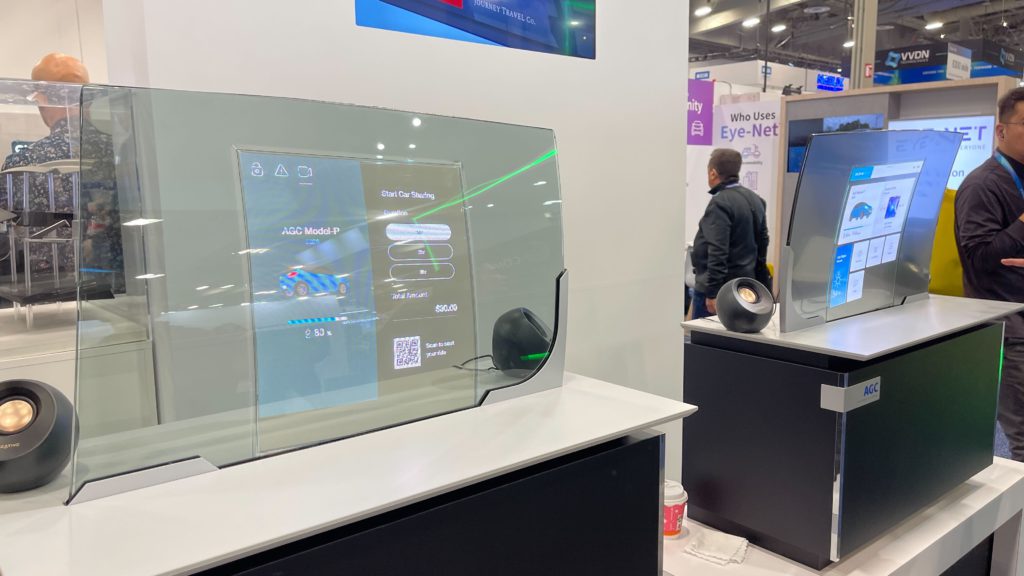
Traditional HUDs require specially coated windshields or bulky projection units that dictate interior design. AGC’s approach flips this—their blade sits as an independent module wherever designers want information to appear. The thin, curved glass panel gets shaped through in-mold forming, creating what the company calls “advanced, sophisticated appearance unique to glass.” For automakers, this means freedom to experiment with cockpit layouts without redesigning entire windshield systems.
Glass Technology Goes Active at CES 2026
AGC positions materials as functional platforms, not passive components.
The Reflective Blade represents AGC’s broader “glass driving the change” theme at CES 2026. This isn’t just about prettier HUDs—it’s about glass becoming an active technology platform. Their booth spans everything from LiDAR-integrated roofs to 5G antennas embedded in train windows. Complex windshields with integrated ADAS and HUD features jumped from 15% to 60% of the replacement market over the past decade. You interact with AGC glass daily without knowing it, but now that glass is starting to interact back.
Beyond the Buzzwords
Real-world impact matters more than technical specifications.
AGC is showcas the Reflective Blade at both their main booth and the Innovation Awards exhibition area, giving CES attendees dual opportunities to experience the technology. While automaker adoption timelines remain under wraps, the modular approach suggests faster integration than previous windshield-coating methods. For drivers, success won’t be measured in technical specs—it’ll be that moment when your navigation stays visible through those expensive sunglasses you actually want to wear.