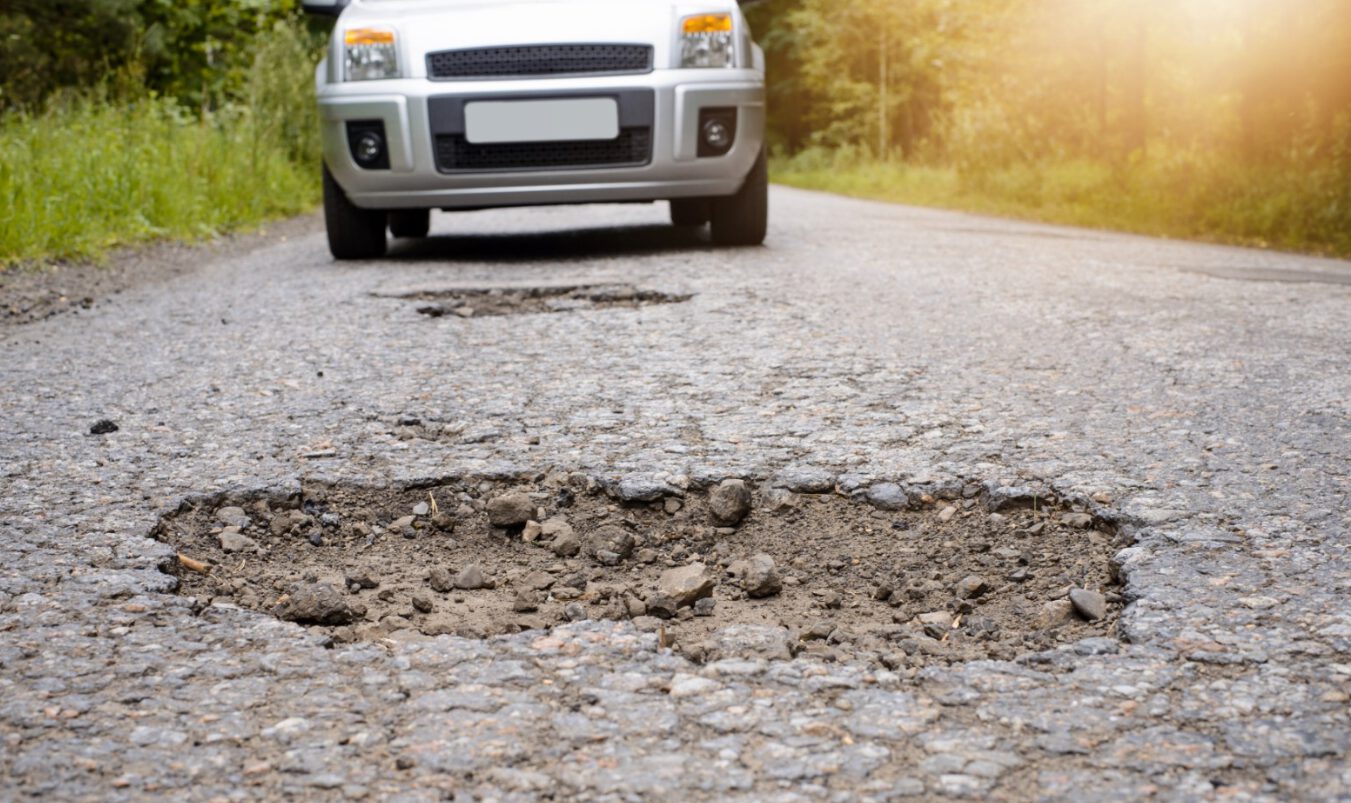
That jarring thud when your wheel drops into a pothole? It just cost you $800 in premature tire replacement—even though your car still drives perfectly straight.
What Actually Breaks Inside Your Suspension
Fractional misalignment changes wreak havoc on rubber contact patches.
Potholes don’t just rattle your teeth—they bend suspension components like control arms, tie rods, and struts with surgical precision. Even minor impacts at speed create fractional changes in camber and toe angles that your steering wheel won’t immediately reveal. Your car feels fine because these shifts measure mere degrees, yet they fundamentally alter how your tires contact the road.
Think of it like wearing shoes with one heel slightly shorter than the other—you’ll adapt your gait, but your shoes will wear unevenly. That’s exactly what happens to your tires after pothole damage, except the consequences cost hundreds of dollars instead of a trip to the cobbler.
The Expensive Aftermath
Misaligned wheels create specific wear patterns that accelerate rubber destruction.
Feathering and cupping aren’t just cosmetic tire issues—they’re death sentences for your tread. When alignment shifts after pothole damage, your tires develop uneven contact patches that scrub against pavement like sandpaper. New tires installed on misaligned wheels start deteriorating immediately, which explains why some drivers replace rubber more frequently than their neighbors.
Worse, compromised tread increases hydroplaning risk during wet conditions, transforming a financial problem into a safety crisis. Your fuel efficiency also drops 2-3% from increased rolling resistance, adding insult to injury at the gas pump.
High-Risk Scenarios
Performance vehicles and AWD systems amplify alignment consequences.
Low-profile tires on performance cars transmit pothole force directly to rims and suspension components, causing damage that standard sidewalls would absorb. AWD systems suffer additional stress when wheels track differently, potentially damaging expensive drivetrain components.
Tire pressure monitoring systems can alert you to pressure drops from impacts, but proper alignment diagnosis requires professional assessment or dedicated diagnostic tools. Most drivers ignore subtle warning signs like off-center steering wheels or slight pulling until the damage becomes expensive.
Schedule an alignment check immediately after hitting significant potholes. The $100 inspection fee beats discovering your tire set needs replacement prematurely. Routine seasonal alignments—especially after harsh winter pothole seasons—prevent this silent automotive wealth drain from emptying your wallet one unnoticed degree at a time.