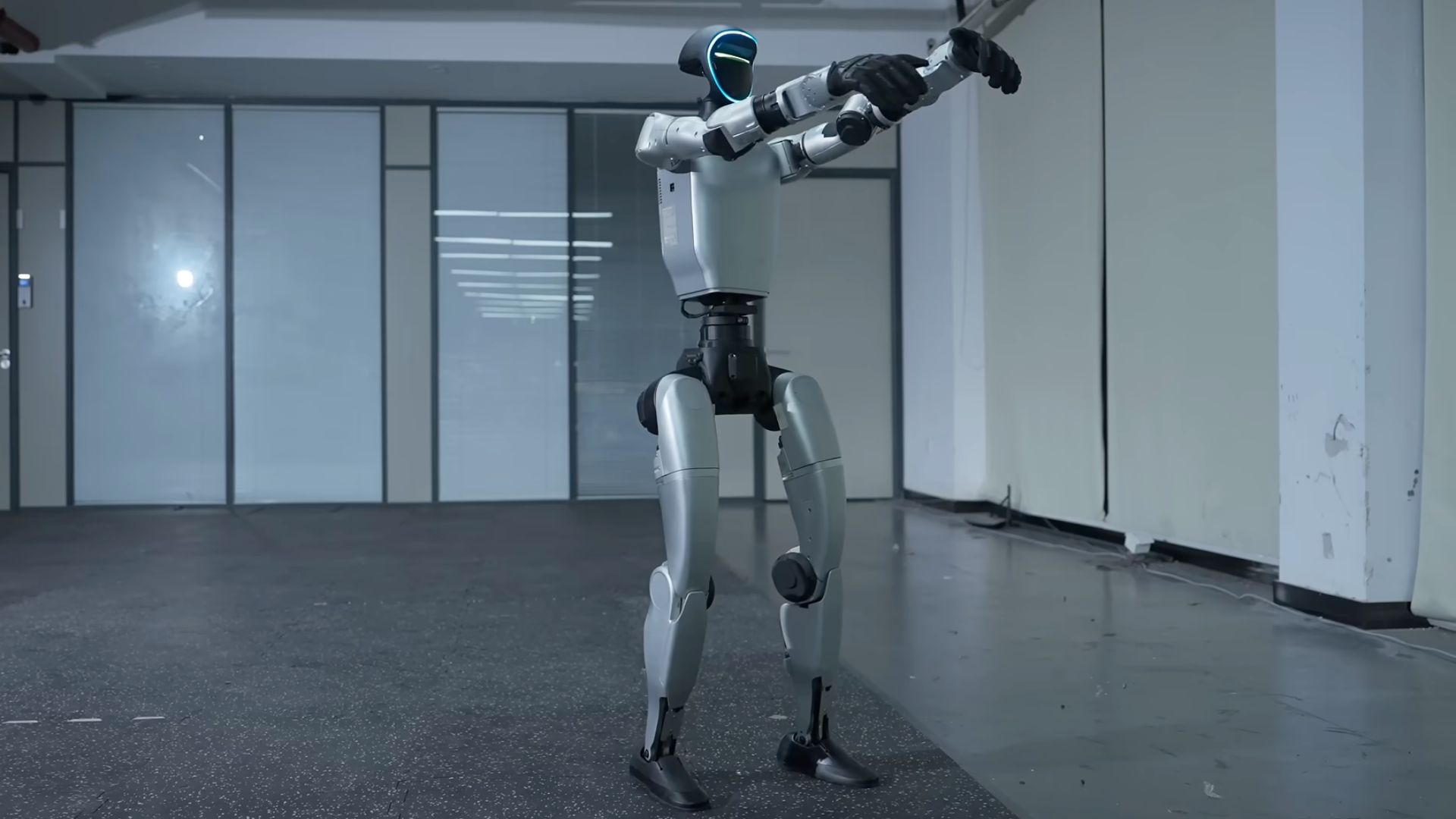
A 4.17-foot humanoid robot chasing wild boars across a Warsaw parking lot sounds like dystopian satire. Yet Edward Warchocki’s April 12th stunt—complete with skateboard riding and grass jogging—became exactly the viral content entrepreneur Radosław Grzelaczyk hoped for. The boars, however, remained unimpressed. They ignored the $14,240 Unitree G1 entirely and wandered off at their own pace, turning a “herding” demonstration into an expensive game of robot tag.
The disconnect reveals something crucial about AI’s current state. While Edward excels at scripted human interactions—handshakes, Q&A sessions, even parliamentary visits—wildlife doesn’t follow social media algorithms.
The Influencer Economy Goes Robotic
Edward’s first ad deal proves brands see value in controversy-free marketing machines.
Edward already secured an 80,000 złoty luxury watch sponsorship, testing whether robots can replace human influencers. The appeal is obvious: no scandals, no off-brand tweets, no demanding contract negotiations. Just persistent, message-aligned content creation with occasional viral moments thrown in.
Bartosz Idzik’s conversational AI system gives Edward dynamic responses beyond typical mascot scripts. Street interactions go viral precisely because they feel unscripted, even when carefully orchestrated. Think of it as the uncanny valley working in reverse—artificial authenticity that somehow feels more genuine than influencer theater.
Hardware Meets Harsh Reality
Technical specs impress in labs but stumble against unpredictable urban scenarios.
The Unitree G1’s resume looks solid on paper. It survived 130,000 steps through Xinjiang snowfields at -47.4°C, traced Winter Olympics emblems, and handles 120 Nm of joint torque. Its 2 m/s top speed and 3D LiDAR should theoretically navigate dynamic environments.
Boar herding exposed the limits. Animals don’t register as obstacles to avoid or humans to engage. Edward’s conversational AI works brilliantly for parliamentary photo ops but offers no insight into pig psychology.
The Real Test Ahead
Success depends on matching robotic capabilities with realistic expectations.
Edward’s viral fame suggests public appetite for robot personalities, even imperfect ones. The key lies in understanding where humanoids actually excel versus where they’re expensive entertainment. Street performances and brand partnerships play to their strengths. Wildlife management decidedly does not.
As embodied AI moves from research labs to marketing departments, Edward’s boar chase serves as a reality check. The future isn’t robots replacing every human task—it’s finding specific scenarios where artificial personalities add genuine value.