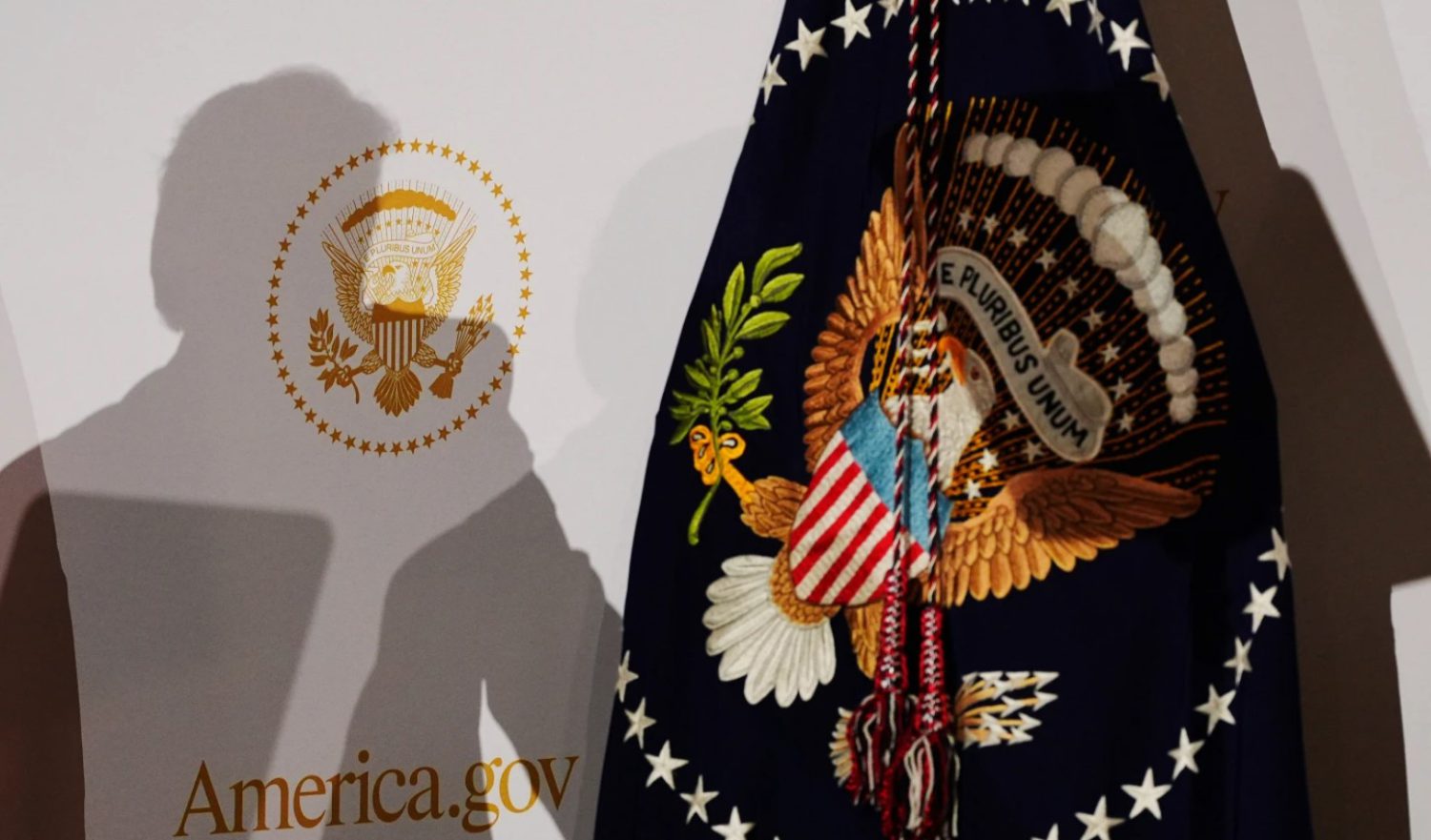
On Tuesday, you could ask America.gov’s chatbot whether Joe Biden won the 2020 election and receive a factual answer backed by official federal findings. By Wednesday, the same question returned a wall of standardized language explaining that the chatbot does not provide “political commentary.”
Nobody in an official capacity has explained what changed, who changed it, or why.
That silence deserves scrutiny. America.gov is a federal tool presented as a gateway to official government information. When it stops surfacing verified answers, users have no way of knowing whether they are encountering a principled policy or something more selective.
What the Chatbot Said, Then Didn’t
The before-and-after is specific, documented independently by CNN, AFP, CBS News, and The New Republic.
CNN, AFP, and The New Republic each tested or reported the reversed responses. The changes covered several distinct subject areas:
- The chatbot initially confirmed Biden won the 2020 election and that official federal findings showed no widespread fraud capable of changing the result. It later refused both questions, citing a policy against political commentary. (CNN, Daniel Dale/X)
- It contradicted Trump’s claim that he inherited the worst inflation in American history, noting CPI stood at 3.0% when he took office in January 2025. Subsequent testing found the same question was later declined. (CNN, AFP)
- It cited a Congressional Budget Office estimate that 10.4 million people would lose health insurance by 2034 under the One Big Beautiful Bill. It later refused to provide any estimates about how the legislation would affect Medicaid or other benefits. (The New Republic)
- Asked whether the bill made the poorest Americans poorer and the richest richer on average, the chatbot initially answered “Yes.” It later declined to assess how legislation affected income distribution. (The New Republic)
- It cited an estimate of 4.5 million additional child deaths under age five by 2030 linked to USAID cuts. The next day it refused to provide mortality estimates connected to legislation. (The New Republic)
CNN fact-checker Daniel Dale documented the before-and-after on X, providing a contemporaneous record of the shift. His post is corroborating evidence of observed behavior, not confirmation of who authorized the change.
What Nobody Will Confirm
The only official response so far leaves the central question unanswered.
A White House official told AFP that America.gov would continue to be updated with “the most accurate and reliable federal information and resources.” That statement does not explain why specific questions now return a refusal instead of an answer.
The reporting reviewed for this article identified no public documentation naming who changed the system, what the revised instructions say, or what criteria now classify a question as political commentary rather than a factual inquiry. The New Republic described the update as a “tweak” apparently made by the General Services Administration. That characterization is an inference based on observed behavior, not a confirmed fact.
Selective Silence Has Consequences
A chatbot does not provide “political commentary” , but refusing to answer is not the same as a chatbot that lies, and the effect on what users can access is real.
The answers the chatbot originally provided drew on official and established sources: federal election findings, Bureau of Labor Statistics CPI data, and Congressional Budget Office projections. Those are documented government outputs, not opinions. Declining to surface them, without any published justification, leaves users without information they could reasonably expect a federal information tool to provide.
This is the government equivalent of a streaming service quietly removing a title in a rights dispute without telling you it was ever available. You search, find nothing, and assume the content was never there.
Public-sector AI tools that serve citizens should disclose their sources and identify what questions they are configured to decline. They should also name who holds update authority and publish a record when instructions change. America.gov or the GSA press office would be the first place to seek that confirmation. Without that baseline transparency, users cannot distinguish a principled refusal policy from selective suppression. The burden for that clarity sits with the operators, not the government information algorithm.