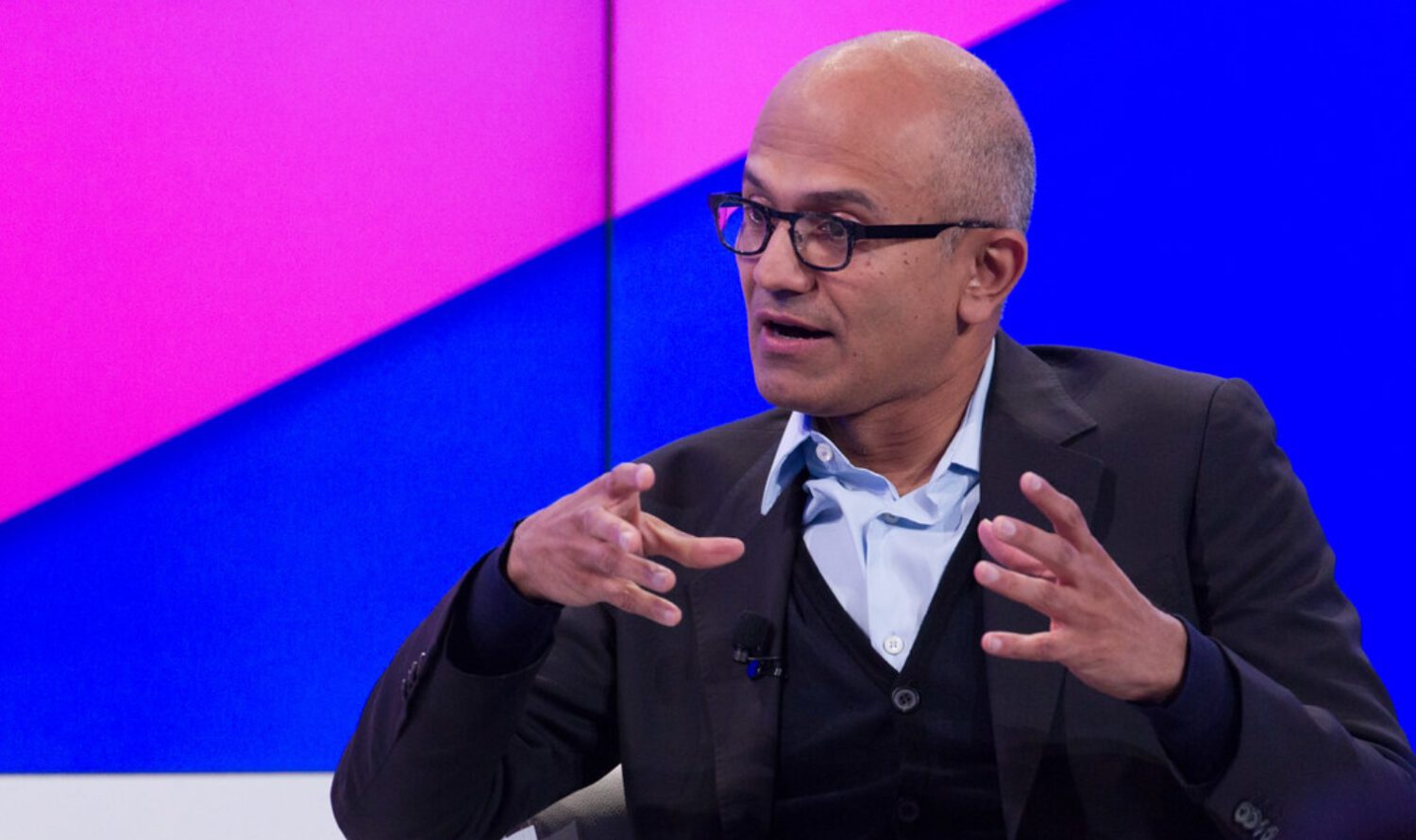
In October, Microsoft offered voluntary buyouts to roughly 60,000 employees at level 70 and below in participating teams across the U.S., Canada, the U.K., and India, according to reporting from Computerworld and KIRO 7.
Speaking with Andrew Ross Sorkin at The New York Times DealBook Summit, CEO Satya Nadella said the program was designed to give employees agency. The idea: decide now whether the AI-transformed version of Microsoft is a place you want to work, or leave with financial support.
Smaller Teams, Bigger Output, Harder Math
The Cowork example reframes what engineers do, but it also raises a question about how many engineers a company still needs.
Nadella rejected the blunt interpretation that AI simply replaces engineers. He described the profession as entering a “new operating point,” where teams direct AI systems rather than manually build every component. The global market for software engineering talent is itself in flux, adding further pressure to these workforce calculations.
His example was an 11-developer team building Cowork, an AI agent integrated into Microsoft 365, using AI as a production system. That is a recognizably different way to build software, though no comparison to a previous team size or output measure was provided.
Nadella’s framing carefully separates “AI changes what you do” from “AI means fewer of you are needed.” Those two things are not mutually exclusive. Treating them as separate arguments obscures the labor math.
The Anxiety Was Real. The Voluntary Structure Was a Response to It.
Nadella linked the program’s voluntary design directly to the anxiety that AI-driven job speculation had created among employees.
On The Pragmatic Engineer podcast with Gergely Orosz, Nadella acknowledged that AI-driven fear and a sense of lost control over career futures had generated significant anxiety among employees. The voluntary structure was, in part, a response to that: a formal off-ramp intended to preserve some sense of personal decision-making during a company-wide shift.
That is a thoughtful read of the human stakes. Employees who remain may still need to adapt to workflows and productivity expectations that have not been publicly defined.
What Microsoft Should Commit to Next
Nadella admitted the transformation will take longer than expected, and that admission needs a concrete plan attached to it.
Microsoft has not publicly detailed what AI-centered roles look like in practice. Retraining pathways, compensation shifts, and expectations for employees who stay and absorb new responsibilities remain undefined.
Nadella acknowledged at DealBook that transforming established workflows at a company not built as an AI-first organization will take longer than many people expect. That acknowledgment deserves a specific follow-through. Publish the retraining commitments. Define what the “new operating point” means for performance reviews and pay. Then explain how productivity gains from smaller teams produce new roles rather than simply compressed headcount.
The Question That Will Define This Era
The answer will reveal whether this was a genuine transition or a workforce reduction with better branding.
Whether Microsoft’s AI shift creates new roles, compresses existing teams, or does both at different organizational levels remains genuinely unresolved. Employees, investors, and competitors are all watching for that answer. The company has offered an explanation of its intentions. What it has not yet offered is a public demonstration of how AI-driven productivity gains will affect employment levels or create the roles it says are coming.