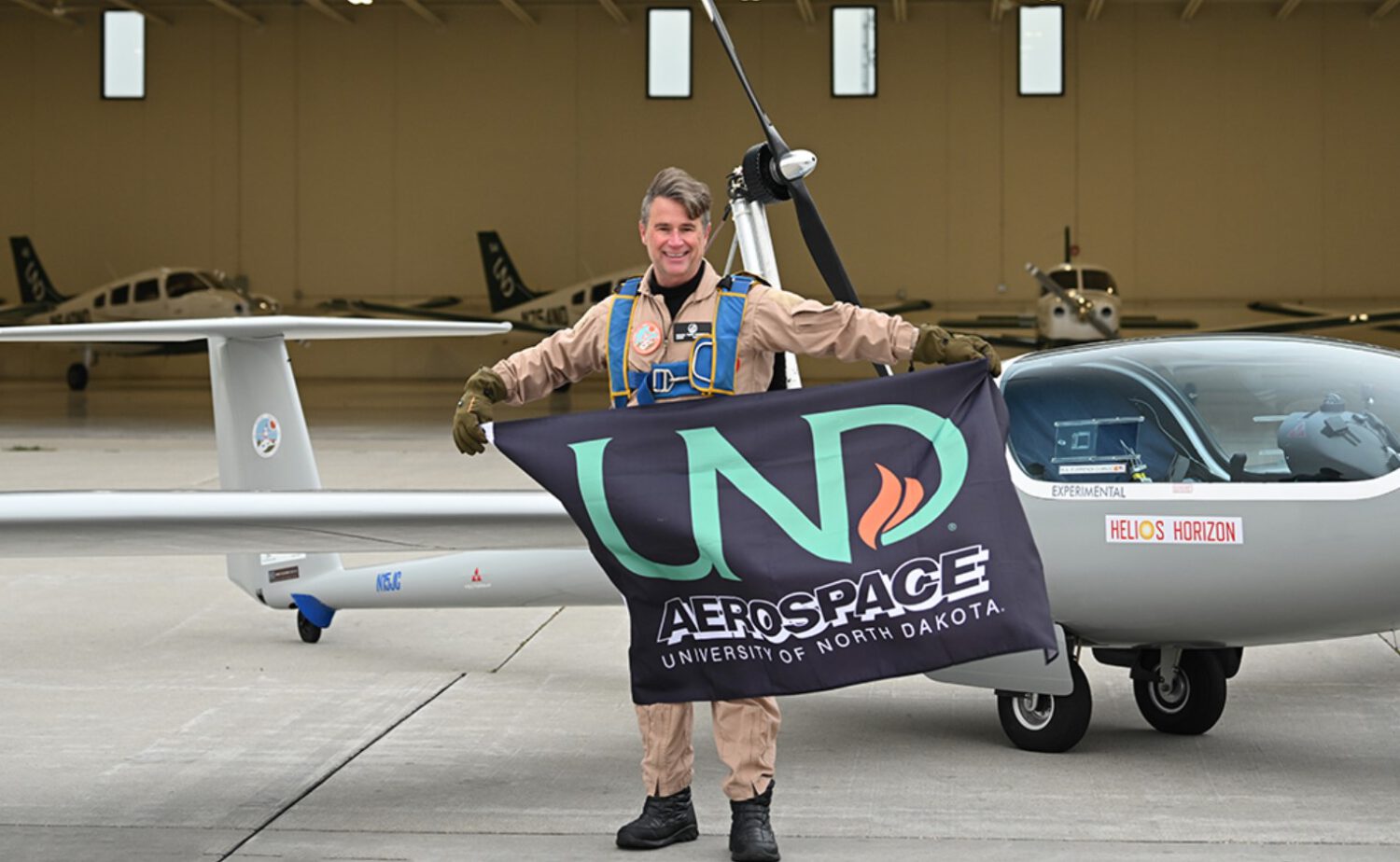
Reaching 17,200 feet is notable. Arriving there with roughly 64% of battery capacity still available is a different kind of result entirely. Helios Horizon, a nonprofit electric-aviation initiative, reported that founder and test pilot Miguel Iturmendi flew a modified Pipistrel Taurus motor glider to that altitude while consuming approximately 36% of its solid-state battery charge, according to a University of North Dakota press release.
The campaign reportedly exceeded three claimed records for electric aircraft under 500 kilograms: maximum altitude, altitude during horizontal flight, and time to climb above 3,000 meters. That climb took 27 minutes.
A National Aeronautic Association observer witnessed the attempts. The records have been submitted to the World Air Sports Federation and remain pending official validation.
A 60% Jump in Energy Density Powers the Climb
Energy density is the key variable here, and the reported improvement is substantial.
Helios Horizon’s solid-state cells reportedly deliver approximately 410 watt-hours per kilogram, compared with roughly 260 Wh/kg for the lithium-ion batteries the aircraft previously used, according to AVweb. Based on those reported figures, that represents about a 60% increase in energy density.
More stored energy without equivalent added weight directly affects how high a plane can climb, how long it can fly, and how much payload it can carry. In aviation, that tradeoff is never abstract.
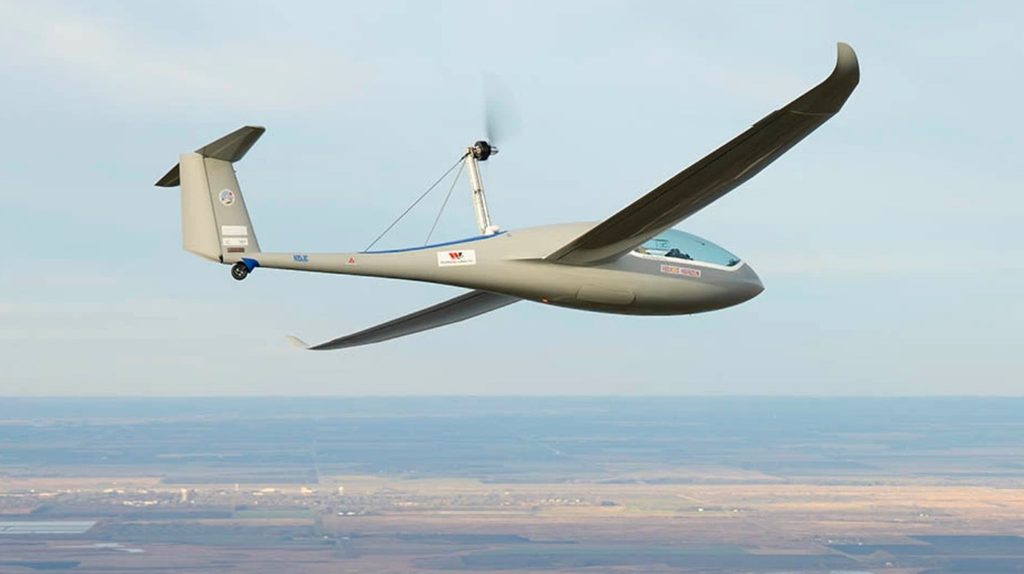
Photo by James Darcy
The Aircraft Earns Part of the Credit Too
Aerodynamic efficiency and battery chemistry worked together to produce this result.
Built with long wings and a low-drag airframe, the Pipistrel Taurus is a motor glider designed to stay aloft efficiently. This result reflects the combination of improved battery chemistry and favorable aerodynamics, not battery chemistry working alone.
That distinction matters: this test does not indicate that solid-state batteries are ready for commercial passenger aviation.
The Pilot and the Partnership
Iturmendi’s background and institutional support shaped both the safety planning and the ambition of the campaign.
His background includes work on Solar Impulse 2, HondaJet, NASA projects, and the Perlan Project, according to FlightGlobal. The University of North Dakota’s John D. Odegard School of Aerospace Sciences supported the campaign with atmospheric measurement tools, including an experimental gas analyzer developed by researcher Shawn Wagner.
The team also used a hypobaric chamber to test pressure suits and life-support equipment, preparation that matters considerably when targeting higher altitudes.
What the Project Is Targeting Next
The next phase introduces engineering challenges that extend well beyond battery chemistry.
Helios Horizon plans to install cells with approximately 25% greater energy density and target flights to or toward 40,000 feet in early 2027. At that altitude, reduced air density affects lift and control response. Motor cooling grows more difficult, and battery thermal management becomes significantly more complex.
Further out, the project has outlined a future concept aircraft called Helios Horizon 2, designed to carry one pilot and two passengers to approximately 80,000 feet. Proposed applications, as described by the project, include atmospheric sensing, reconnaissance, scientific research, and stratospheric tourism.
Those remain concepts, not operational plans. Passenger flights at that altitude would be expected to require a pressurized cabin, regulatory certification, redundant safety systems, and extensive testing and operational evidence. The available reporting does not show that these requirements have been completed.
What does exist is an aircraft that climbed to over three miles of altitude during a test flight, using approximately 36% of its reported battery capacity, and still had most of that charge remaining. For electric aviation, that is the benchmark worth watching.