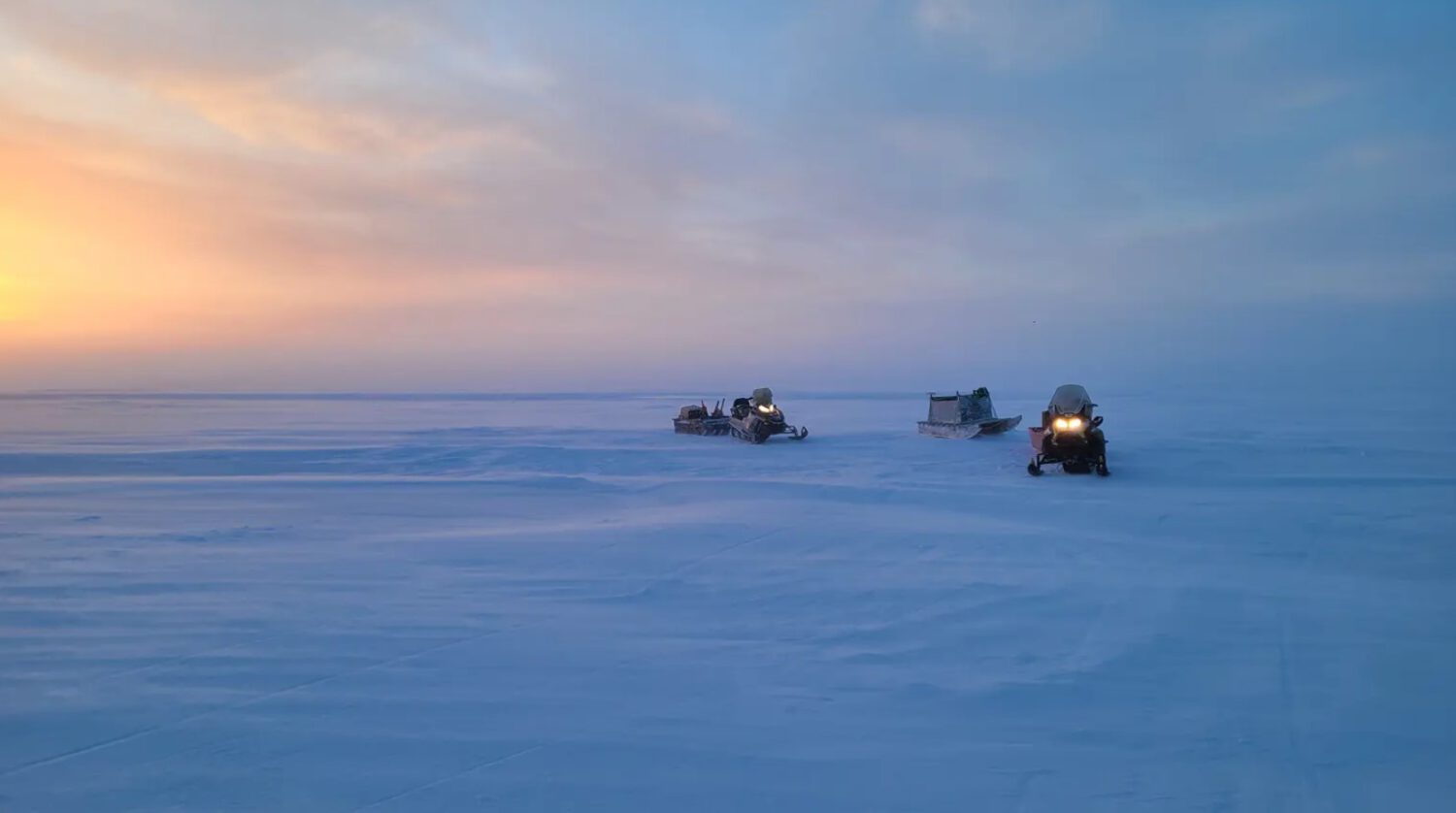
Up to 50 centimetres of additional ice thickness, generated over a roughly one-square-kilometre study area near Cambridge Bay, Nunavut, is the headline figure from the company’s latest work. Treatment was applied to only about a quarter of that site, so the thickening did not cover the full area.
The gap between that result and the company’s larger ambitions is where the real story lives.
Drill, Pump, Freeze
The method relies on a straightforward physical process, though its broader effectiveness remains under study.
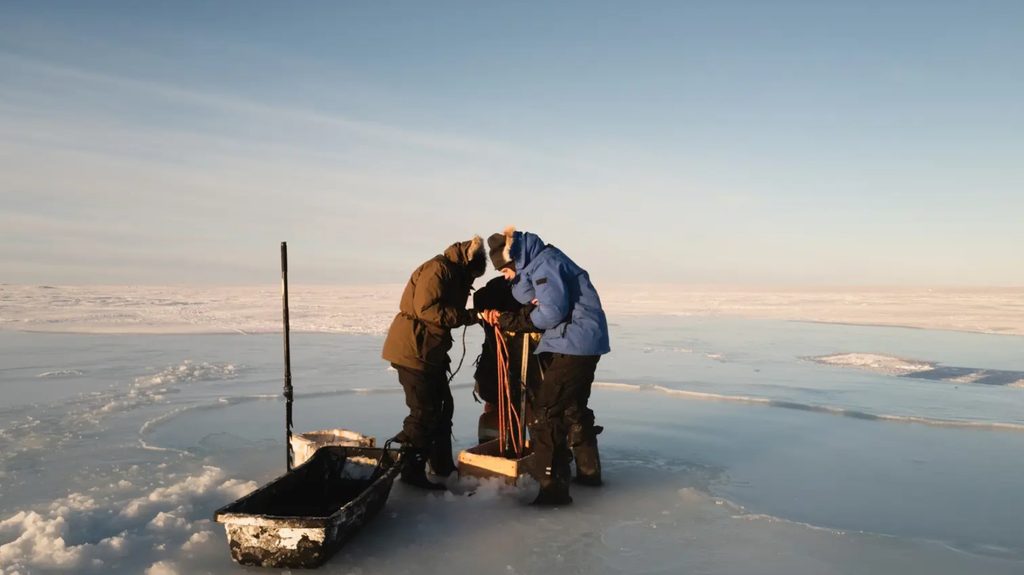
Workers drill or melt holes through existing winter sea ice, pump seawater onto the surface, and let the extreme cold freeze it into a new layer. Saturating or displacing insulating snow can also trigger additional freezing from below, as heat escapes more easily from the exposed ocean.
What the Results Actually Show
The strongest independently documented result comes from the 2024–25 field campaign, which found treated areas up to 30 to 32 centimetres thicker than untreated controls.
According to Real Ice, the additional thickness produced in its latest trials could extend ice survival by roughly seven to ten days into the melt season. That figure has not been independently confirmed in the available published evidence and should be understood as a company-reported projection.
The 2026 field season produced a reported result of approximately 50 centimetres by the start of the melt season. That figure also awaits independent peer-reviewed confirmation.
The Scale Problem Is Not a Footnote
The proposed deployment would require a fleet and a budget with no precedent in Arctic operations.
Real Ice estimates that meaningful regional impact would require treating approximately one million square kilometres of sea ice. According to the company’s preliminary projections, that scenario would involve roughly 500,000 autonomous underwater drones at an annual cost somewhere between $5 billion and $10 billion. Those figures are company estimates, not demonstrated operating costs.
Coordinating a fleet that size in polar darkness, sub-zero temperatures, and moving ice is a hardware and logistics challenge that dwarfs anything the field trials have tested. Manufacturing, transporting, refuelling, repairing, and replacing half a million machines in the Arctic is not a background assumption. It is the central unsolved problem.
Ecology Sits Between the Lab and the Field
Researchers and regulators have identified ecological questions that small-scale trials have not yet resolved.
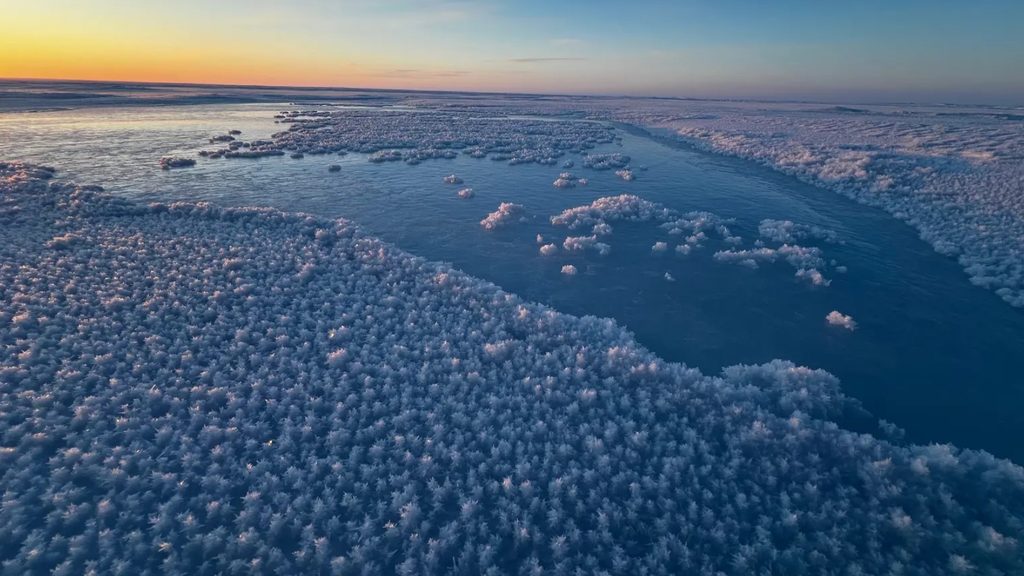
Pumping seawater onto ice introduces salt into an environment where natural ice formation largely excludes it. Researchers have raised concerns, documented by the project’s own permitting review, about effects on under-ice algae and the marine food webs that depend on them.
Covering snow with seawater may also disturb the structures ringed seals use for denning, with potential downstream effects on polar bears and other species. That risk has not been observed in the Real Ice trials; it remains a concern raised in the ecological literature.
Real Ice has stated it intends to avoid settlements, shipping lanes, and sensitive wildlife areas, and to work with Indigenous communities and biologists before expanding. The Cambridge Bay site was selected in collaboration with the Ekaluktutiak Hunters and Trappers Organization. Those are documented steps, though ecological safety and governance at larger scale have not yet been demonstrated.
Thicker ice that reflects more sunlight could theoretically slow local solar absorption during the melt season. Whether that produces a measurable climate benefit across a limited treatment area remains unproven.
This Does Not Touch the Atmosphere
Ice preservation addresses a symptom of warming, not its cause.
Preserving sea ice, even at scale, does not remove carbon dioxide from the atmosphere or slow the warming driven by greenhouse-gas emissions. It is, at best, a temporary buffer while emissions reductions address the underlying cause.
For scale: humanity emits roughly 910 million tonnes of CO2 in approximately eight days. Local ice restoration and global decarbonization are not competing strategies, but they are not equivalent ones either.
Where This Actually Stands
Real Ice has demonstrated localized winter ice thickening under tested conditions; the harder questions begin at the boundary of the pilot site.
The published field campaign confirmed that flooded areas grew meaningfully thicker than untreated controls. Independent ecological monitoring, transparent data sharing, and verification at meaningful scale remain open requirements, not solved ones.