



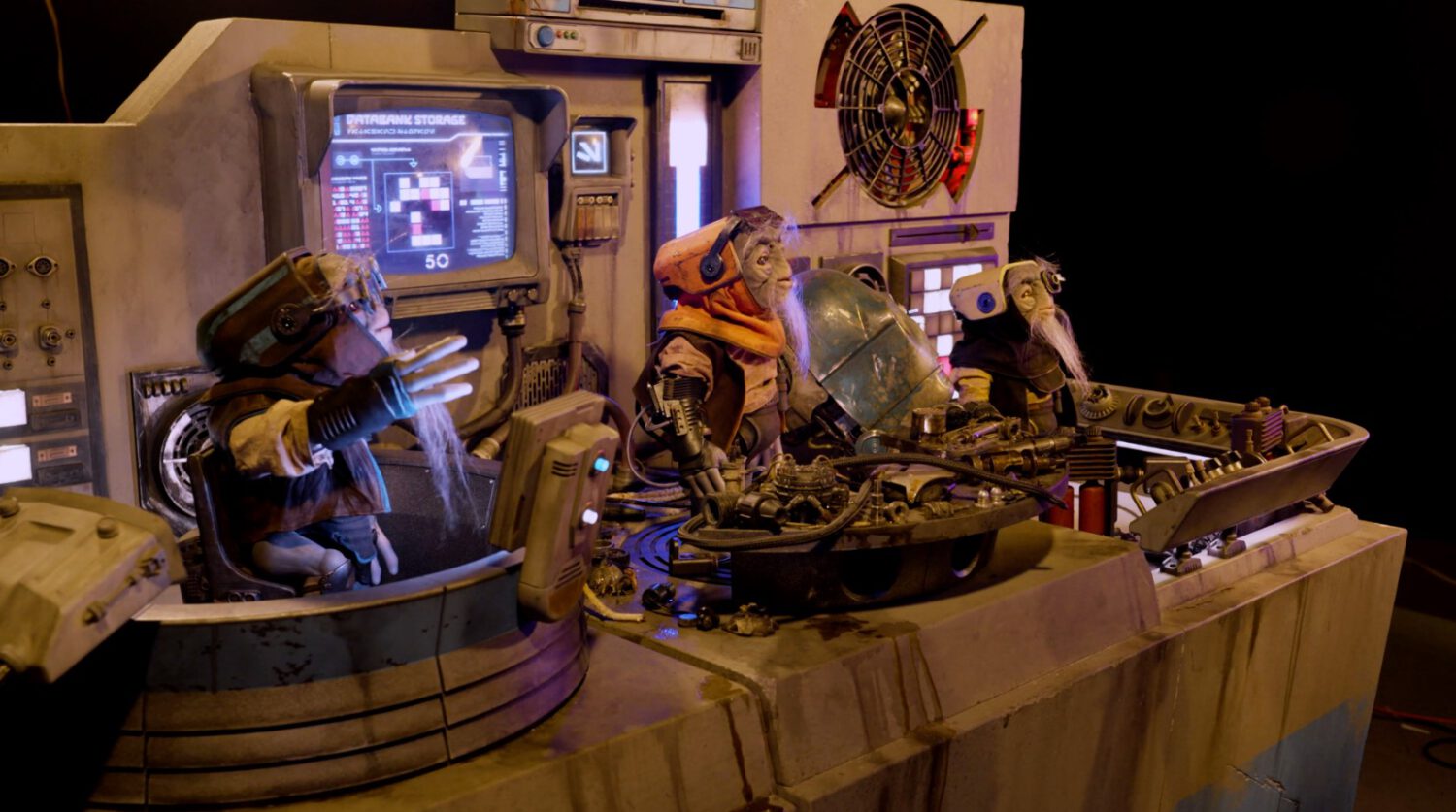
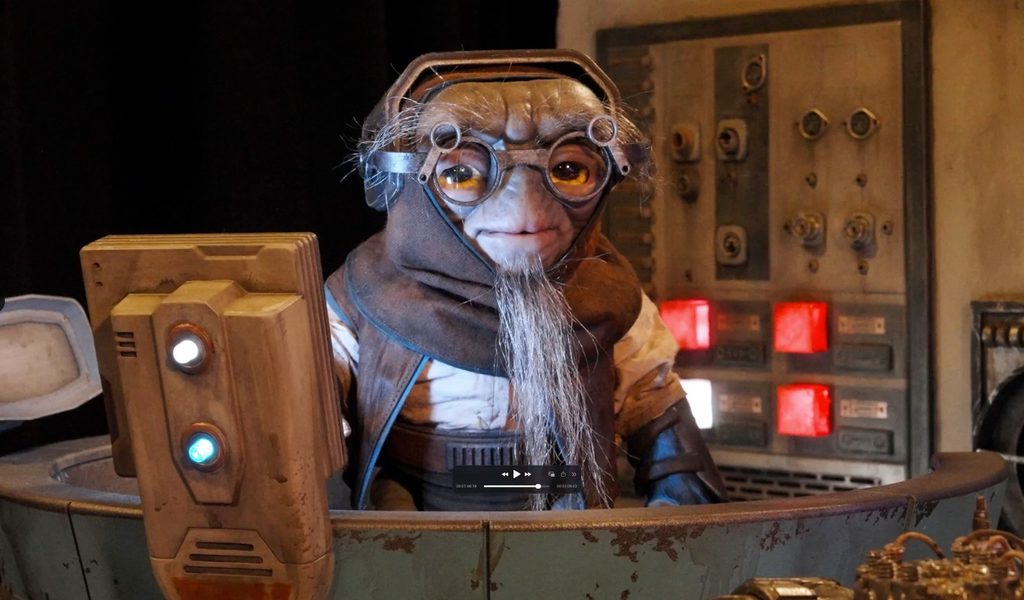
Traditional Audio-Animatronics follow a locked sequence: same lines, same timing, every cycle. Walt Disney Imagineering R&D’s three new prototypes, Vilo Vele, Kado Bre’a and Jibu Bre’a, work differently. They observe visitors and select a response from a pre-authored library in real time, with no hidden handler making those choices.
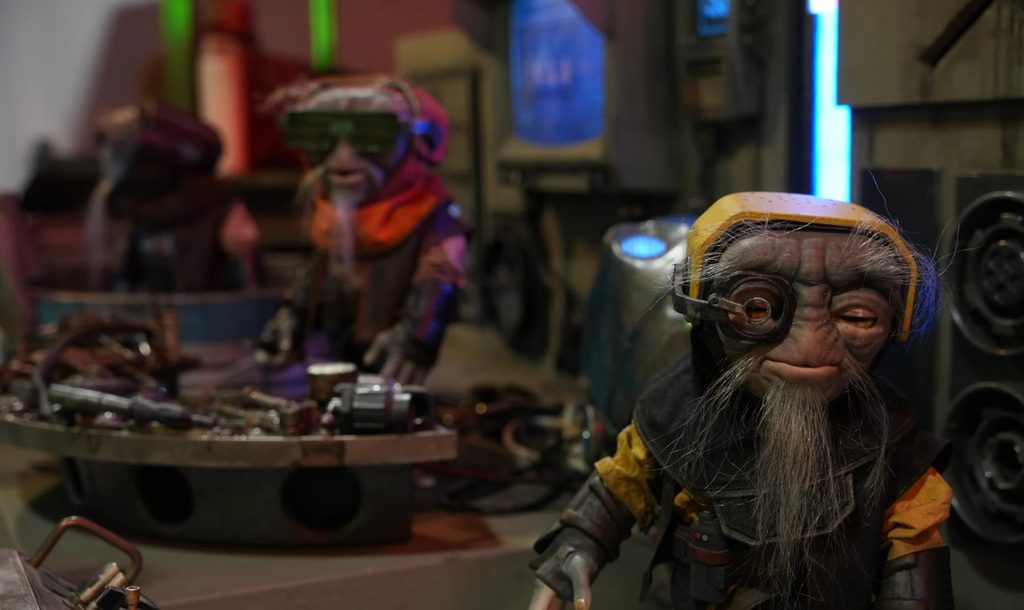
The characters are modeled on the Anzellans, the small alien species featured in “The Mandalorian and Grogu.” AWS supplies the cloud and AI infrastructure; Disney retains creative control over what the characters can say and do.
Sensors, Speed and Split Processing
A fast model handles eye contact and immediate gestures; larger models manage context and extended exchanges.
Each prototype uses cameras and microphones to capture guest movement and speech. That input feeds a multi-model AI system running through AWS cloud infrastructure. The split is deliberate: slow reactions break the sense of attention, so the architecture is designed to keep response times tight.
A faster model handles immediate cues, such as turning toward an approaching visitor or making eye contact. Larger contextual models then assess the broader situation and plan longer exchanges. Together, they are intended to make the characters feel present rather than mechanical.
What the AI Controls and What It Doesn’t
Imagineers authored all dialogue and choreographed all gestures in advance; the AI selects from that library rather than generating new content.
This is the design choice that separates the Anzellans from open-ended generative AI. Imagineers wrote the available lines, recorded the audio and designed the gestures before the system is deployed. The AI determines which approved response fits the moment and when to deploy it.
The result is interaction that can feel different from one visitor to the next, while the characters’ personalities, language and behavior remain within company-approved boundaries. The system selects from an authored library; it does not compose new material.
Three Characters Coordinating in Real Time
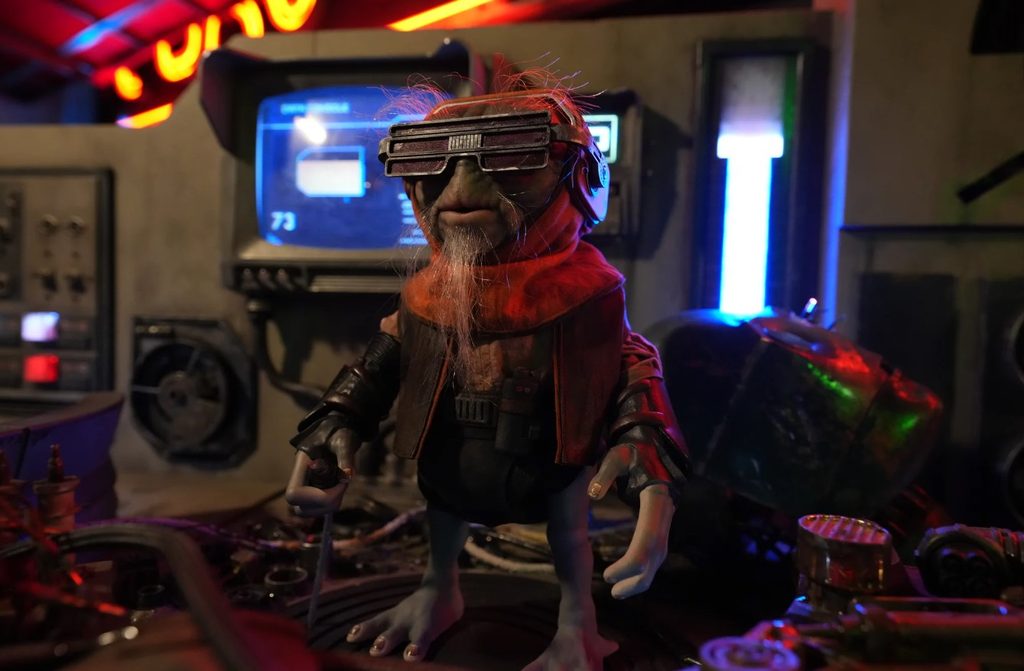
Multi-character coordination sets these prototypes apart from both scripted figures and operator-controlled robots.
In Disney’s demonstrated scenario, all three Anzellans notice an approaching guest, turn together and coordinate speech and gesture as a group. That coordination extends to interactions among the characters themselves. The arrangement differs from solo operator-controlled figures because the Anzellans make their own selections without a visible or concealed handler, a capability that echoes advances seen in the latest Humanoid Robot designs built for autonomous guest interaction.
The Las Vegas Stress Test
AWS re:Invent in Las Vegas gives Disney a real-world test with unpredictable crowds and ambient noise.
The prototypes are scheduled to interact with real visitors at AWS re:Invent in Las Vegas. A conference floor introduces competing noise, simultaneous conversations and unpredictable visitor behavior , conditions reminiscent of a real-world test for any autonomous system. Those conditions can surface challenges that controlled demonstrations may not reveal.
A reliable performance there would meaningfully strengthen the case for broader deployment.
No Park Date Yet
Future use in “Star Wars: Galaxy’s Edge” or other attractions remains speculative and unconfirmed.
Disney has not committed the characters to any theme-park installation. Potential applications in “Star Wars: Galaxy’s Edge” or other attractions remain unannounced. AWS and Disney already share a broader technology relationship, including cloud infrastructure supporting Disney+, and the Anzellan project extends that partnership into physical guest-facing entertainment.
If the system performs reliably at re:Invent, Disney will have a tested model for characters that feel autonomous while remaining constrained by their designers. What comes next remains unannounced, even if the dialogue already isn’t.