Nvidia says its new TCBP-JOBS algorithm, integrated into its CUDA-Q platform, compresses a quantum research workflow that previously took 12 weeks down to 45 minutes. That figure covers the time researchers spend analyzing and simulating quantum-error-correction designs, not the runtime of a finished quantum application doing useful work.
The Algorithm Behind the Claim
TCBP-JOBS is a classical decoding tool, not a quantum chip, and its benchmark numbers come from Nvidia.
TCBP-JOBS is a software algorithm running on conventional accelerated hardware that handles the decoding side of quantum-error-correction research. Nvidia reports it delivers up to a 13,000-fold speed improvement, a figure the company’s technical paper describes as a maximum result measured against specific configurations of a competing decoder called Tesseract, on bivariate-bicycle code workloads. Nvidia’s own documentation provides benchmark methodology, but no independent external validation has appeared in current reporting.
Why Error-Correction Decoding Is the Bottleneck
Quantum processors generate noisy, error-prone results, and testing schemes to manage that noise is where most research time goes.
Quantum processors are highly sensitive to multiple sources of physical noise, which causes them to produce error-prone results. Researchers must continually design and test schemes for interpreting that noise and identifying likely errors, a process called decoding. Faster decoding shortens the feedback loop between designing a new quantum architecture and evaluating whether it actually works.
IBM, Fermilab, and the Collaboration Layer
Nvidia is connecting its GPU infrastructure to quantum hardware through a joint platform with two major partners.
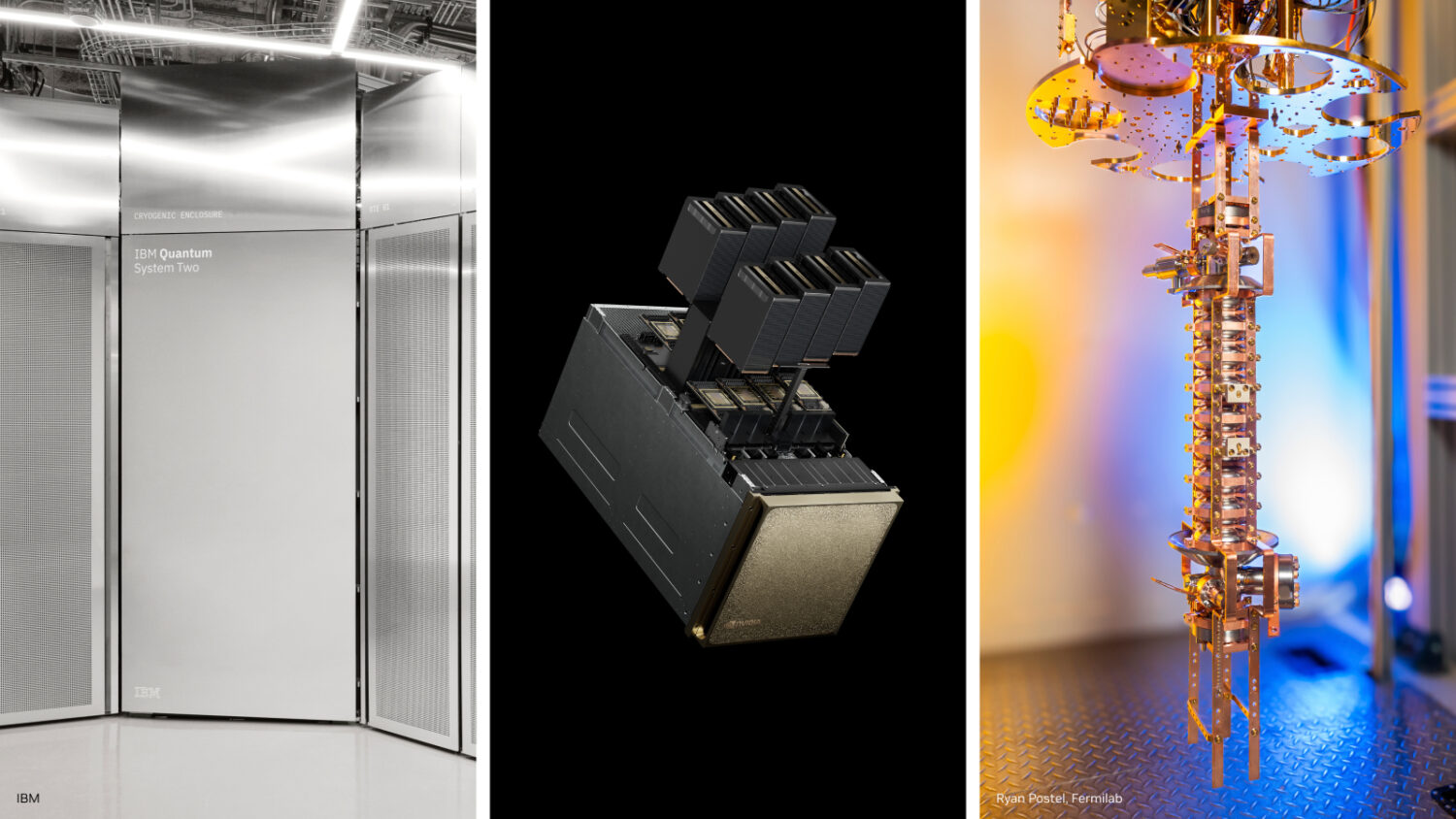
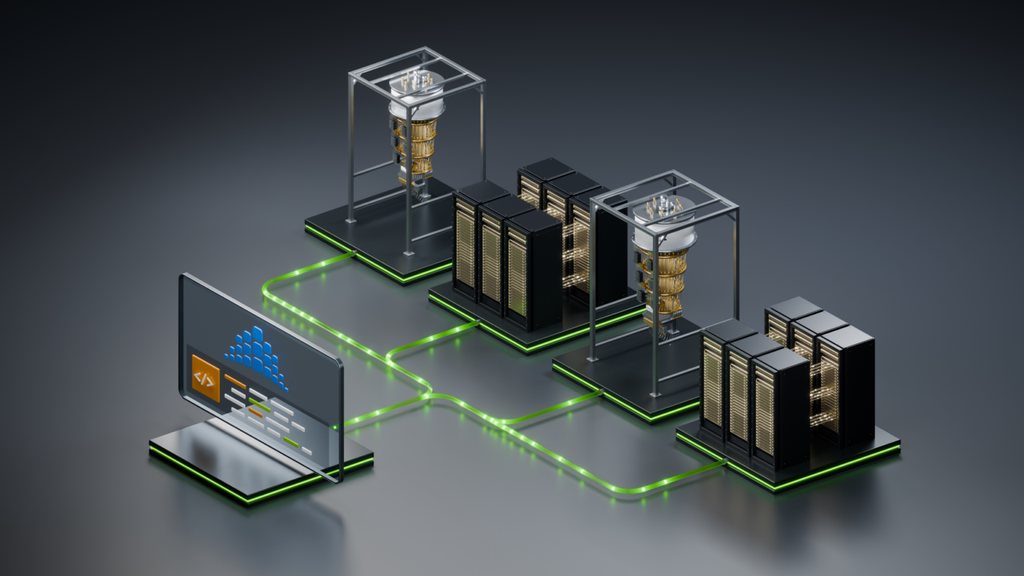
Alongside the algorithm announcement, Nvidia disclosed a quantum-classical codesign platform built with IBM and Fermi National Accelerator Laboratory, a U.S. Department of Energy facility. The platform pairs Nvidia GPUs and CUDA-Q software with IBM quantum computers to support research into modular quantum architectures and scientific computing applications. Nvidia also reported that Fermilab used CUDA-Q to complete studies in three weeks that would normally have required five months; Nvidia attributes that result to its own platform, and no independent verification has been published.
Nvidia’s Position in the Quantum Market
The strategy here is not to build quantum hardware but to supply the infrastructure layer surrounding it.
CUDA-Q is designed to coordinate quantum processing units, GPUs, and conventional CPUs within a single workflow, positioning Nvidia as an operating-system layer for quantum-classical supercomputing centers. Expanded support for Slurm, a widely used workload manager at high-performance-computing facilities, is intended to make quantum processors easier to schedule alongside conventional resources. Both efforts reflect Nvidia’s approach of selling accelerated classical infrastructure rather than competing in quantum hardware directly.
What the Announcement Does Not Establish
A research-workflow speedup is not evidence that fault-tolerant quantum computing is commercially ready.
This announcement describes a software and classical-computing advance supporting quantum research, not the construction of a universal or fault-tolerant quantum computer. The 13,000-fold improvement is Nvidia’s own reported figure, measured against specified decoder configurations, and independent peer-reviewed assessment is not available in current reporting. The 45-minute result reflects faster classical computation used to study quantum-error-correction designs; it does not describe a quantum processor completing an enterprise or scientific application in that time.