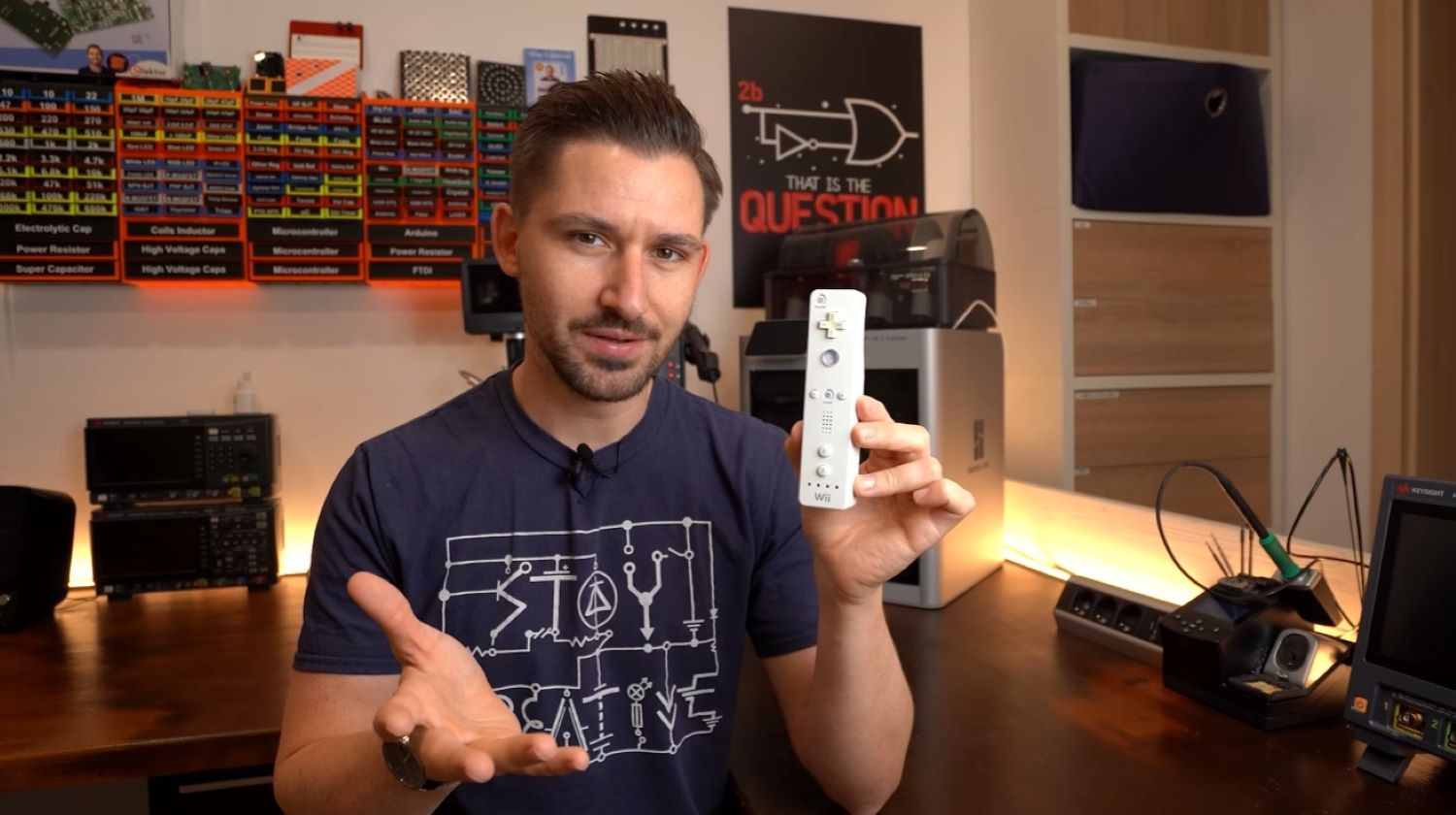
The Wii Remote is basically a museum piece now, a relic from the era when motion controls were going to change everything. Turns out they changed one thing: they filled a lot of closets with orphaned hardware.
GreatScott! found a better use for one. The build replaces most of the original internals with a Seeed Studio XIAO ESP32S3 Sense board, a front-facing camera module, a lithium-polymer battery, and a small piezo buzzer for feedback.
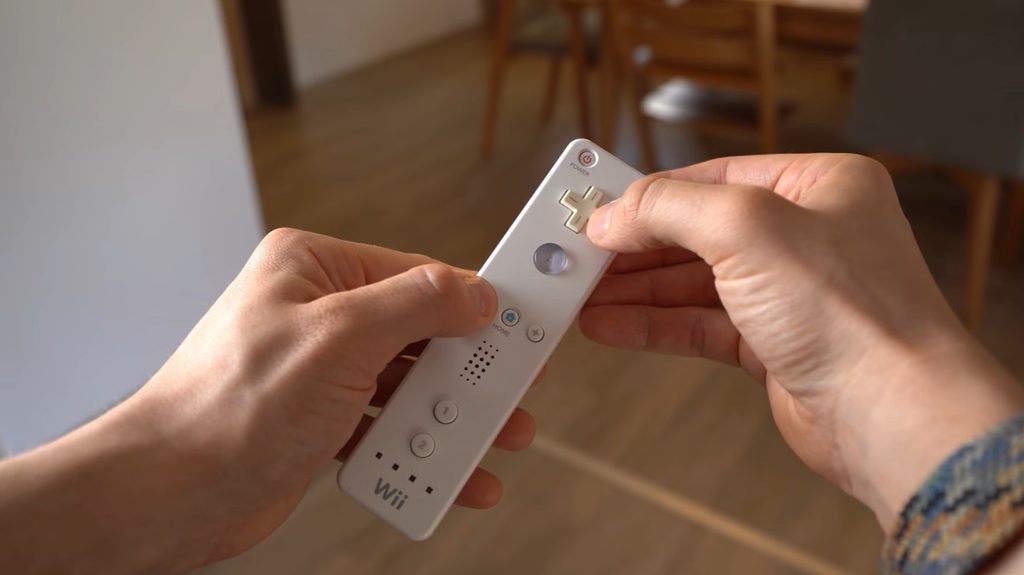
Outside, it largely retains the appearance of a standard smart home controller.
Point It, Press It, Wait for the Beep
The interaction strips everything down to two buttons and a 1.4-second pause.
Point the remote at an appliance, press Home to trigger classification, and wait about 1.4 seconds for a beep. Then press A to activate whatever the system thinks you’re targeting.
The camera captures a 96×96-pixel frame and passes it to a quantized neural network running entirely on the ESP32. That model is 35 kilobytes. No cloud, no sending your living room footage anywhere. Commands travel via MQTT to Home Assistant, which fires the appropriate Shelly smart relay or plug. Note that Wi-Fi is still required for those appliance commands to reach Home Assistant.
Training a Brain on 1,000 Photos
GreatScott! assembled the dataset personally, shooting more than a thousand photos across varied rooms and lighting conditions.
The images sorted into seven categories, including an “unknown” class for scenes the system should ignore. Training ran for roughly 50 iterations on an 80/20 train-validation split.
The best resulting model hit 87.78% accuracy on reserved validation images. For a 35KB network running on a microcontroller, that is a genuinely solid result, though validation accuracy and real-world reliability are two different things.
Where the Concept Gets Honest With Itself
Real-world testing revealed a structural limitation baked into how the model sees the world.
When lighting shifted, furniture moved, or two similar appliances shared a frame, success dropped to roughly two out of three attempts. The root cause is not accidental.
The model classifies entire scenes rather than detecting specific objects. A rearranged couch or a different lamp in the background can confuse the system even when the target appliance has not moved. That gap between scene classification and object detection is the single biggest distance between “impressive demo” and “daily driver.” Readers curious about AI-powered tools beyond the hardware realm may find that context useful.
Why This Build Still Earns Its Place
Edge AI running locally on repurposed hardware points toward something worth paying attention to.
A 35KB model running offline on salvaged consumer hardware is a compelling combination, even at two-thirds reliability. The maker community has been reviving Wii Remotes with ESP32 boards and Home Assistant integration for some time, treating the shell as a surprisingly ergonomic enclosure rather than electronic waste.
GreatScott!’s version adds a camera and a neural network to that lineage. A future iteration using object detection instead of scene classification would close the reliability gap considerably. Adding a confidence threshold before anything switches on would help further. Those are not documented features; they are the logical next step.
For now, this is a clever proof of concept that is honest about its own limitations. It will not replace your actual remotes. It will, however, make you look at the one gathering dust in your closet and wonder what else it could become.