Parasite pressure in Norwegian salmon farming is persistent and costly. Sea lice attach to fish and feed on their skin, causing tissue damage, stress, and impaired health across millions of animals held in net pens.
The industry’s standard responses, including mechanical removal and thermal delousing (brief immersion in heated water to dislodge parasites), create a second set of welfare problems alongside the first. Norway’s Veterinary Institute identifies injuries from delousing as a leading cause of mortality and reduced welfare in farmed salmon.
How the Robots Work
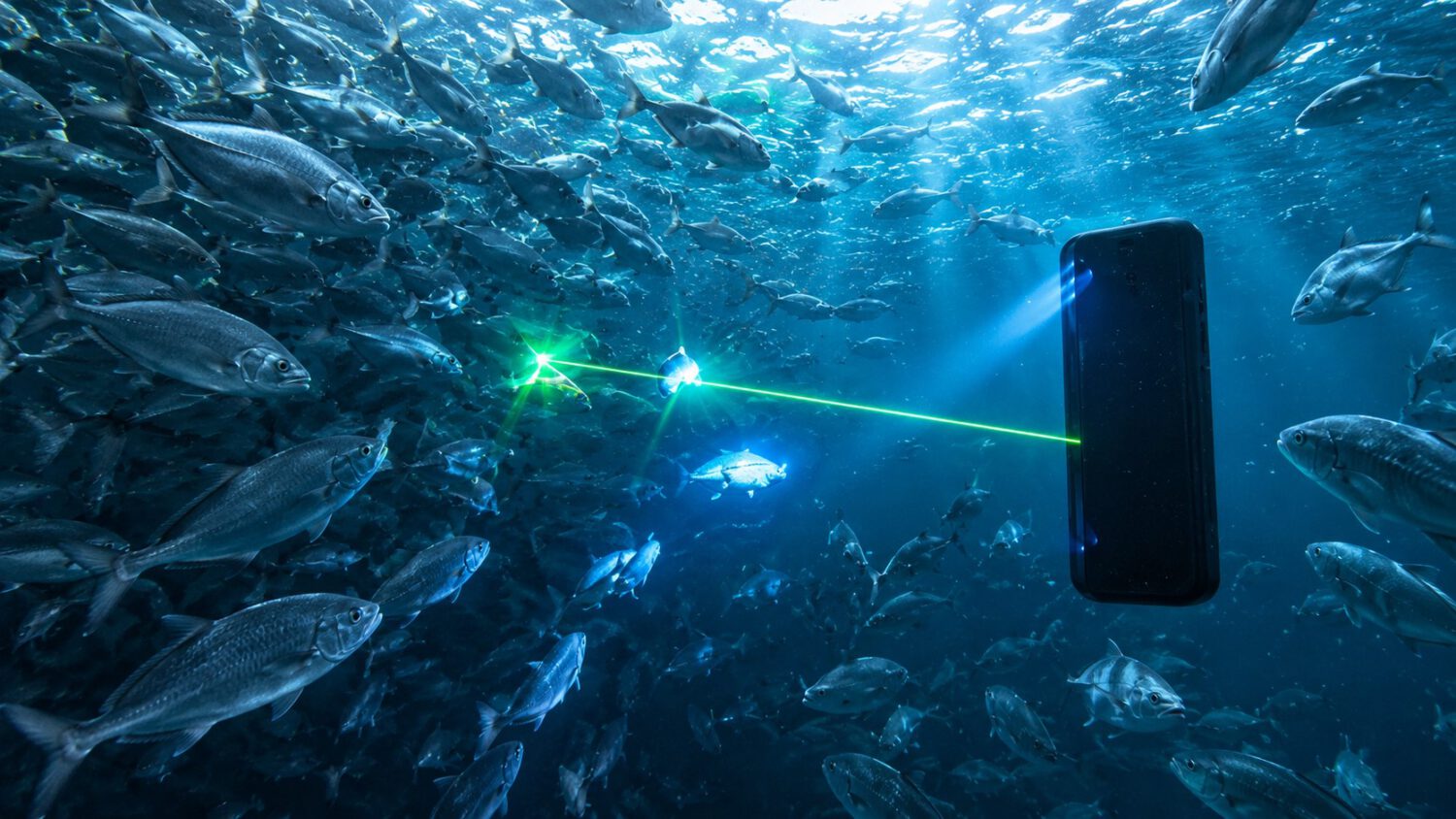
Stingray Marine Solutions uses stereo cameras, blue-light illumination, and precision lasers to kill individual sea lice while fish swim freely, though all performance figures remain the company’s own claims.
Stingray Marine Solutions deploys underwater robots that combine stereo cameras, blue-light illumination, and precision lasers to identify and kill individual sea lice while fish swim freely. The blue light improves contrast between the parasite and the salmon’s skin, allowing the system’s software to distinguish target from host.
According to Stingray, units can fire up to five laser pulses per second and operate continuously, 24 hours a day. The company says more than 2,000 of its robots are currently protecting more than 50 million salmon and trout across Norwegian farms; those figures have not been independently verified.
The Problem the Robots Are Replacing
Documented mortality data from conventional delousing illustrates why farms are seeking an alternative, and the numbers are substantial even when outcomes vary.
The scale of harm from conventional delousing is documented. Research summarized via the FAO AGRIS database found that for a typical cage of 150,000 fish, the median mortality within two weeks reached 790 after thermal treatment. Mechanical treatment pushed that figure to 928, though outcomes varied widely across sites.
Fish-health personnel, inspectors, and advisers surveyed by Norway’s Veterinary Institute ranked post-delousing injuries as the single most important cause of salmon mortality. A peer-reviewed study published in the Journal of Fish Diseases found that mechanical delousing can trigger pathological changes and deaths for days after a single treatment event.
Continuous laser treatment, if effective, sidesteps the crowding and physical handling that are associated with those outcomes.
Where the Technology Falls Short
Official health reporting shows that laser effectiveness is uneven, and an emerging eye-injury concern means the technology’s welfare trade-offs are not yet fully understood.
Norway’s Veterinary Institute’s 2024 Fish Health Report states that laser performance depends on lice pressure, water currents, and unit count. Equipment positioning within each pen also affects results, the report states.
Fish-health respondents described lasers as most useful when infestation levels were low. During periods of high lice pressure, the technology’s impact was harder to observe.
There is also a welfare concern tied to the lasers themselves. Norway’s Veterinary Institute has recorded reports of severe unilateral cataracts in harvest-size salmon at sites using laser systems. That is a documented concern, not evidence that every installation causes harm, but it means the technology’s welfare balance sheet is not yet settled.
Continuous Management, Not a Cure
Laser robots represent a meaningful step toward reducing handling-related harm, but the available evidence does not support treating them as a complete solution to sea-lice management.
Laser robots may allow farms to reduce or delay some large-scale delousing events, which is a meaningful gain given the mortality those events can produce. Available evidence does not establish that the technology eliminates sea-lice treatment or resolves the broader welfare problems associated with intensive salmon farming.
Whether the system delivers consistent results under the heaviest infestation loads Norwegian farms face remains the central unanswered question. Until that is established across a range of real-world conditions, the technology is best understood as continuous parasite management rather than a definitive solution.