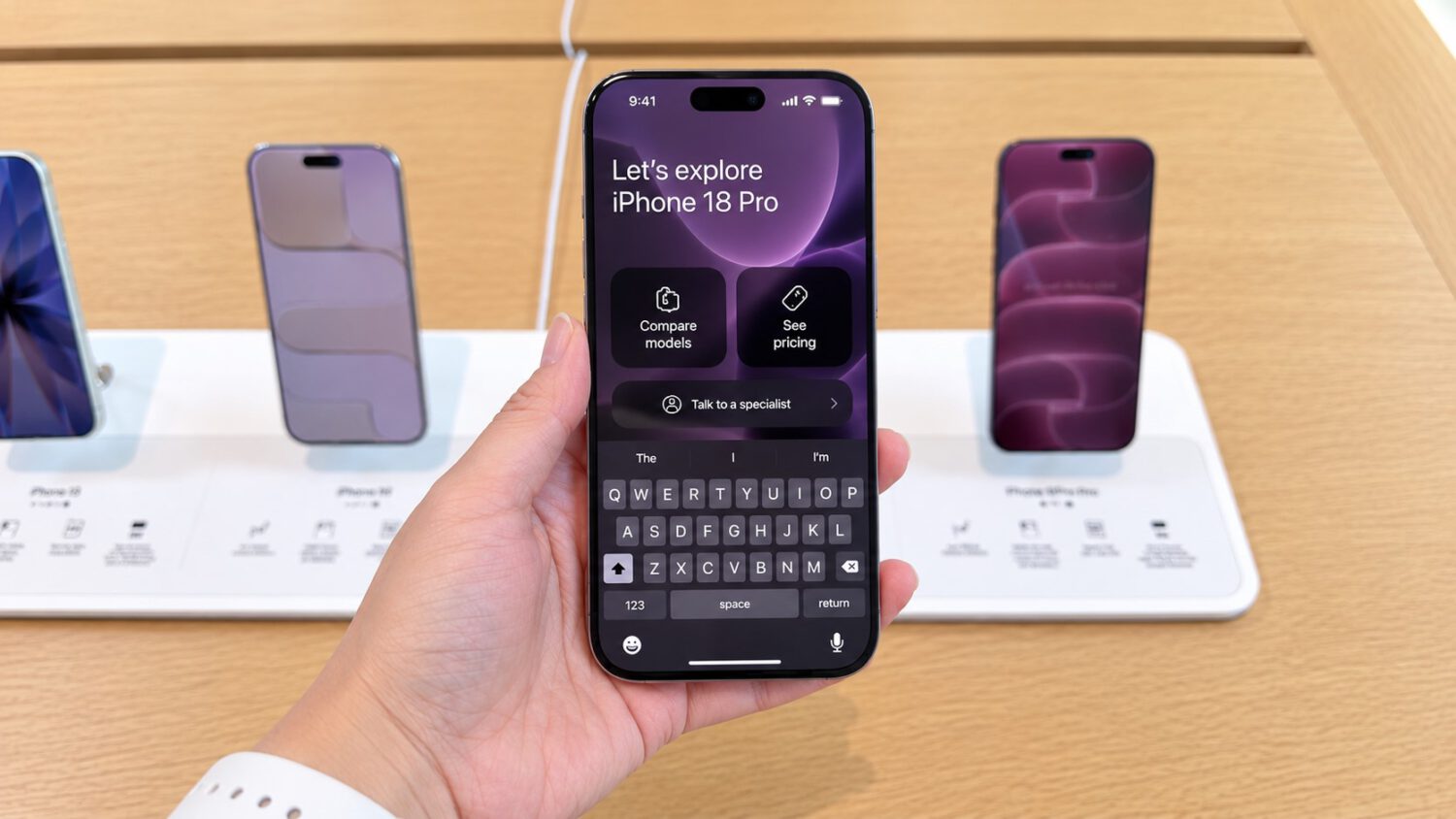
Swipe “dictator Trump” on an iPhone and the keyboard produces a lowercase “trump.” The autocomplete bar offers “dictator trumps” instead. Reporting from Reuters indicates this is not a glitch but reflects how Apple’s keyboard is designed to handle certain phrases, much like how other tech systems have been caught secretly tracking users without disclosure.
The Researcher Who Cracked the Hash Table
An independent researcher found roughly 100,000 words and phrases excluded from iOS predictive suggestions, stored in a hidden file deep inside the operating system.
Independent researcher Derik Kauffman identified an undisclosed iOS list containing roughly 100,000 words, phrases, and variants across multiple languages. A second independent researcher confirmed the same list, according to Reuters.
To be precise about what this list actually does: it excludes phrases from predictive suggestions and swipe-typing results in most cases. Users can still type any of these terms manually, one character at a time, and the filtering operates at the suggestion layer, not the input layer.
From “Sleepy Joe” to “Santa Isn’t Real”
The list spans political slogans, regional independence terms, and oddly mundane phrases, raising questions that Apple’s stated rationale does not fully answer.
The range of what Apple has excluded tells a more complicated story than “avoiding offensive content.” Political phrases from both directions appear: “dictator Trump,” “sleepy Joe,” “left wing conspiracy,” and “right wing conspiracy.” Regional independence terms also appear, including “Tibetan independence” and “United Ireland,” alongside entries like “Santa isn’t real” and “iMessage isn’t working” that fit no obvious harm-prevention rationale.
Reuters found politically sensitive phrases filtered in Hindi, French, and Hebrew as well, indicating that Apple’s editorial judgments vary by language and region.
Where Apple’s Explanation Starts to Buckle
Apparent asymmetries in the list, including gendered phrases treated differently from their counterparts, suggest the filtering criteria extend well beyond a straightforward slur or explicit-content filter.
The inconsistencies are harder to set aside. According to Kauffman’s findings, “bad girl” is excluded from suggestions while “bad boy” is not, a discrepancy that does not align cleanly with a policy designed to block slurs or explicit content. Apple has offered no public accounting for individual entries and no explanation for discrepancies, a pattern that also surfaced when Apple’s Confidential Files were left exposed to ex-employees.
Apple told Reuters the keyboard is designed to avoid “potentially inappropriate or offensive suggestions,” and that users can type what they want and override predictive-text suggestions. Both points are accurate. Neither explains why particular political phrases, regional independence terms, or benign statements about a messaging app appear on the list.
The Autocomplete Isn’t a Mirror
When a filtering system operates across hundreds of millions of devices without published criteria or a public review process, its invisible choices become a transparency problem.
Predictive keyboards necessarily make choices about which phrases to surface, and research into keyboard skills shows how heavily users rely on these suggestions. Apple’s system operates through criteria the company has never published, with no publicly documented review process, and with regional variations users have no way to examine. When a phrase requires extra keystrokes because the keyboard does not suggest it, some users will rephrase, abbreviate, or drop the thought entirely. That is a form of influence, whether or not it was intended as one.
What Apple Should Actually Do
Publishing the filtering criteria, clarifying regional variation, and creating a review process for contested entries would bring Apple’s keyboard practices in line with the transparency its scale demands.
Apple should publish the criteria it uses to determine which phrases are excluded from suggestions. It should also clarify how language- and region-specific variations are decided, and create a transparent review process for entries that do not fit the stated rationale. A system affecting this many devices, across this many languages, warrants a public accounting of how those decisions are made and by whom.