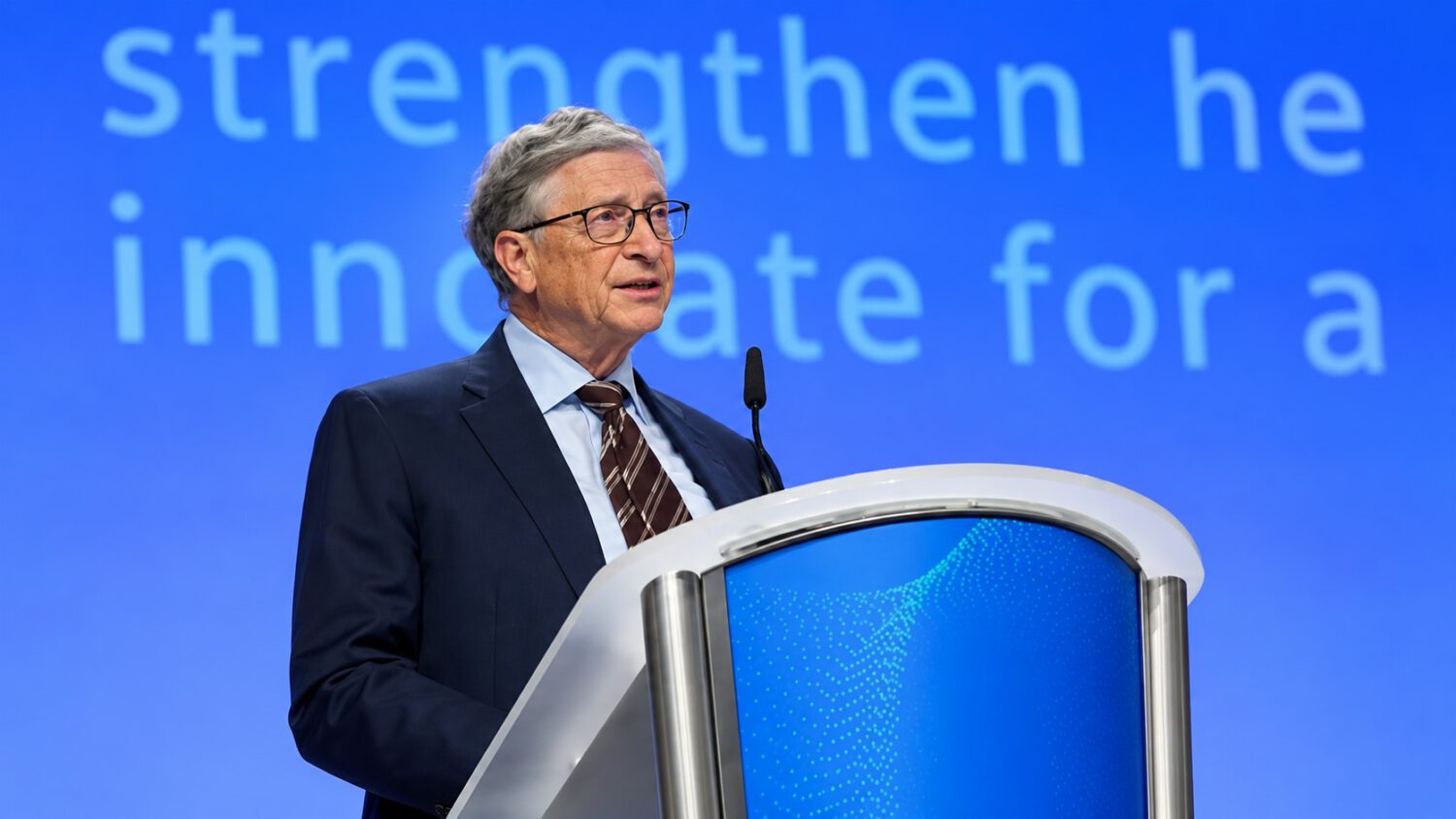
The Gates Foundation announced a $1 billion commitment to build and deliver AI tools across education, health care, and agriculture, with education receiving 40% of that total. The stated goal is AI tutoring that individualizes instruction for students who have fallen behind, piloted first in schools serving large shares of low-income students, with teacher training and independent evaluation built in.
The Structural Problem That Money Alone Cannot Solve
Teachers say the schools with the greatest need may be least equipped to absorb what the foundation is offering.
Siobhan Casey, principal of Crimson Global Academy’s Greenwich Campus, told Fortune that AI can support teacher expertise, but it cannot replace it. That distinction matters because the foundation’s model still requires educators to verify accuracy, align content to learning objectives, and judge whether the level of challenge is appropriate for each student.
Amy McBride, a teacher at Pepin Academies, argued that providing a tool does not automatically give schools the time, training, or staffing support needed to use it well. Students who need the most help may also require the most adult guidance to use AI effectively at all, she added.
That tension sits at the center of this investment. Dora Palfi, CEO and co-founder of edtech platform Imagi, warned that some schools may need to address foundational literacy and numeracy before deploying sophisticated AI systems. Without that groundwork, better-resourced districts may capture the most practical benefit first, according to Palfi.
Salena Davis, a history teacher at Laurel Springs School, raised a related concern: apparent performance gains could be temporary, driven by novelty rather than genuine mastery. Students with weaker foundational knowledge, she noted, are also less likely to recognize when an AI response is inaccurate or incomplete. That gap creates a compounding risk in the classrooms this investment is meant to serve.
New York City Chose the Opposite Direction
While the Gates Foundation funds broader adoption, the nation’s largest school district is hitting pause.
New York City announced a moratorium on student-facing generative AI for grades 2-K through 8 during the 2026–27 school year, covering nearly 600,000 students, according to the city’s official announcement. Where the city does permit pilots, they are capped at 45 minutes per week, limited to vetted programs, and kept under direct teacher supervision. The two approaches reflect the same underlying concern about evidence; they reach opposite conclusions about what caution requires right now.
Three Tests This Investment Needs to Pass
Operational efficiency is the easiest bar to clear. Durable equity outcomes are the only ones that matter.
The foundation has acknowledged that prior ed-tech adoption too often lacked sufficient evidence, which makes its proposed safeguards the most consequential part of this commitment. Three outcomes need to be measured and reported. First: whether AI saves teacher training time and produces better instructional materials. Second: whether students demonstrate durable, independent mastery rather than novelty-period score bumps. Third: whether schools with the greatest structural deficits benefit as much as well-resourced districts.
Reporting only on average gains would obscure the equity question. Failed pilots, implementation costs, and cases where human instruction outperformed AI all belong in the public record. That transparency is what separates evidence-based intervention from another cycle of well-intentioned technology experimentation.