According to Variety, Peter Ocko will serve as writer and showrunner on an eight-episode series for Amazon MGM Studios, with James Wan, Michael Clear, Rob Hackett, and original co-creator Ed Neumeier among the executive producers. The core conceit stays intact: a technology conglomerate persuades a city to put a surveillance app to target civilians , or, here, a robot on its police force, with the machine implanted with the consciousness of a fallen officer.
Neumeier co-wrote the screenplay in 1987. According to the reported premise, it required no structural update to feel current.
The film was never really about the robot. It was about who owns the robot, who profits from deploying it, and who answers for it when something goes wrong.
ED-209 Was a Warning, Not a Blueprint
The hardware is already here. The governance is not.
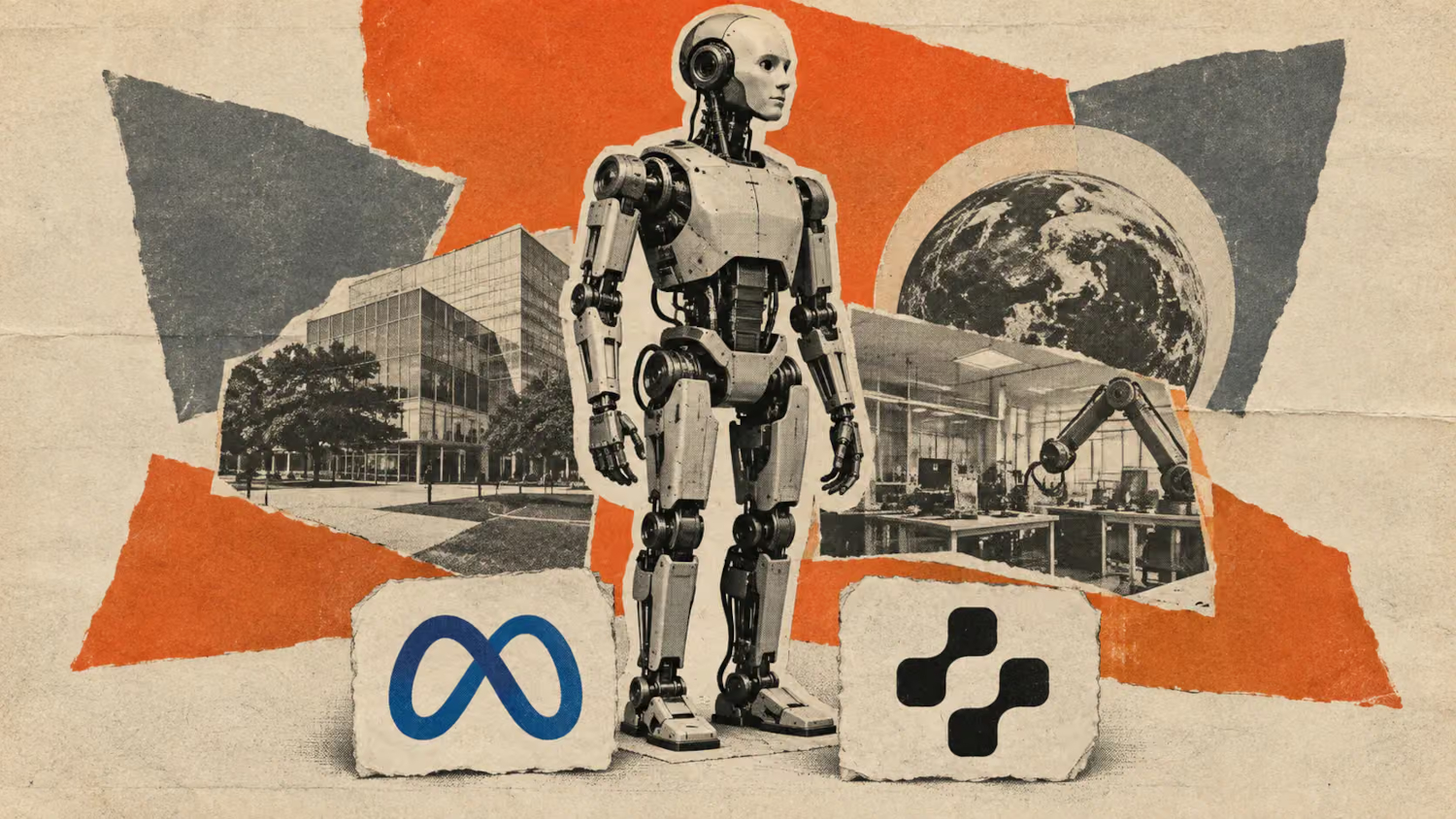
Unitree markets its H2-X humanoid robot for security operations and protection. The specs, per the company’s own product page, are specific: approximately 1.7 meters tall, over 65 kilograms, 31 degrees of freedom, and onboard visual sensing.
Unitree’s product page describes the robot as intended for patrol, alert, safeguarding, and building a physical protective barrier. That is a commercial company marketing humanoid hardware for security-related applications.
The H2-X is not an ED-209. The cited product page does not identify weapons or autonomous law-enforcement capability. The convergence itself, though, is the point RoboCop was making.
Omni Consumer Products did not start with a murderous prototype. It started with a pitch deck and a city desperate for solutions.
When the Algorithm Flags You, Who Do You Call?
AI surveillance distributes responsibility until nobody holds it.
Facial-recognition systems, automated risk scoring, and algorithmic flagging tools can shift consequential decisions toward privately developed software running on privately controlled data. When one of those systems targets a person, responsibility may be spread across police agencies, software vendors, contractors, and data providers , a dynamic explored in depth in San Jose’s Flock problem.
Critics argue that fragmented responsibility can make remedies difficult to pursue. Details of specific deployments vary and require independent verification, so no named contracts are cited here.
OCP’s real power in the film was not the robot. It was the contract.
The Spreadsheet Is the Science Fiction
Public agencies in many contexts rely on private infrastructure for core safety functions.
The deepest parallel to RoboCop’s world is not a humanoid on patrol. It is the infrastructure layer underneath. Public agencies may depend on private companies for the networks, databases, sensors, and cloud systems that safety operations run on.
Procurement agreements can shape operational priorities without the transparency normally attached to legislation or public debate. What efficiency sells is an arrangement neither side has fully priced in public.
When vendor priorities and public interests diverge, the contract decides who wins. It was not drafted in public, and it rarely gets revised there either.
Four Things That Should Change Before the Next Contract Renewal
The accountability gap is a policy failure, not an inevitability.
The question is not whether automated systems belong in policing contexts at all. The question is whether procurement preserves meaningful public control.
Four standards should be non-negotiable. First, mandate public disclosure of every automated system used in any policing or public-safety context. Second, require independent auditing of algorithmic tools before deployment, not after a harmful outcome surfaces. Third, assign clear legal liability when an automated system produces harm: not diffused across a vendor chain, but assigned. Fourth, enforce procurement rules that prevent single-vendor lock-in on critical public-safety infrastructure , a concern that mirrors how government health, financial, and legal data protections have driven policy in Europe , because dependency is leverage, and leverage gets used.
These are not radical proposals. They are the minimum conditions for public accountability in any domain, applied to one that has quietly drifted away from them.
The Premise Didn’t Need Rewriting
Neumeier’s 1987 screenplay still fits. That should disturb you more than it comforts you.
Ed Neumeier co-wrote RoboCop nearly four decades ago. According to entertainment reporting, he is now an executive producer on the Prime Video reboot. That is not a creative coincidence; it is a diagnostic one.
The concern is not that the technology exists. Technology advances; that is what it does. Innovation and efficiency make privatized systems attractive before the harder questions surface. Who sets the rules? Who audits the outcomes? Who suffers when the system fails?
Those questions do not answer themselves. The companies marketing the systems have limited structural incentive to ask them on the public’s behalf.