Seven years is a long time to spend on anything. It is an especially long time to spend on something that looks like a prop from a Nickelodeon game show but actually requires structural engineering to keep from cracking in half.
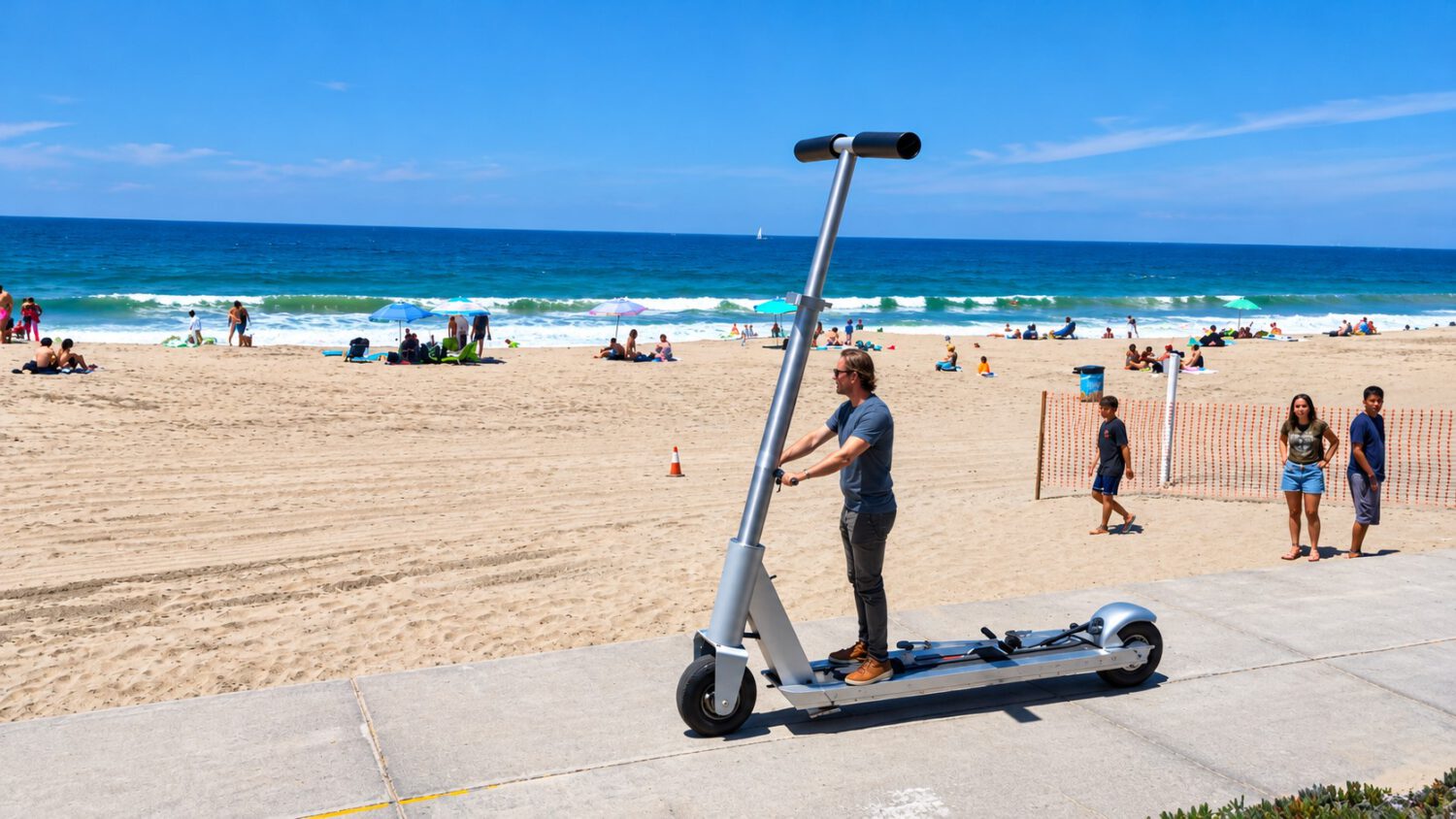
Matt Brown, the engineer and YouTube creator behind SuperfastMatt, has completed what he describes as the largest two-wheeled Razor-style scooter he has encountered. The machine is approximately 8 feet long, built from wood, aluminum sheeting, and salvaged hardware.
Seven Years, One Very Large Scooter
Brown’s project began with a CAD concept that exceeded 20 feet and had to be rebuilt almost from scratch before it became rideable.
Where most scooter projects end at the hardware store, Brown’s began in CAD software. His first scaled concept stretched past 20 feet, which was impractical to store and nearly impossible to turn in a standard parking area.
He redesigned the entire concept around a fat-tire electric-scooter wheel. That decision brought the final length down to roughly 8 feet, with a deck sized to standard lumber dimensions.
The finished machine uses a wooden structural frame reinforced with two-by-fours and a half-inch plywood top plate. Aluminum exterior panels cover the frame, shaped to recreate the look of an oversized Razor scooter.
A center tread strip sharpens the visual resemblance. Several components, including fork covers, tubes, and a telescoping handlebar clamp, came from a 3D printer.
The motor and electronics originated from a secondhand fat-tire electric scooter. Brown initially repaired the original battery cells himself, but years of inactivity during the project’s many interruptions caused the pack to fail.
Replacement battery packs arrived just in time to keep the build from being discarded. Brown has not announced any commercial plans for the scooter.
Looks Easy, Rides Hard
The scooter steers, but early handling required a turning radius Brown compared to maneuvering a battleship.
Swapping the original taller handlebars for a set taken from a standard Razor scooter improved control significantly. That change made the machine usable at low speeds where it had previously been difficult to direct.
Reliability remained a work in progress. On one occasion, faulty battery indicators gave Brown a false reading and he ended up pushing the scooter home.
Two standard Razor scooters were mounted on the rear deck to carry passengers. Adding riders made maneuvering in tight spaces considerably harder.
Not Quite a Record, But Close Enough to Draw a Crowd
Brown’s claim is specific and self-attributed: the largest two-wheeled Razor-style scooter he has encountered, not an independently certified title.
Oliver Tree previously built a giant scooter, but the available reporting does not establish its wheel configuration with sufficient detail to make a direct comparison. Brown’s informal claim rests on the two-wheeled distinction.
Children, adults, and passing runners regularly stop for photographs. At its desert debut, the scooter drew steady attention as a photo opportunity.
Brown has described the finished machine as an engineering demonstration rather than practical transportation, and the documented reliability issues support that framing.