Fine-particle pollution inside Manhattan’s tolling zone dropped roughly 13% below levels expected from comparison-site trends during the first full year of New York City’s congestion-pricing program. The finding comes from a Columbia University’s Lamont-Doherty Earth Observatory study published in Environmental Science and Technology Letters.
That figure represents an estimated decline of 1.3 to 1.4 micrograms per cubic meter of PM2.5, the fine particulate matter small enough to penetrate deep into the lungs. New York’s program, which launched January 5, 2025, is the first congestion-pricing system in the United States.
What the Monitors Recorded
All six representative sites examined in detail showed lower PM2.5 readings in 2025 than in any prior comparison year.
All six air-quality monitoring sites examined by the researchers recorded lower median PM2.5 concentrations in 2025 compared with the 2022–2024 comparison period, according to the Columbia University study.
The largest single-site reduction came from Broadway and 35th Street, near Macy’s in Midtown, where PM2.5 fell by approximately 2.7 micrograms per cubic meter.
The Policy Behind the Numbers
The program’s first-year vehicle counts broadly matched its air-quality trajectory.
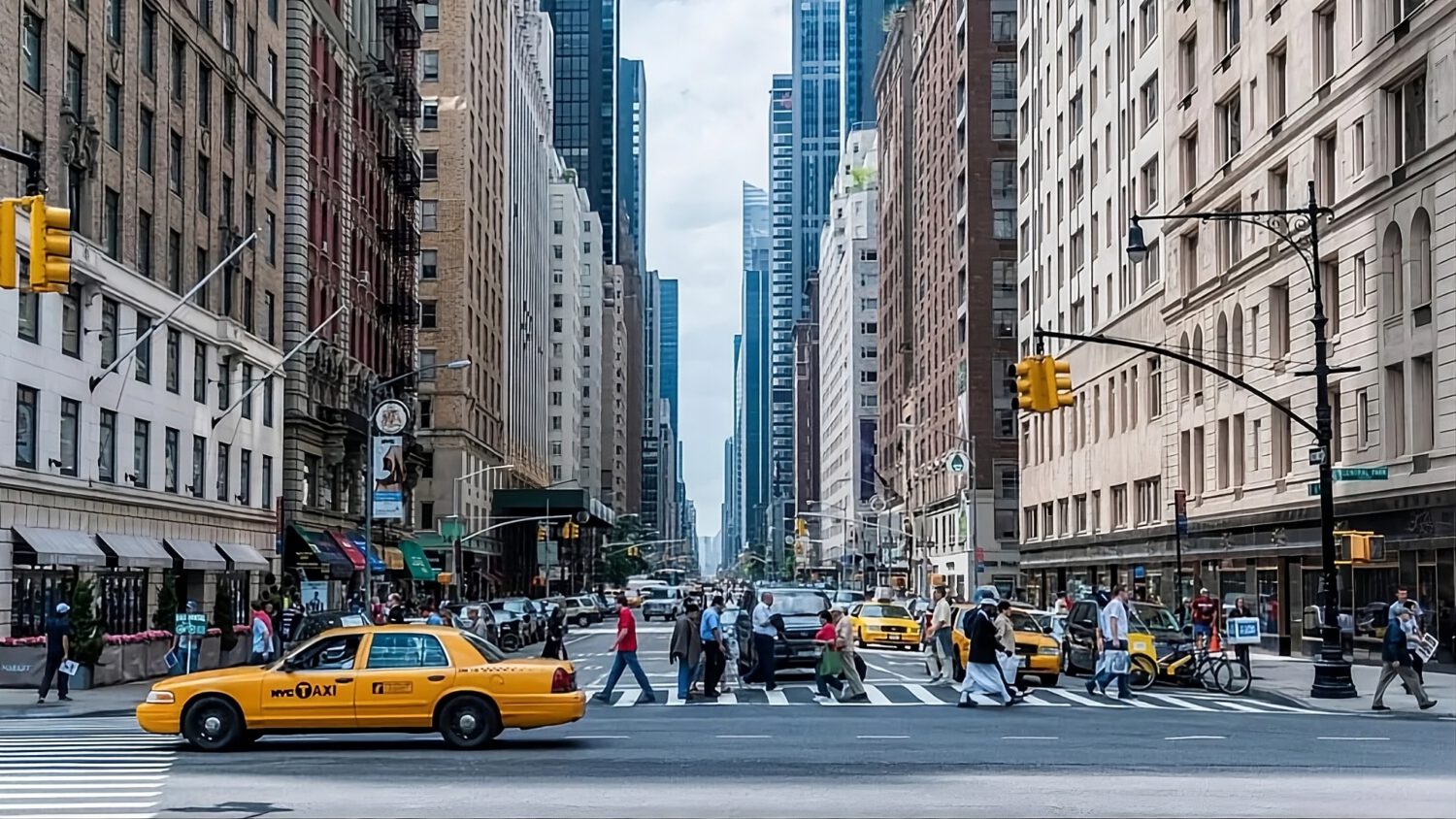
Most vehicles entering Manhattan south of and including 60th Street pay a toll under the program administered by the MTA, though certain roadways and eligible vehicles are excluded or exempt. Passenger vehicles pay $9 during peak periods and $2.25 overnight using E-ZPass; large trucks and tour buses pay $21.60 during peak hours, according to MTA documents.
The MTA projected the program would keep approximately 80,000 vehicles out of the zone each day. Observed data from the first year showed roughly an 11% reduction in vehicles entering the zone, a figure that broadly tracks the 13% drop in PM2.5 recorded inside it, according to the Columbia University researchers.
What the Study Cannot Prove
The researchers were careful to distinguish what the data shows from what it conclusively proves.
The study compared pollution inside the tolling zone against measurements from sites outside it, adjusting for weather, seasonal variation, and regional pollution trends. That methodology strengthens the association between reduced vehicle traffic and cleaner air, but it does not establish that the toll alone caused the entire decline.
Other variables, including broader regional emissions changes and year-to-year weather differences, may have contributed to the improvement. The research measured pollution concentrations, not downstream medical outcomes. It did not calculate respiratory or cardiovascular events potentially prevented by the reduction.
What Comes Next
Sustained monitoring will determine whether the gains hold and where the effects land.
Sustained reductions in PM2.5 could benefit public health, but quantifying those gains requires separate health-outcome research this study did not undertake. Continued monitoring will also reveal whether pollution burdens shift to neighborhoods outside the tolling zone, a question with real consequences for residents just beyond its boundaries.