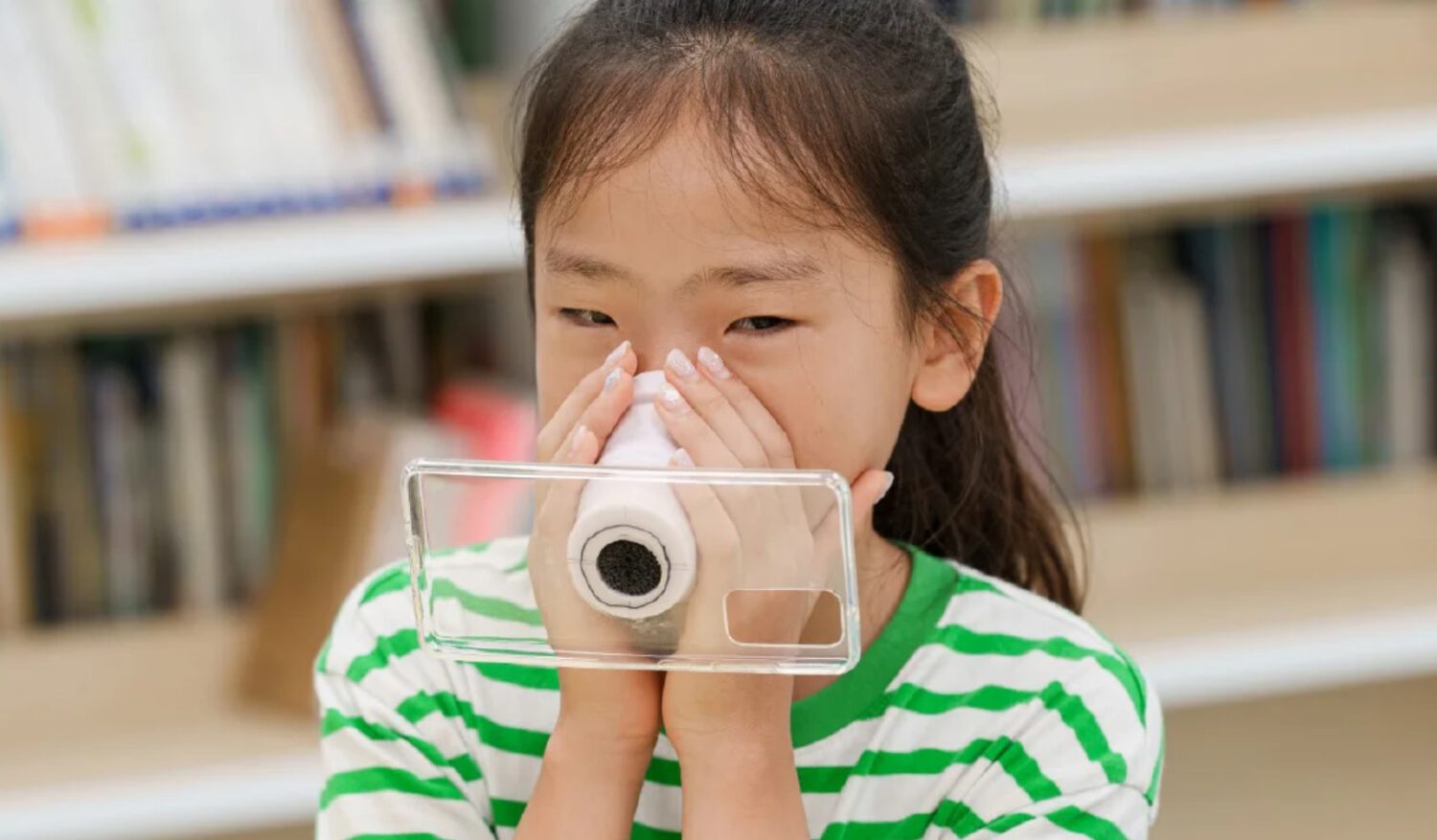
Your phone is probably within arm’s reach right now. Kim Ji-on, a fifth-grader at Chilcheon Elementary School in Geoje, South Korea, decided that proximity could save lives. If you’ve ever thought about phone accessories that go beyond the ordinary, this invention may reframe what “useful” can mean.
Her invention, the “Initial Fire Evacuation Breathing GripTok,” functions as a standard expandable phone grip during everyday use and unfolds into a temporary breathing aid during a fire. It won the Presidential Award at South Korea’s 39th Korea Student Invention Exhibition, the highest honor in the competition.
From a Fire Station Visit to a National Prize
A hotel fire, a fire-station visit, and a phone grip combined to produce South Korea’s top student invention.
Kim reportedly became interested in smoke-related fire deaths after watching coverage of the August 2024 Bucheon hotel fire, where seven people died and 12 were injured. Authorities linked five of the fatalities to toxic smoke inhalation, noting the hotel lacked room sprinklers and that thick smoke spread rapidly through the building.
A visit to a fire station deepened her understanding of how smoke can incapacitate people before flames reach them. That insight shaped everything about the design.
This was her first invention-competition entry, developed with assistance from her teachers.
How It Works
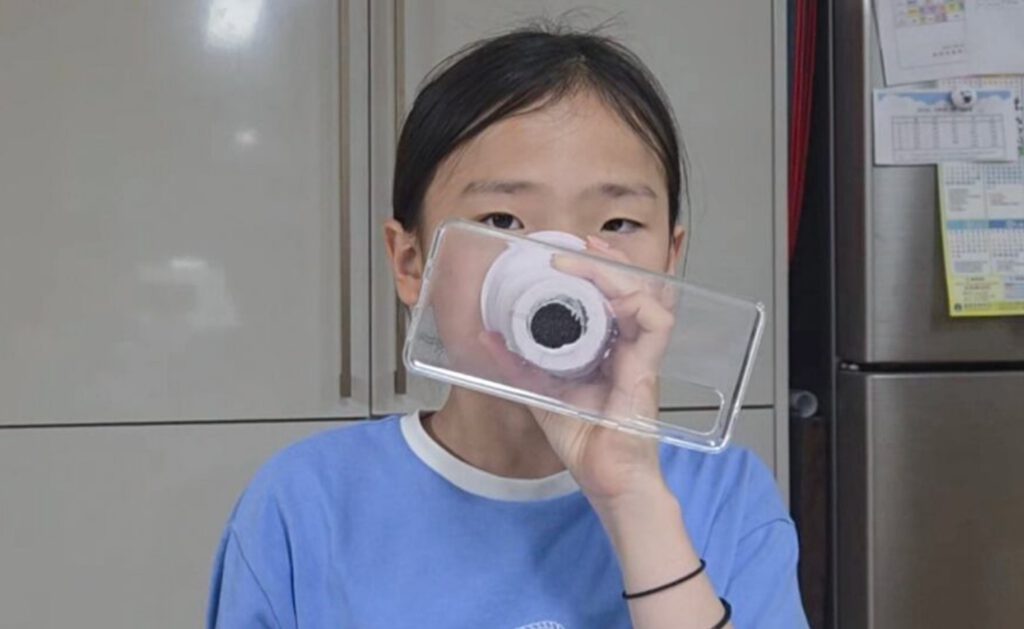
The GripTok embeds emergency filtration into the one object most people already have at arm’s reach.
The core logic is about location. You know where your phone is at 3 a.m. You probably don’t know where your nearest emergency respirator is. Compared with other smart gadgets designed to simplify daily life, the GripTok’s dual-use premise is unusually high-stakes.
The GripTok unfolds from its standard grip position and covers the nose and mouth. Reporting from South Korean outlets including the Electronic Times and Maeil Business Newspaper describes the filtration layers as including activated carbon intended to address some harmful gases and a nonwoven filter targeting smoke particles. Additional layers reportedly include an electrostatically spun melt-blown material and flame-resistant coated fabric.
The device is designed for the first one to two minutes of evacuation, not prolonged exposure. Think of it as bridging the gap between waking up and getting out, not as a replacement for getting out fast.

What the Award Does Not Guarantee
A student competition prize and a certified life-safety rating are two very different things.
The Presidential Award confirms recognition in a student invention competition. It does not confirm regulatory approval, independent safety testing, or verified performance in an actual fire.
That distinction matters. The available reports do not establish that the prototype filters carbon monoxide or provides protection against every toxic component of fire smoke; those claims would require specific materials, engineering validation, and formal certification. The prototype may also not form an effective seal against all face shapes, which means contaminated air could enter around the edges.
No independent test data or safety certification appeared in the available reporting. Readers should not treat this prototype as a substitute for working smoke alarms, building sprinklers, or practiced evacuation procedures. Certified respiratory protection remains a separate, non-negotiable standard, much like the rigorous requirements seen in other areas of workplace safety innovation.
The Competition
The GripTok ranked first in a nine-stage national competition that drew nearly 7,000 entries.
The 39th Korea Student Invention Exhibition drew 6,959 total submissions and used a nine-stage judging process to select 183 award-winning inventions. Kim’s entry ranked first overall, competing against middle- and high-school students.
The GripTok was displayed at South Korea’s 2026 Youth Invention Festival in Daegu, held July 30 through August 1. According to Hankyung, Kim reportedly plans to donate the 3 million won prize. No commercial availability was reported.
Emergency equipment tends to live in cabinets and hallways, while the first moments of a fire don’t wait for you to find it. Whether the GripTok eventually clears the engineering and regulatory hurdles required of life-safety products remains to be seen. The question a fifth-grader thought to ask, though, was the right one.