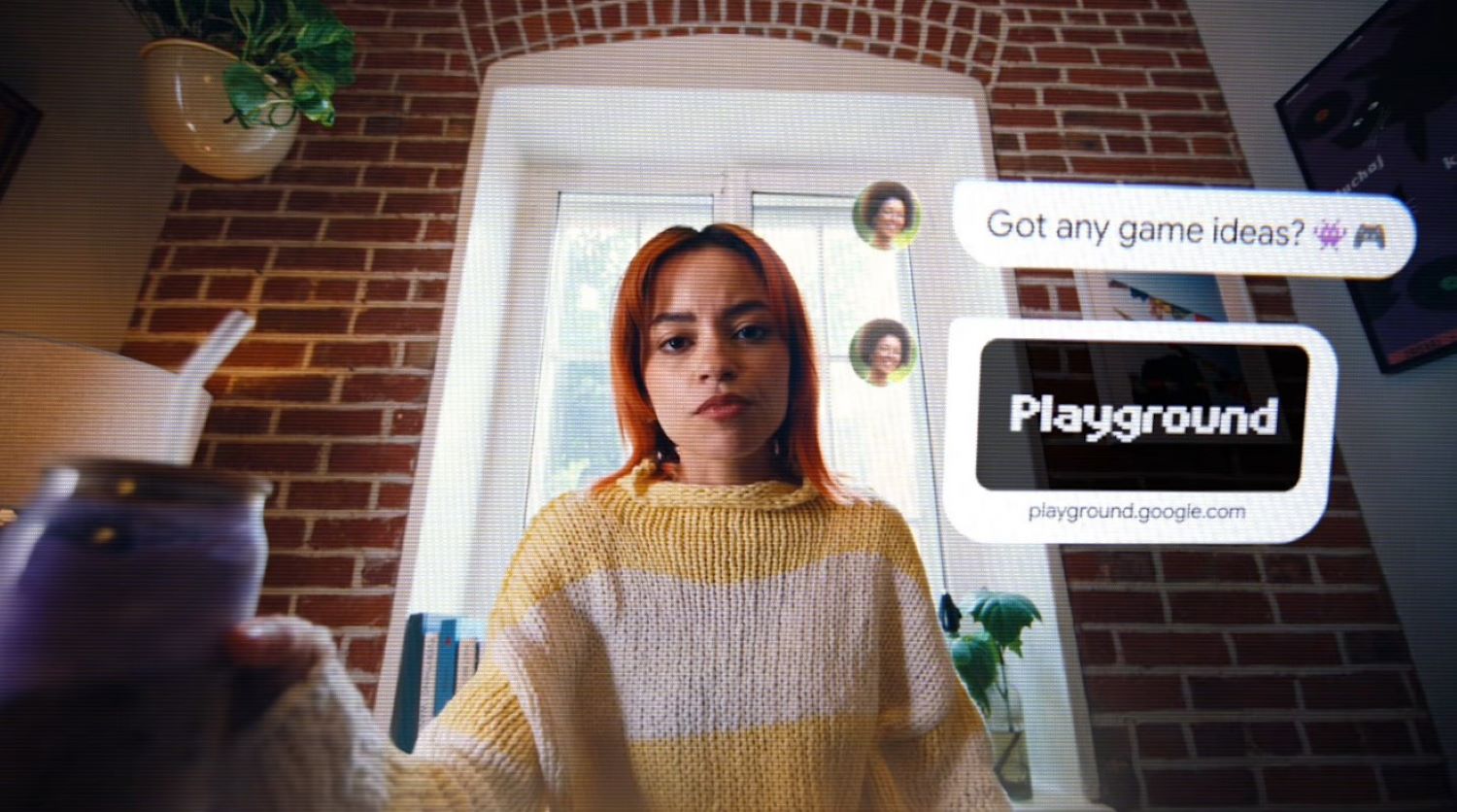
Describe a 2D tower defense game with a neon art style, and Playground attempts to build it. No coding is required, the games run in a browser, and Google also provides guided creation support. Google Labs launched Playground on October 7, 2026, as an experimental platform for creating browser-based games through natural-language prompts. Its arrival follows Roblox, which announced a competing prompt-driven creation tool approximately 83 days earlier, reflecting a Global Devs landscape in rapid flux.
What Playground Actually Does
The platform replaces the traditional download-and-tutorial barrier with a text prompt.
Most game-creation tools start with a download and a steep learning curve. Playground starts with a text box. Users pick a genre template (trivia, tower defense and racing are among the options) or open a blank project and describe what they want.
Creators can specify 2D or 3D, single-player or multiplayer, then detail the mechanics, gameplay and visual style in plain language. Uploaded reference images can be converted by Playground’s AI into game assets tailored to the project’s broader aesthetic, according to reporting by TechCrunch.
Finished games run in the browser on both desktop and mobile. Projects can stay private, travel via shared link, or go public in Playground’s Explore gallery, where leaderboard support is available for qualifying projects. Creators can continue editing after publication.
Access, Limits, and What’s Coming
Playground is free to browse but gates creation behind a weekly usage limit.
Playground is currently open to users 18 and older in the United States, with international expansion planned. Browsing and playing existing games is free. Creation runs on a weekly token system: a limited free allocation for standard accounts and higher limits for Google One subscribers, though exact token quantities are not specified in Google’s announcement. Readers looking to boost their workflow alongside tools like this may find value in exploring AI-Powered Websites that complement browser-based creation.
Google also announced a planned integration with Unity Spark, intended to bring advanced 3D capabilities and more sophisticated mechanics to the platform. Unity Spark is in testing with a closed beta planned; exact timing, scope and commercial terms remain unconfirmed per Google’s announcement.
How Playground Compares to Roblox Build
Roblox entered the prompt-based creation space first, but inside a very different ecosystem.
Playground is not arriving into an empty field. Roblox announced its own prompt-driven creation tool, Build, in July 2026. It converts natural-language prompts into playable Roblox experiences, with AI assistance for gameplay, characters, environments, sound and achievements. Creators can refine and publish the results.
Roblox Build currently emphasizes 2D and 2.5D video games and is available to users aged 9 and older in supported regions, according to Roblox’s creator documentation. The distinction between the two tools is less about features than about ecosystem. Playground is a standalone Google Labs experiment centered on flexible browser sharing and a community Explore gallery; Roblox Build operates as a creation tab inside Roblox’s established publishing infrastructure, with an existing audience already on the platform.
Playground remains experimental, access is restricted to U.S. users for now, and the weekly creation limit is a real constraint. The Unity Spark integration could raise the platform’s technical ceiling significantly, but that remains a future possibility rather than a current capability. Google and Roblox announced prompt-based game-creation products about 83 days apart, a convergence that signals the approach has become a platform strategy rather than an isolated experiment.