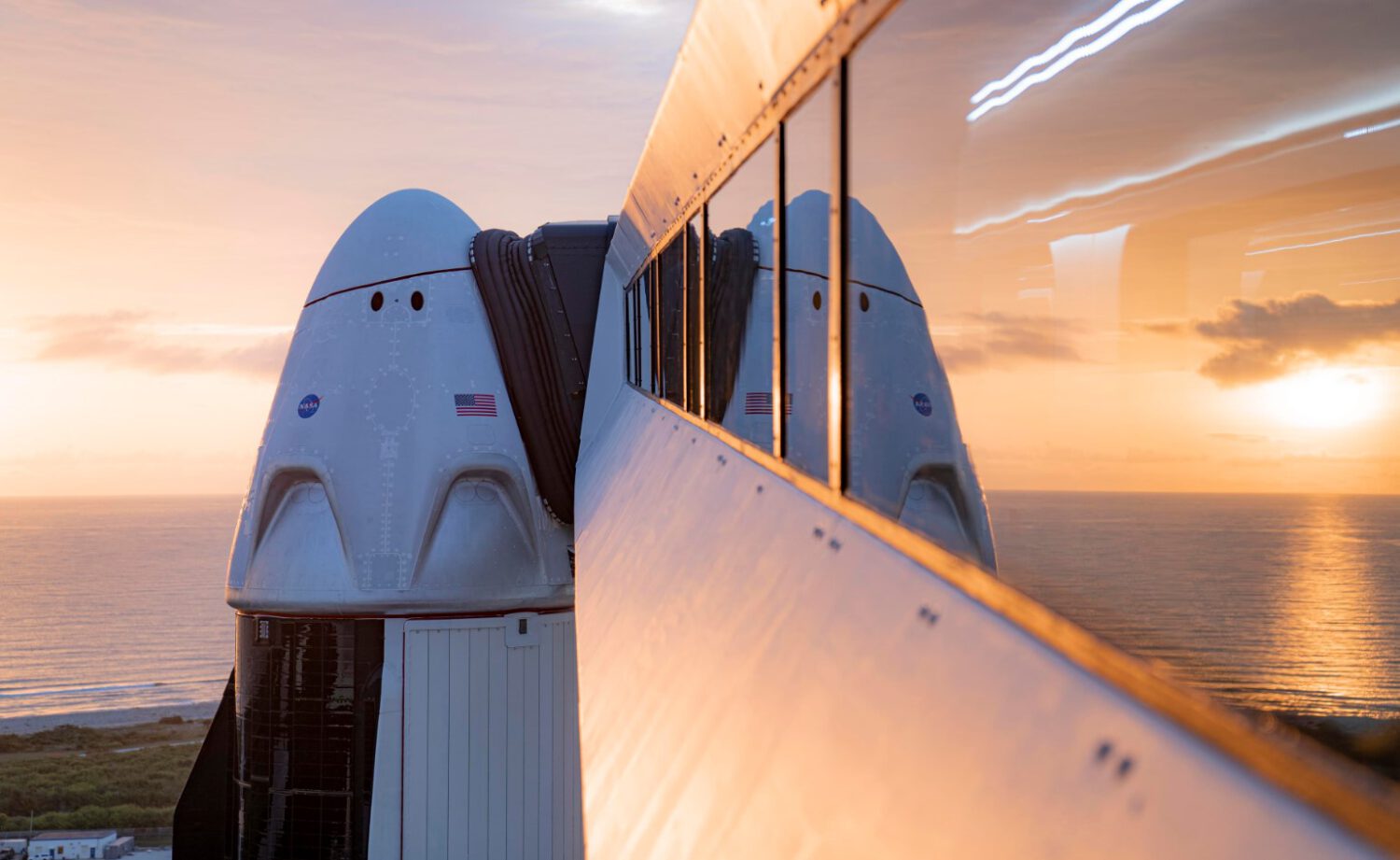
Seven hours and 55 minutes. That’s how long it took SpaceX’s Crew Dragon to travel from a Florida launch pad to the International Space Station on Oct. 1, 2026, setting the fastest launch-to-docking time ever recorded by a U.S. spacecraft. The achievement, confirmed by NASA, had less to do with engineering than with orbital geometry: the ISS was in an opportune spot in space.
Why Orbital Timing, Not Horsepower, Made the Difference
The record came down to geometry, and the director of SpaceX’s Dragon program said so plainly.
Crew-13 lifted off on a Falcon 9 at 11:10 a.m. EDT and docked at the station’s Harmony module at 7:05 p.m. EDT, according to NASA’s mission blog. That time beats the previous overall U.S. record of approximately 12 hours and 33 minutes, set by SpaceX’s uncrewed CRS-31 cargo mission in November 2024, according to Space.com. The prior crewed U.S. record stood at 14 hours and 43 minutes, achieved by Crew-11 in August 2025.
Orbital phasing determined the outcome. The ISS travels at roughly 28,000 kilometers per hour and completes a full orbit every 90 minutes, according to Space.com.
A spacecraft cannot simply point at the station and accelerate. It must enter a compatible orbital plane, then use a lower orbit to close the gap over successive passes.
At launch on Oct. 1, the station’s position was favorable, allowing Dragon to begin narrowing the distance almost immediately after reaching orbit. Even a short delay could have forced a longer rendezvous profile or a rescheduled flight entirely.
“The space station was in an opportune spot in space, and the orbital mechanics, the physics of it all, worked out for it to be the shortest launch-to-docking time we’ve had to date,” said Julianna Scheiman, director of NASA science and SpaceX’s Dragon program, as quoted by Space.com.
Fast by U.S. Standards. Not the World Record.
Russia’s Soyuz program set the overall ISS rendezvous benchmark six years ago, and it still stands.
Crew-13’s time is notable within its U.S. context, but the overall ISS speed record belongs to a Russian Soyuz mission that reached the station in approximately 3 hours and 3 minutes in 2020, according to Space.com. Soyuz missions have historically used highly constrained launch windows to achieve that pace, far faster than speed considerations alone could explain. The trade-off is rigid timing: even a minor delay can close off the fast-track option entirely.
That constraint applied equally to Crew-13, which is why Scheiman was candid about the circumstances. “We got lucky this time,” she told reporters, as quoted by Space.com.
Faster rendezvous times carry practical value: less time in transit can mean crews arrive at the station with fewer hours spent in a confined capsule. Mission logistics also gain flexibility when the gap between launch and crew availability on station shrinks, though the supplied sources do not quantify that benefit directly.
Still, 7 hours and 55 minutes should not be treated as a new baseline for Dragon flights. The duration reflects a specific orbital alignment that favorable mission geometry enabled, not a capability Dragon can guarantee on demand. The record shows what is possible under the right conditions. Those conditions are not available on a fixed schedule.