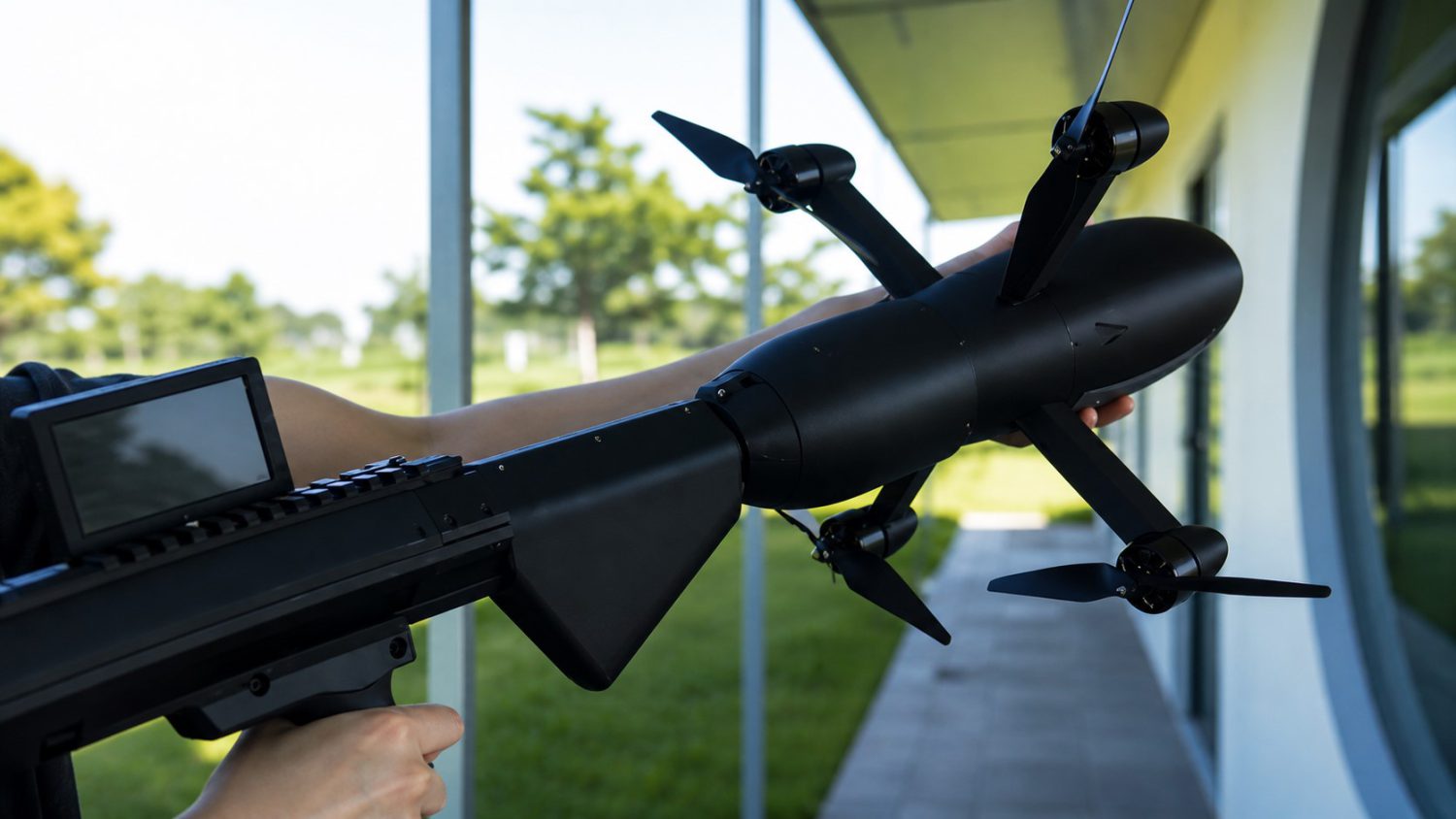
One operator. A physical collision at speeds that promotional material claims reach 420 km/h. That is the core pitch behind the Skylark R7, a man-portable counter-drone interceptor developed by Chinese company Skylark System.
Unlike conventional counter-drone tools that attack a hostile drone’s radio link or GPS signal, the R7 is designed to physically pursue and strike its target. All performance figures cited here come from Skylark promotional material or secondary reporting; none have been independently verified.
How the R7 Reportedly Works
AI tracks the target; the interceptor finishes the job on impact.
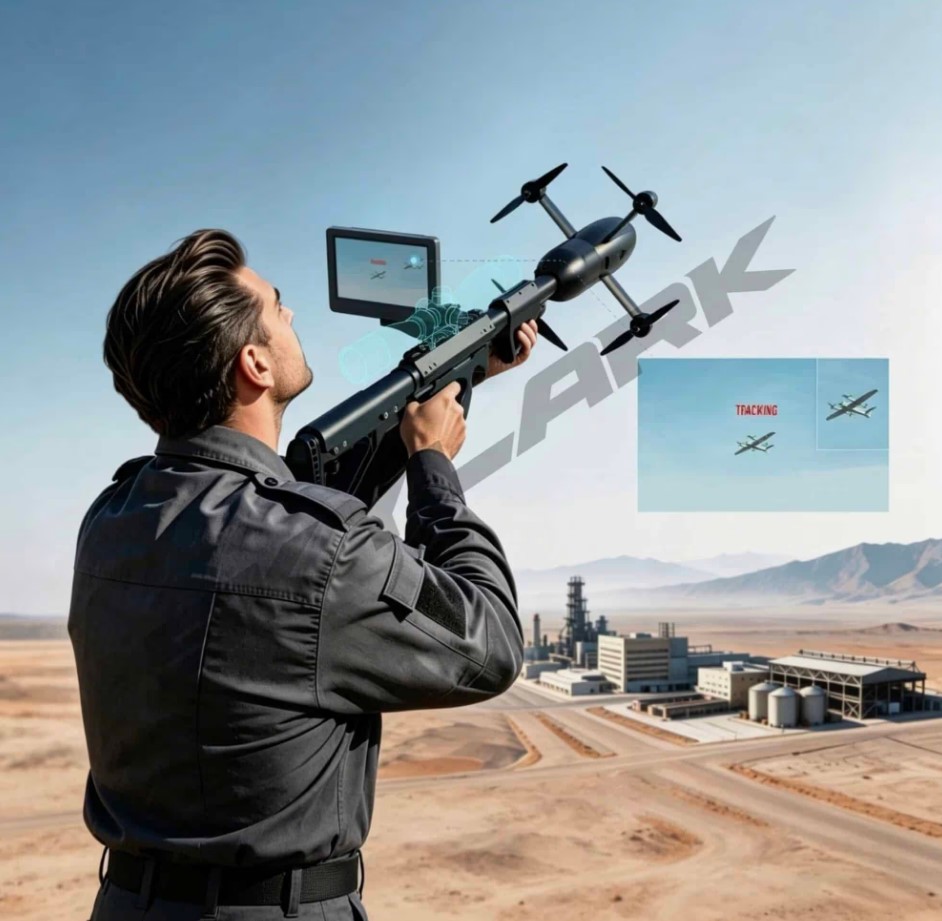
The system uses high-resolution optical cameras and onboard AI to detect and track incoming drones. Skylark lists a system response time from detection to release of under five seconds, though that metric describes the launch sequence rather than target-lock time specifically.
Once airborne, the interceptor closes on the target through direct collision, carrying no explosive warhead. That kinetic approach matters in one specific scenario: drones running autonomously or in RF-silent mode, where attacking a radio signal does nothing because no signal exists to attack.
Skylark’s promotional material puts the interceptor’s top speed at 420 km/h, roughly 260 mph. One specialist database, defence.tech, lists a substantially lower figure of 230 km/h for the same system. Neither number has been independently validated, and both should be treated as unconfirmed claims until Skylark publishes a verified technical datasheet.
Portability and Deployment
Backpack-ready in theory; the setup and launch figures are not the same number.
Skylark markets the R7 as backpack-portable, with secondary reporting describing a compact launcher operable without fixed radar infrastructure or a multi-person crew. A 30-second full deployment time appears in secondary and promotional sources, but no primary manufacturer document in the available evidence confirms that figure.
A separate figure, sometimes cited alongside the deployment claim, describes the detection-to-release response time as under five seconds. These are two distinct metrics and should not be read as interchangeable: one describes complete system readiness, the other describes the moment of launch after the system is already active.
What Remains Unverified
The 90% interception rate needs a test protocol before it means anything.
An interception success rate of at least 90% appears in promotional and derivative material, with one specialist database specifying that figure against loitering targets traveling at 150 km/h. No disclosed test protocol, sample size, target type, weather conditions, or definition of a successful intercept accompanies that number, so it should be treated as a promotional claim rather than a benchmark.
Range and altitude figures conflict across sources. Operating range is reported variously as 3 to 5 kilometers; altitude capability is cited between 3,000 and 5,000 meters. The discrepancies may reflect different system configurations or reporting inconsistencies, but no authoritative specification sheet was available to resolve them.
Regulatory and Safety Questions
A system that physically strikes aircraft raises questions no press release answers.
A kinetic interceptor capable of striking a drone mid-flight sits at a complicated intersection of aviation law, weapons regulation, and public safety. One report, from DroneXL, connected the product’s U.S. availability to broader scrutiny of Chinese-origin drone hardware and FCC restrictions. If you are evaluating deployment, the precise legal status of the R7 under current U.S. regulations has not been confirmed; verify with relevant authorities before acting.
The available sources also do not address what happens when the interceptor misses. Falling debris from a high-speed kinetic collision near an airport, energy facility, or populated area is a material safety question, not a footnote.
Independent testing with disclosed methodology is the only path to knowing whether the R7’s claimed performance survives contact with reality.