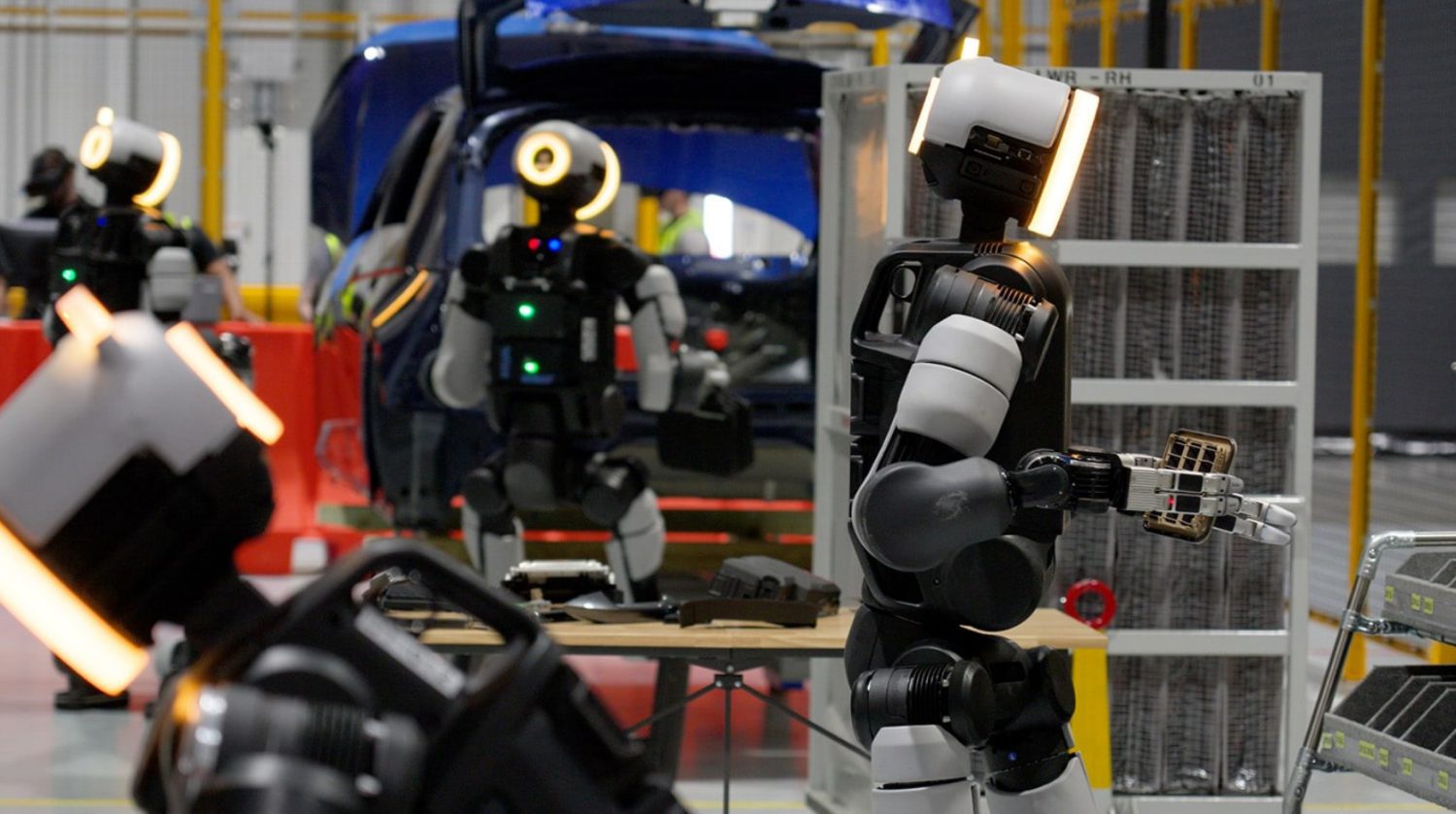
The robot that went viral doing parkour is now being asked to sort car parts. Boston Dynamics opened the Robotics Metaplant Application Center (RMAC) on September 21, 2026, at Hyundai Motor Group Metaplant America outside Savannah, Georgia, marking a deliberate shift from demonstration toward planned industrial deployment.
The scale of the ambition is not subtle. Hyundai Motor Group has set a target of 25,000 humanoid robot units across Hyundai and Kia facilities globally, backed by plans for a dedicated production facility capable of building 30,000 robots annually.
From Demonstration to Factory Floor
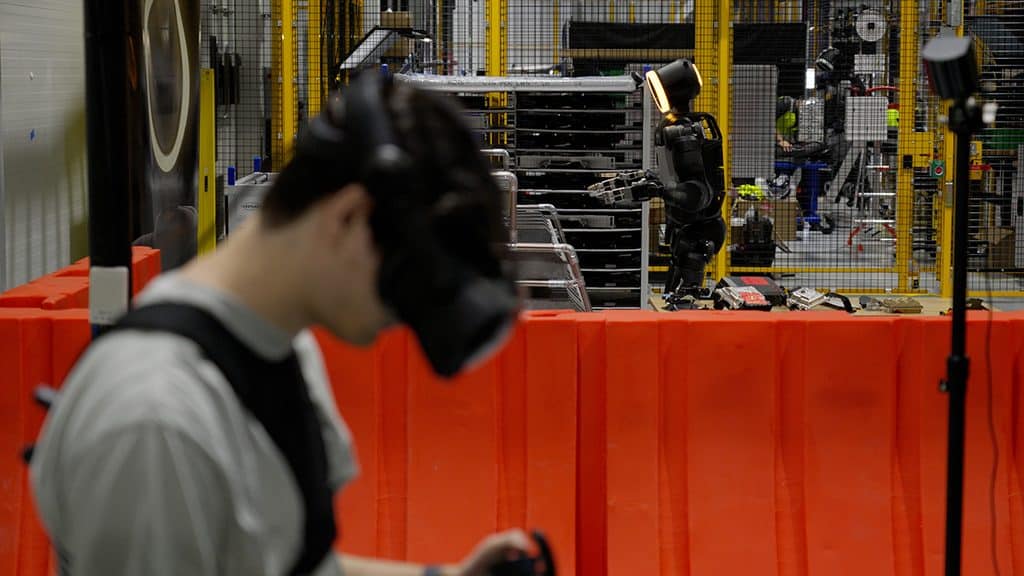
RMAC embeds Atlas inside a Hyundai manufacturing environment to train the robot on real production tasks, not laboratory simulations.
Working inside Hyundai’s manufacturing environment changes the stakes considerably compared to a controlled lab. RMAC is designed to train Atlas on real production tasks, starting with parts logistics, sorting, and sequencing. That means preparing automotive components and arranging them in the correct order before assembly reaches the line.
Component assembly is the longer-term target, with Hyundai’s roadmap pointing to 2030, subject to technology validation, operational readiness, and business requirements. “Together with Hyundai Motor Group, we are pioneering physical AI at enterprise scale,” said Zack Jackowski, Chief Product and Technology Officer at Boston Dynamics, in the company’s announcement accompanying the RMAC launch.
Atlas by the Numbers
The robot’s verified specifications place it among the most capable humanoid platforms currently being prepared for industrial use.
Atlas stands 1.9 meters (6.2 feet) tall and weighs 90 kilograms (198 pounds). It has 56 degrees of freedom and a maximum reach of 2.3 meters (7.5 feet).
Its instantaneous lifting capacity is 50 kilograms (110 pounds), with a sustained capacity of 30 kilograms (66 pounds) and a four-hour battery life. Boston Dynamics confirms that Atlas navigates to a charging station and swaps its own battery autonomously, extending operating periods without requiring the robot to remain idle while recharging.
The official product page lists an operating temperature range of -20°C to 40°C. Specific tactile gripper specifications referenced in some company materials could not be independently confirmed from official sources and should be treated as unverified.
The Road to 25,000
The 25,000-unit figure represents a planned deployment target, not a count of robots currently operating on any factory floor.
Hyundai’s published roadmap calls for initial Atlas deployment at Metaplant America in 2028, beginning with parts-sequencing tasks where proven safety and quality benefits can be demonstrated. From there, Hyundai has stated that “by 2030, applications will extend to component assembly.”
The planned production facility, targeting 30,000 robots annually, would supply that intended fleet. Its location, construction schedule, and commercial unit pricing are not established in available sources.
What Happens to the Workers
Hyundai frames the deployment as a way to reduce physical burden, though the net employment effect remains unquantified.
Hyundai describes Atlas as a tool for reducing heavy, repetitive, and physically hazardous work from human employees, a goal that aligns with broader efforts to improve workplace safety. The available sources do not quantify how many positions the deployment could alter or eliminate, and no net employment figure is established.
Human workers are expected to remain involved in operating, training, and maintaining the robotic systems, though the specific scale and terms of those roles have not been detailed in official materials.
The Real Test Starts Now
Operational reliability, not visual spectacle, will determine whether RMAC becomes the template for humanoid robots in manufacturing.
Backflips got Atlas famous. Factory reliability will determine whether it matters. The question RMAC exists to answer is not whether Atlas can move with impressive fluidity. It is whether the robot can sort the same batch of components correctly and consistently across thousands of repetitions in a manufacturing environment. Operational performance, not spectacle, will decide whether this becomes the broader industry’s template.