After declining to renew its Flock Safety agreement in July 2026 over privacy, data-ownership and security concerns, LAPD is now pursuing a surveillance arrangement that is larger, longer and currently less specific about the details that ended the last one.
On September 22, 2026, the Los Angeles Board of Police Commissioners voted 3-0 to forward a proposed 10-year, $235 million Axon contract to the City Council. Commissioners approved a separate no-cost, three-month streetlight ALPR pilot in a second 3-0 vote at the same meeting. City Council approval is still pending, and critical specifics about retention periods, data-sharing rules and pilot locations have not been made public.
What the $235 Million Would Buy
The proposed contract would run through July 2036 and bundle cameras, weapons, evidence storage and AI-assisted reporting into a single decade-long agreement.
If approved, the scope covers upgraded body-worn cameras, in-car camera systems with ALPR on more than 1,600 patrol cars according to NBC Los Angeles, Tasers and digital evidence storage. Phased deployment of some technology is reported to begin in January 2028.
The contract also includes Draft One, an AI tool that generates a first-draft police report from body-camera audio. An officer must review and approve the draft before submission to a supervisor.
Available reporting leaves key questions unanswered about Draft One. Those include how the system handles audio errors, accents or overlapping speech; whether AI-generated drafts become discoverable legal records; and how supervisors would catch and correct systemic inaccuracies.
LAPD has contracted with Axon since 2016 for body cameras and digital evidence storage, adding in-car video in 2022. This proposal extends an established vendor relationship rather than introducing an unfamiliar one.
Streetlights as Surveillance Infrastructure
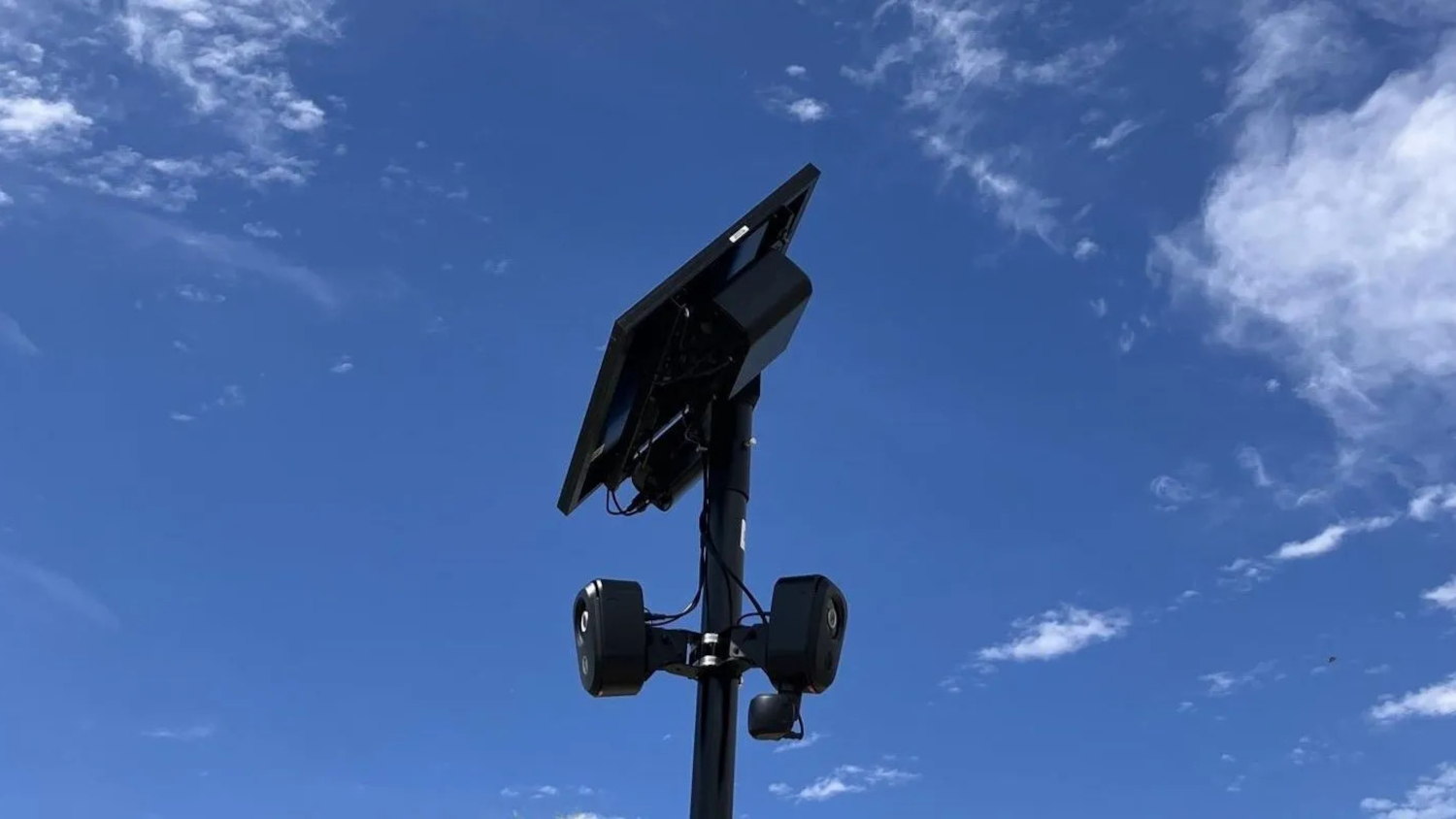
The pilot would mount Axon Lightpost units on city-owned streetlights, drawing power from existing infrastructure at no cost to the city during the three-month test.
Axon subcontractor Ubicquia would install the units by clamping them onto existing poles. According to LAPD officials, the cameras read license plates and identify vehicle characteristics such as vehicle type, and may capture drivers or pedestrians within the field of view. Officials said the system would not use facial recognition or technology designed to secretly tracking users identify individuals.
Specific installation locations and the pilot’s exact start date had not been announced as of the commission vote. LAPD described location criteria only as areas where crime tends to occur, according to Police1.
LAPD Chief Information Officer Dean Gialamas compared public concern about ALPR technology to earlier skepticism about DNA testing. He framed the goal as preserving the investigative tool while imposing limits on access, retention, sharing and advanced capabilities. The comparison raises a reasonable question: the rules governing DNA evidence in court developed through decades of litigation and legislative action. The retention schedule and sharing limits for plate data collected under this pilot are not yet part of the public record.
Stated Commitments, Not Yet a Verified Contract
LAPD officials say the proposed terms would give the city sole ownership of collected data, but the final executed contract has not been made public.
LAPD officials said the city would retain sole and exclusive ownership of all collected images, video, plate reads, metadata and algorithmic outputs. Described safeguards include role-based access controls, multi-factor authentication, continuous audit logging and annual independent security testing. These are stated positions in a surveillance app proposal, not provisions verifiable against a final signed agreement.
The City Council review, the publication of pilot locations and the public disclosure of retention and sharing rules are the unresolved checkpoints ahead. Until those specifics surface, Los Angeles residents have a stated promise of accountability without yet the means to measure it.