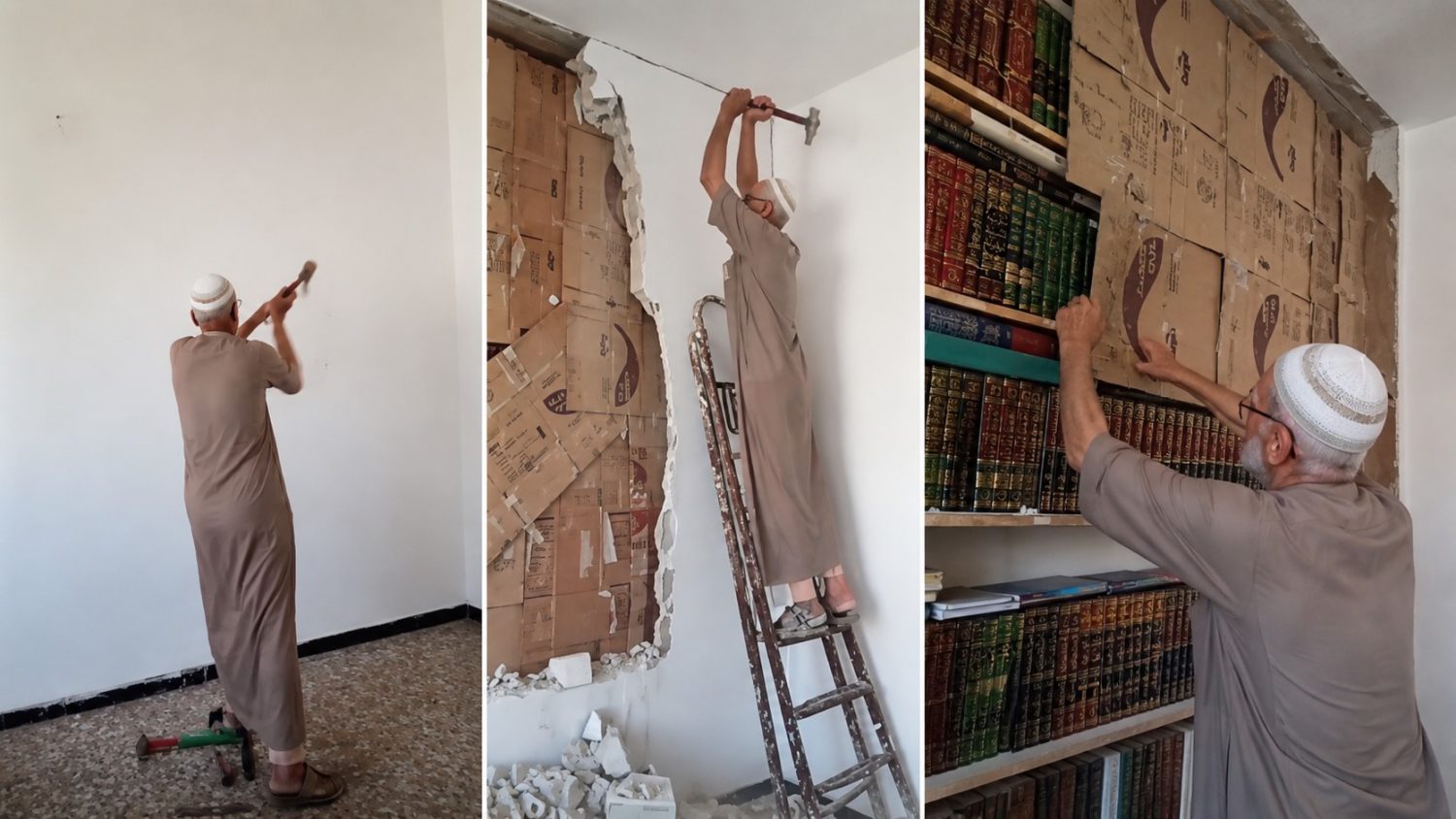
An elderly Syrian man named Abu Bilal picked up a hammer in August 2026 and swung it into his own wall. On the other side: hundreds of banned books that, fifteen years earlier, could have sent him to prison.
He had built that wall himself in late October 2011, sealing his son’s private library behind concrete and plaster. He then fled to Kuwait as Assad’s security forces tightened their grip on Syrian cities. According to Siasat, he refused to leave until the concealment was complete.
A Wall Built from Fear
Owning the wrong book under Assad-family rule was not a minor offense; it could cost you everything.
Hafez al-Assad governed Syria from 1971 until his death in 2000. His son Bashar held power until the regime’s reported fall in 2024. Throughout those decades, security services monitored what Syrians read, and banned political, religious, or opposition texts could implicate an entire household during a raid.
Abu Bilal constructed a false interior barrier inside his home, hiding shelves of books, magazines, and manuscripts entirely from view. Reports place the home variously in Damascus or Homs; that detail remains inconsistent across coverage, though outlets agree the property sits in western Syria.
He then left for Kuwait, and the wall stood.
What Fifteen Years Preserved
Sealed behind concrete, the collection waited through more than a decade of war, exile, and political upheaval.
Behind the concrete, according to reporting by Siasat and regional outlets, Abu Bilal had concealed hundreds of politically sensitive and religiously significant texts. The hidden space also held Quranic ijazat (certificates of mastery in Quranic recitation), academic certificates, personal documents, and even some money.
When he finally broke through in August 2026, only dust greeted him. The books came out largely intact, with minimal signs of moisture or damage after a decade and a half of sealed storage.
The Video, the Viral Moment, and What Comes Next
His son’s footage of the demolition spread across regional and international media, becoming a symbol of Syria’s shifting intellectual climate.
His son, Syrian writer and activist Bilal Alloun, filmed the demolition and shared it. The footage spread quickly, with Al Jazeera’s NewsFeed among the outlets that picked it up, framing it as a symbol of cultural liberation in post-Assad Syria.
Cultural writer Wahid Taja, a media officer at Dar al-Fikr in Damascus, captured the mood in Al Jazeera’s culture section: “We brushed the dust from the pages and returned them to their rightful place.”
Abu Bilal’s library is not an isolated case. According to Al Jazeera’s culture reporting, hidden notebooks and buried books have been resurfacing across Syria since the regime’s fall in 2024. Damascus and other cities have held book fairs with no banned titles, regardless of ideology or religious orientation. Formerly forbidden publishing houses have reopened.
The parallel to Daraya’s wartime underground library is hard to miss. Activists there sheltered thousands of volumes in a basement through bombardment and blockade, at serious personal risk. Syrians have a documented history of treating books as worth protecting.
Analysts caution, however, that Syria’s new intellectual openness remains fragile. Formal bans may have lifted, but the legal and political frameworks governing expression are still taking shape.
The wall is rubble now. The books are out. What Syria builds around them, in terms of lasting protections for free expression, is still unresolved, and worth watching closely.