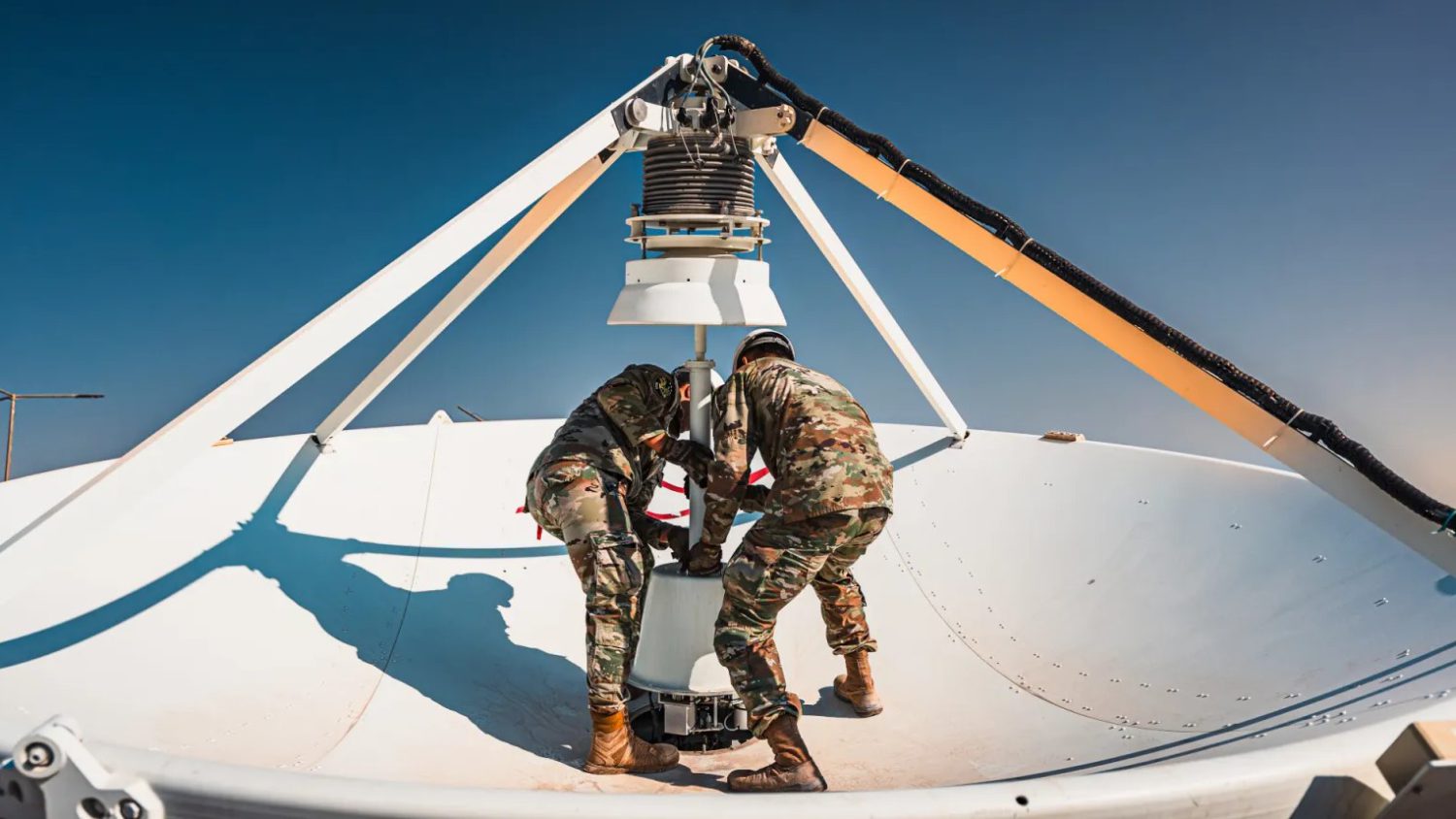
Alarm Red sirens were blaring and incoming missiles were targeting her site. Specialist Gray stayed at her console anyway, waging electromagnetic warfare against a determined adversary until her commander physically pulled her away.
That account came from Chief of Space Operations Gen. Douglas Schiess at the Air and Space Forces Association’s 2026 Air, Space and Cyber Conference in September. It offers the clearest public picture yet of Space Force’s role in Operation Epic Fury and confirms a fundamental shift: space is no longer a support domain, but an active battlefield.
Guardians at the Console
Gray deployed to the U.S. Central Command area of responsibility as part of the 42nd Electromagnetic Warfare Combat Detachment, a unit operating under U.S. Space Forces-Central since at least 2024. Within hours of Epic Fury’s launch at 1:15 a.m. on February 28, 2026, she received a top-priority target package. It directed her to reconfigure her weapon system and execute non-kinetic fires, electromagnetic effects designed to disable or degrade adversary systems without physical destruction.
“She locked onto the target, optimized her weapon system, and waged electromagnetic warfare against a determined adversary. Even as Alarm Red sirens were blaring and incoming missiles targeted her site, she courageously held the line protecting forces, denying adversary capability, and delivering space effects until her commander had to literally pull her from the console to safety.” , Gen. Douglas Schiess, Chief of Space Operations, Air and Space Forces Association 2026 Conference
Joint commanders made the broader stakes plain. They told Schiess they would not proceed without Space Force’s capabilities, and Guardians were designated part of the minimum force package.
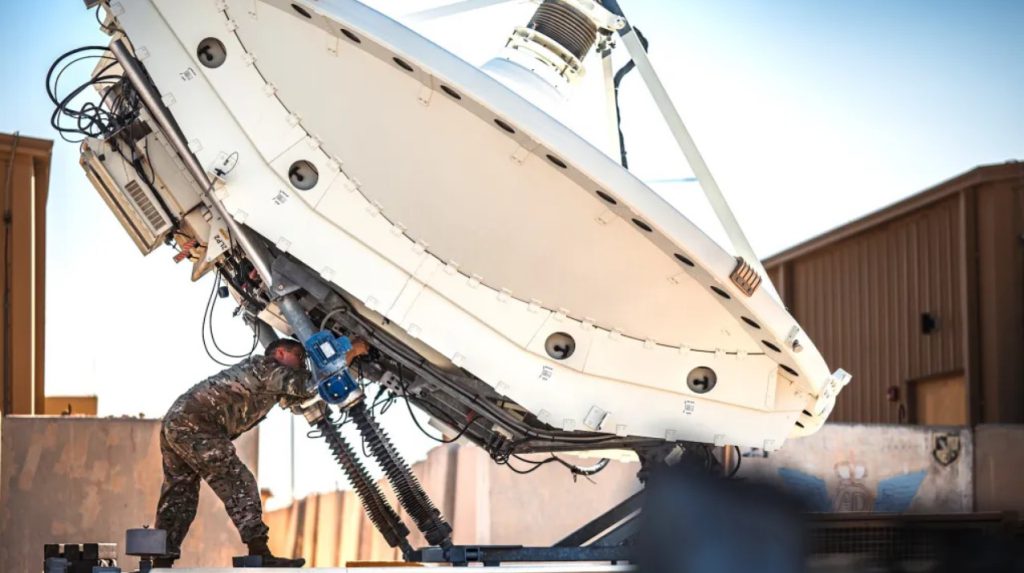
The Weapon System and What It Likely Did
Schiess did not name Gray’s weapon system. Photos of the 42nd EWCD in the region show trailer-mounted multi-band antenna systems associated with variants of the Counter Communications System, or CCS, according to analysis from The War Zone and New Space Economy. Those images show equipment consistent with CCS, a ground-based jammer designed to conduct uplink jamming. Uplink jamming blocks signals from adversary ground stations before they reach satellites, severing the relay paths used for command, control, and targeting data.
Whether CCS was the specific system Gray operated has not been confirmed by official sources. CENTCOM Commander Admiral Brad Cooper credited Space Force with “degrading Iranian capability” and protecting U.S. forces during Epic Fury, without detailing specific activities.
Weapons in Orbit, Stated Plainly
His statement was direct:
“So let me be crystal clear: Today, Guardians operate on-orbit weapons that can defend the Joint Force against space-enabled attacks.” , Gen. Douglas Schiess
Prior doctrine described six categories of counter-space weapons, including kinetic, directed energy, and radio-frequency jamming systems in both ground-based and space-based variants. Official statements, however, never explicitly confirmed operational on-orbit systems, according to spaceforce.mil. That changed in September 2026.
Two Readings of the Same Disclosure
The official U.S. framing presents these capabilities as defensive: protecting forces, denying adversary space-enabled attacks, and preserving freedom of action as China and Iran expand their own space-based tools. Commentary at worldatlarge.news offered a sharply different reading, arguing that deploying such systems in Epic Fury reflects contempt for arms-control norms and risks normalizing space warfare. Both perspectives are circulating in policy debates that will only intensify as more states develop or reveal their own on-orbit capabilities.
The Harder Problem
Chief Master Sergeant of the Space Force John Bentivegna said Epic Fury forced the service to confront challenges it had not fully worked through, including how to reconstitute forces, sustain EW units under fire, and determine what infrastructure must be hardened or moved underground. Iran targeted Al Udeid Air Base in Qatar and inflicted serious damage on aircraft, radars, and other assets during the conflict’s opening phases. Those strikes, and the vulnerabilities they exposed, will drive Space Force planning long after the conference headlines fade.