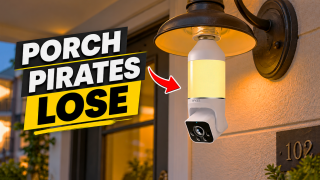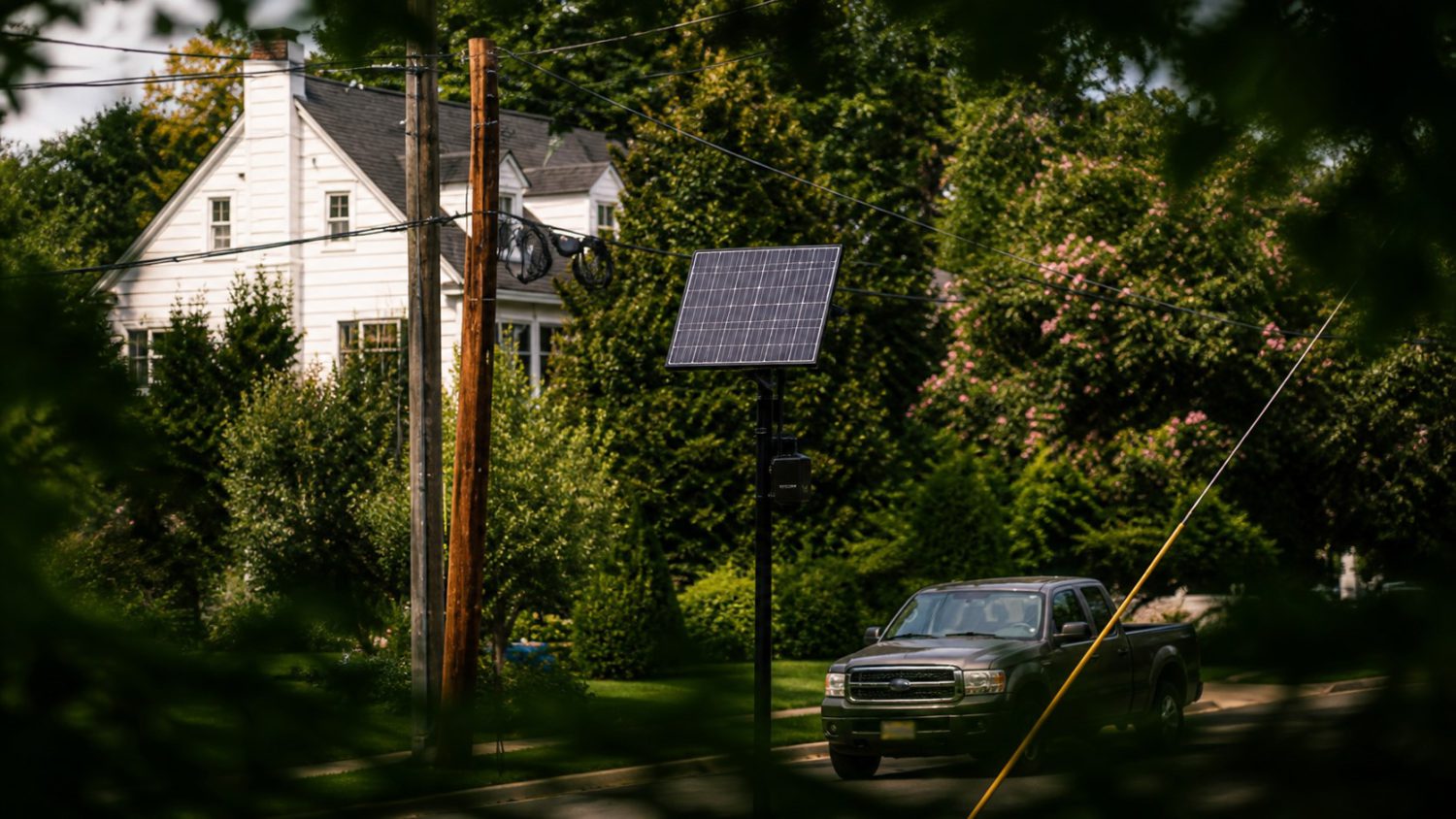
People are bagging Flock Safety’s license plate readers in black trash bags and packing city council chambers to demand contract cancellations. The anger is warranted. But it is aimed at the simplest version of the problem.
Roughly 120,000 Flock Safety cameras operate across 49 states. Crowdsourced mapping suggests about four in five ALPRs nationwide are Flock-manufactured, according to ABC News. These cameras feed a shared national database that police agencies can query across jurisdictions. According to NPR, no legislature explicitly authorized that network. That last point matters more than any single camera on any single pole.
What Flock Built While Nobody Was Looking
The scale of what Flock assembled, quietly and incrementally, is the story most communities missed until it was too late.
Business Insider testing found Flock’s AI misreads the state on a license plate roughly one in every ten reads. At least a dozen documented incidents involve innocent drivers stopped at gunpoint or attacked by police dogs after false alerts, according to Business Insider. Audits in Dayton and Georgia uncovered officers using the system to stalk ex-partners, resulting in criminal charges, per Forbes. Investigators documented officers conducting tens of thousands of immigration-related searches through the platform, as reported by the Los Angeles Times.
The ACLU has documented that Flock repeatedly misled city councils, police departments, and the public about its operations and the extent of federal data access. Flock responded by tightening recommended data retention from 30 days to 7 and adding tools to flag abusive searches, per Stateline. Civil liberties groups argue those fixes do not resolve the underlying problem of warrantless mass surveillance, with some pointing to cases of secretly tracking users that no legislature explicitly authorized that network to enable.
“Congress never authorized the network your industry has built,” Sen. Josh Hawley wrote in a letter to Flock Safety’s CEO announcing a Senate investigation, as reported by Forbes.
What Comes After the Camera
Communities have proven they can stop static surveillance hardware; the harder question is whether they can move fast enough to intercept what replaces it.
More than 50 cities and counties canceled or deactivated cameras in 2026, per ABC News and Stateline. Florida banned local police from placing plate readers on state highways, according to Reuters. Cities including Christiansburg, VA, New Bedford, MA, Asheville, NC, Saint Paul, MN, and Oviedo, FL voted to end contracts, per Forbes. These are real, demonstrable wins.
They were won against fixed hardware. Autonomous wheeled security robots are already in early deployment at malls, parking lots, and campuses, equipped with cameras, microphones, and thermal sensors. Quadruped robots capable of navigating stairs and rough terrain are being tested for public-safety and industrial inspection roles. Multiple robotics companies and automakers are marketing humanoid labor robots designed to operate in existing human-built environments; the scale of current deployment remains limited, and details are still emerging from manufacturers.
The pattern behind Flock’s rise makes the next chapter easy to read. The company entered communities under a crime-prevention rationale, emphasizing stolen-car recovery and neighborhood safety. It scaled quietly into regional and national data repositories, mirroring how a covert surveillance app can embed itself before residents grasp its reach. Residents grasped the full scope only after cameras, contracts, and policies were deeply embedded. That is not a Flock-specific failure; that is the template.
A security robot in one mall parking lot is the new camera on a pole. Show up to city council meetings before contracts are signed, track deployment decisions through initiatives like DeFlock, and support legislators pushing for federal oversight. The window to act is open now, before the machines gain legs, treads, and a national database of their own.