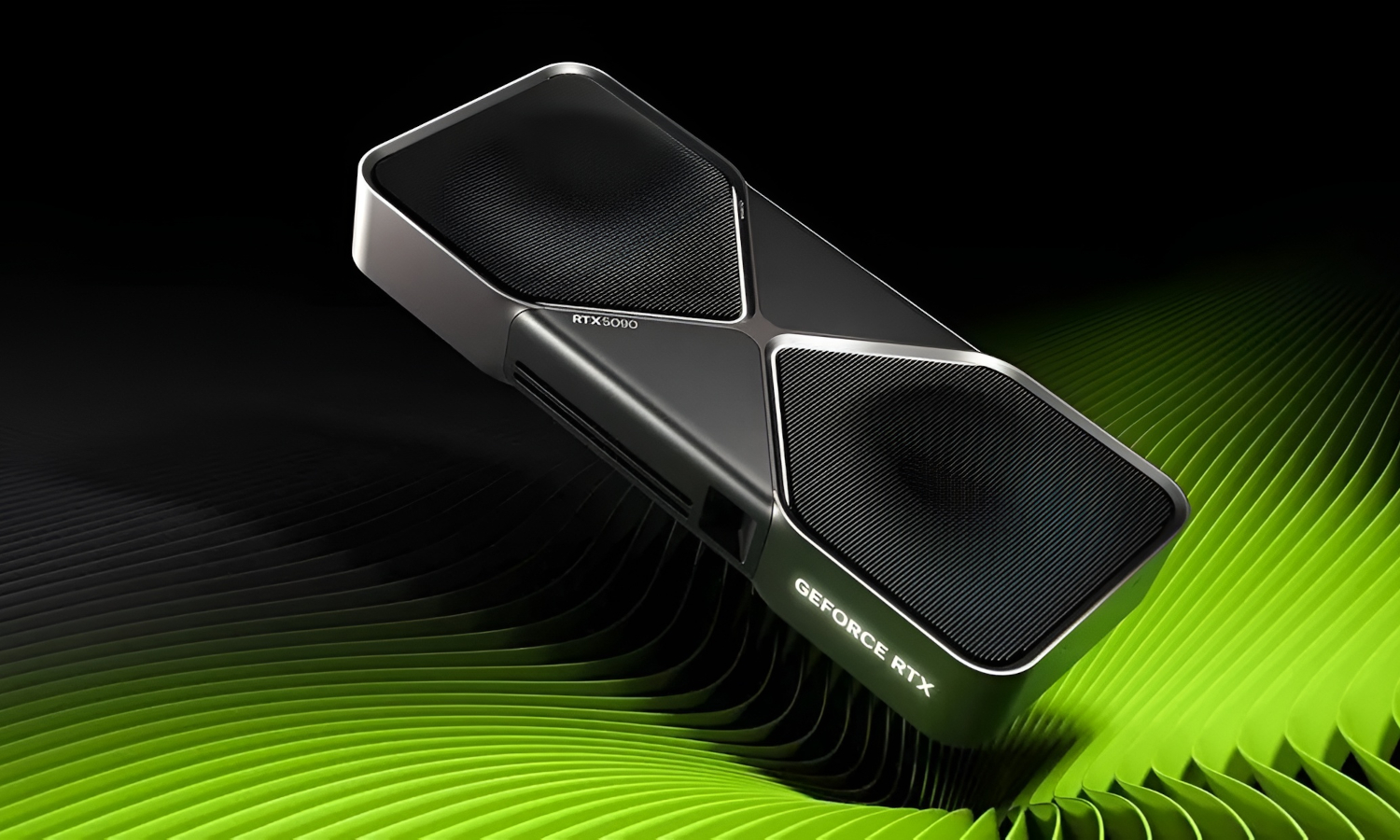
Nvidia’s GeForce RTX 5090 launched at $1,999. Third-party sellers on Amazon and Newegg are now asking up to $9,500 for the same card , and if you’re wondering whether you’re paying too much, that gap tells you everything about where the U.S. online GPU market stands right now.
Major U.S. online retailers have effectively exhausted their RTX 5090 inventory, leaving only third-party marketplace listings behind, according to Tom’s Hardware. The situation is not a temporary stock dip; it reflects sustained demand pressure that has made first-party retail inventory nearly impossible to find online.
The Market Has Broken Down
Third-party sellers have stepped into the vacuum left by depleted first-party retail stock, and their asking prices reflect it.
Third-party listings on Newegg and Amazon are filling the void, but at prices that bear little relationship to the launch MSRP. Tom’s Hardware reports a current range of $6,395 to $9,500, with a specific Newegg listing at $8,699 and an Amazon listing at $6,395. Part of the sustained demand pressure comes from beyond gaming: some of it is attributed to AI hobbyists and small builders drawn to the RTX 5090’s GB202 GPU and 32GB of GDDR7 memory for compute workloads, per Tom’s Hardware.
For quick reference, here is where pricing currently stands, per Tom’s Hardware and Micro Center listings:
| Item | Value |
|---|---|
| Launch MSRP | $1,999 |
| Cheapest Amazon third-party listing | $6,395 |
| Newegg third-party listing | $8,699 |
| Top third-party asking price | $9,500 |
| Micro Center in-store cheapest available | $4,299 |
One Retailer Still Has Stock, With Conditions
Micro Center remains the only reported source of in-person RTX 5090 inventory at something close to a controlled price.
Micro Center is the clear exception. Tom’s Hardware reports in-person stock available at that retailer, with the cheapest option coming in around $4,299 at the time of reporting. That is still more than double the MSRP, but it is the closest thing to a controlled price in the current market.
Micro Center’s own product pages list several models as sold out or unavailable. Those include the ASUS ROG Astral at $3,509.99, the MSI Gaming Trio at $3,339.99, and the Gigabyte Windforce at $2,999.99, per Micro Center listings.
If you don’t live near a Micro Center, your options are grim.
The Scam Risk Is Real and Documented
Buying an RTX 5090 from a third-party marketplace right now carries documented fraud risk, not just the possibility of overpaying.
The caution against third-party purchases at this price point is explicit in Tom’s Hardware reporting, and it is backed by documented incidents. Amazon customers have reportedly received a fanny pack instead of a GPU after completing a purchase. Separate cases involving counterfeit or stripped RTX 5090 cards have also surfaced in the secondhand market, according to Tom’s Hardware.
At prices between $6,000 and $9,500, a fraudulent transaction is not a minor inconvenience. Standard marketplace dispute processes are not built to absorb losses at that scale cleanly or quickly.
What to Do Now
Patience carries less risk than chasing inflated third-party listings, and the card’s performance standing will not shift in the meantime.
If you need an RTX 5090 and a Micro Center is within reach, that remains the most defensible path to a legitimate purchase. If you’re tracking the market remotely, waiting for first-party retail restocks carries far less risk than chasing third-party listings at inflated prices. The RTX 5090 is currently Nvidia’s fastest gaming GPU in benchmark testing, per Tom’s Hardware, and that standing is unlikely to change in the near term. If you run into hardware acquisition headaches along the way, reviewing common computer problems and their solutions may help.