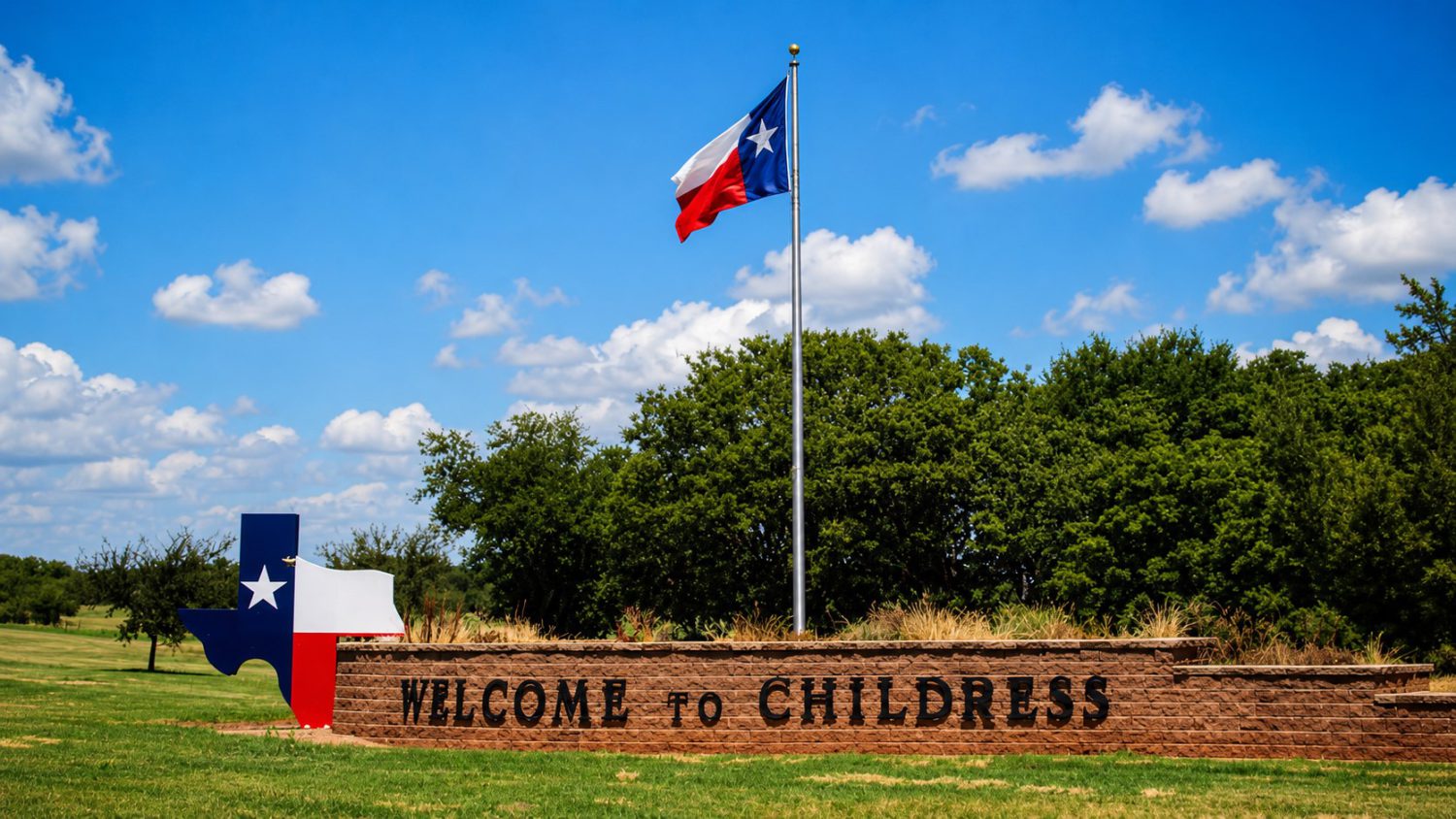
When your tap water becomes a biohazard and the temperature outside could fry an egg on concrete, “extraordinary measures” is not bureaucratic boilerplate. It is the actual situation facing roughly 6,000 residents in Childress, Texas, grappling with the pressures that AI data centers and industrial expansion can place on local communities.
Mayor Cary Preston signed a local state of disaster on September 11, 2026. Childress County Judge Kim Jones issued a parallel county-level declaration the same day.
What Triggered the Declaration
The mechanics are straightforward; the underlying conditions are not.
A citywide boil water notice went active on September 8, according to the City of Childress official website. Officials cited extreme heat, high ground temperatures, and ongoing drought as the drivers behind a critical problem: disinfectant residuals in the water supply had evaporated, leaving the system unable to guarantee safe drinking water.
- Boil water notice issued September 8, 2026, per the city’s official site
- Disaster declaration signed by Mayor Preston on September 11, per NewsChannel 10
- County Judge Jones issued a parallel declaration covering Childress County
- Stage 4 Drought Contingency Plan status in effect, tied to low Lake Greenbelt levels via the Greenbelt Municipal and Industrial Water Authority, according to Red River Authority documents
- Declaration active for up to seven days unless the city council renews it; the city is seeking state assistance
Stage 4 is the emergency threshold under the contingency plan. The plan does not enumerate a Stage 5.
A 750-Megawatt Neighbor and a 1-Gigawatt Plan
Childress is managing a serious water emergency at the same moment it is hosting one of the most power-dense industrial build-outs in the Texas Panhandle.
IREN operates a 750 MW campus on 576 acres, directly connected to the ERCOT grid via on-site substations. The facility started as a cryptocurrency mining operation and is now pivoting to AI cloud services, including server hosting agreements with Microsoft.
When ABC7 Amarillo asked about water use, IREN COO David Shaw said the Childress facility uses a closed-loop liquid cooling system and does not require ongoing daily or weekly local water use after the system is initially filled. That is the company’s stated position, not an audited or publicly verified commitment.
A second campus raises the scale further. Crusoe and Lancium announced a planned 1 GW AI and high-performance computing campus on 270 acres. Construction is scheduled for Q3 2026. The project features behind-the-meter solar, battery storage, and closed-loop liquid cooling. The Greenbelt Authority has been in active discussions about a Lancium water supply proposal, according to Clarendon Live reporting from August 2026.
That is more than 1.75 GW of data center capacity, planned or operating, in a county that just hit its emergency water shortage threshold.
Neither company is the verified cause of this specific boil water event. The drought and the heat drove the disinfectant failure; that much is established. The harder question is whether Childress and the State of Texas ever seriously asked what this level of industrial growth would demand from a water system already at Stage 4. Closed-loop cooling claims deserve scrutiny, not automatic credit. “Doesn’t use water after filling” is a very different commitment than a binding, audited, publicly disclosed water-use agreement.
What Needs to Happen Next
The planning conversation that should have happened before permits were issued is now overdue.
Water-use disclosures from industrial operators should be mandatory and public, not voluntary talking points delivered to local TV stations. Municipal water planning needs to account for large-scale development before construction starts, not after a disaster declaration is signed. State oversight should require verified water commitments as a precondition for permits, particularly in drought-stressed regions.
If you live anywhere that drought-stressed infrastructure meets industrial-scale power demand, the Childress situation is a preview, not an outlier. Childress residents are boiling their water right now. Every day that water-use disclosure remains voluntary is another day communities like theirs negotiate blind.