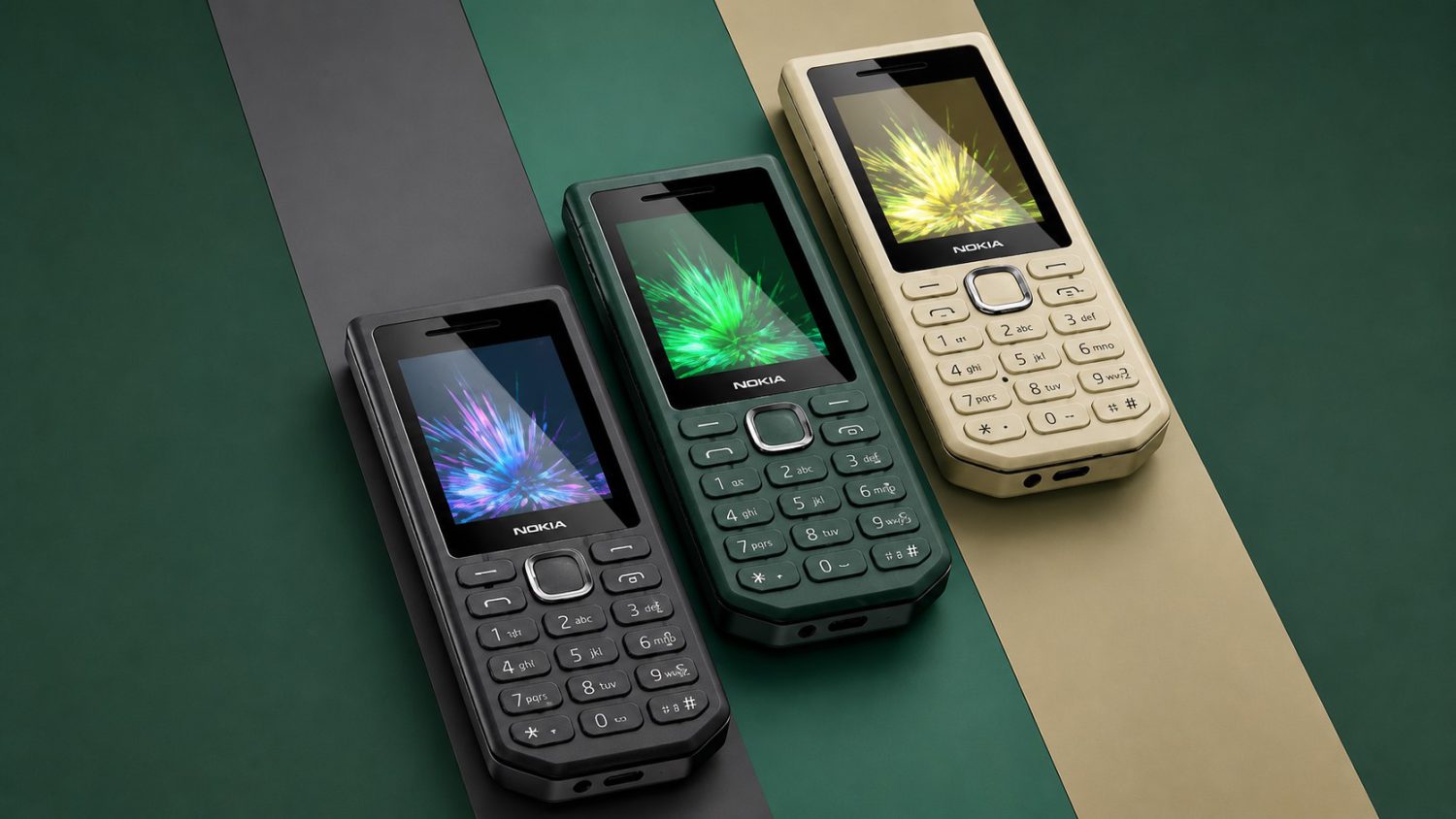
Most feature phones are stripped-down throwaways — emergency drawer fodder you forget exists until a camping trip forces your hand. The Nokia 300 Charge is something different. HMD Global built a 2G brick that can charge your dying iPhone via USB-C, blind an entire parking lot with its flashlight, and survive 40 days on standby. That’s not nostalgia. That’s a utility knife with a dial pad.
Specs That Actually Matter
A feature phone with one genuinely modern trick up its sleeve.
The headline number is 3,700 mAh — a removable battery that HMD claims delivers up to 37.9 hours of talk time and 40 days of standby, according to the official spec sheet. Alongside that sits 10W reverse charging via USB-C, which lets the phone function as a pocket power bank. Round it out with:
- An LED flashlight claimed to be 4x brighter than the Nokia 105 (per HMD)
- A 3.5mm headphone jack
- microSD expansion up to 32GB
- Dual mini SIM support on GSM 900/1800 — 2G only, no exceptions
The ceiling is worth naming upfront: 3,700 mAh won’t replace a proper Anker brick. What it will do is pull your smartphone back from 4% at a music festival when every charging station has a 45-minute queue and someone’s already posted about it on their Stories. Think of it as the duct-tape solution you actually have on you — because it fits in a jacket pocket and costs roughly $34–$38.
What It Won’t Do
Four megabytes of RAM isn’t a typo. It’s the product philosophy.
The Nokia 300 Charge runs HMD’s S30+ software on a Unisoc SC6531E chipset, with 4MB RAM and 4MB internal storage. No 4G. No apps. No Spotify, no maps, no doom-scrolling. The 2.4-inch QVGA display shows you calls, texts, and a basic menu. That’s the inventory.
For its intended buyer — the glove-box phone, the power-cut companion, the festival second-SIM — none of that is a dealbreaker. It’s the point. HMD launched it in the Philippines at PHP 1,990–2,190 (roughly $34–$38); international pricing remains unannounced.
If your daily driver is already handling everything else, the question isn’t whether this phone is smart enough. It’s whether you’re smart enough to keep one charged in your bag before the next outage reminds you why you should.