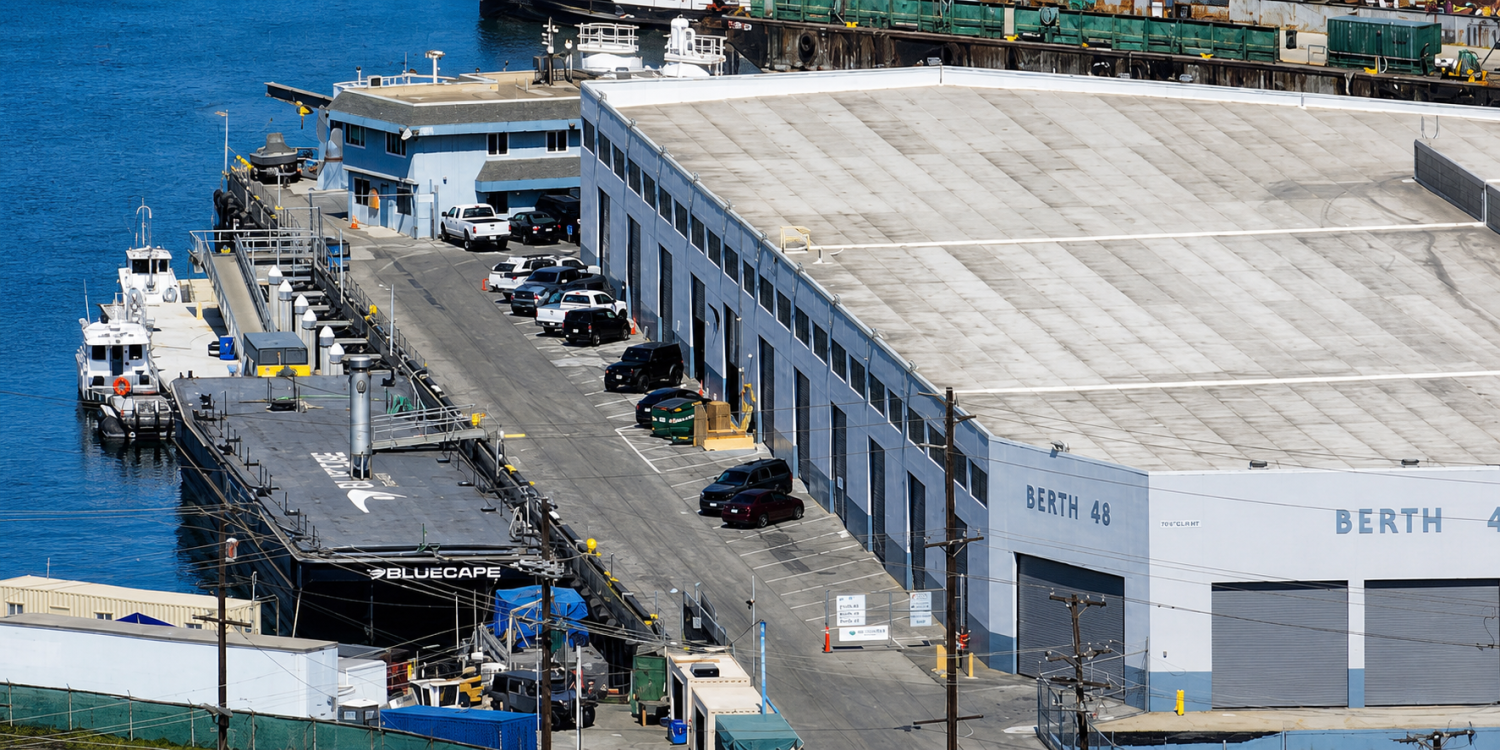
A reactor core roughly five feet wide, sitting on a barge at Berth 48, surrounded by container cranes and cargo ships. That’s not a fever dream — it’s Bluecore Energy’s current test setup at the Port of Long Beach. California hasn’t launched a serious nuclear energy project in 50 years. The fact that this one comes from a startup founded by a former Uber Freight executive, not a utility giant, tells you everything about how strange and urgent this moment actually is.
What’s Actually Been Agreed
The deal is real — but it’s a framework for the future, not a reactor switch about to flip.
The basics, without the spin:
- The Port of Long Beach and the U.S. Maritime Administration (MARAD) signed a non-binding memorandum of cooperation — first-of-its-kind in the maritime sector. No reactor purchase required.
- Bluecore Energy, founded by Kofi Asante, holds a lease at Berth 48 with a barge and electric test reactor pressure vessel already on-site — non-fueled test equipment, not an operating nuclear core.
- The 10 MWe light-water SMR is designed to power a full terminal or roughly 15,000 homes, according to the company.
- Bluecore has raised approximately $10 million in pre-seed funding. No formal NRC application has been filed as of mid-August 2026.
Asante describes the concept simply: take reactor technology with a 70-year operating history, miniaturize it, put it on a barge. Think of it as the Airstream trailer of nuclear power — compact, mobile, and deeply committed to going places traditional AI Infrastructure can’t reach. The physics isn’t new. The address is.
“We’re a few years away from the biggest energy crisis in a generation.” — Kofi Asante, Bluecore Energy founder
USC engineering professor Dr. Najm Meshkati, speaking personally rather than on behalf of any state panel, calls the project “very unprecedented.” Small reactor physics isn’t the unknown here. Parking one inside a working commercial port is. He’s pushing for tougher, independent oversight and genuine public engagement — and those aren’t bureaucratic footnotes. They’re the entire ballgame.
California’s 50-Year-Old Problem
A decades-old nuclear ban creates a legal gray zone that no one has formally resolved.
The state’s 1976 nuclear construction moratorium bars new nuclear fission plants until waste disposal solutions exist. The Supreme Court upheld it in 1983. Legislative attempts to carve out SMR exemptions have stalled repeatedly — and nobody has answered the central question yet: does a barge-mounted reactor even qualify as a “nuclear fission power plant” under state law? That regulatory gray zone is precisely where this project currently lives.
“Keep the feet of the regulators and the industry people to the fire.” — Dr. Najm Meshkati, USC engineering professor
No commercial nuclear generation is imminent here. What exists right now is a barge, a test vessel, a memorandum, and an enormous regulatory question mark. If this works, it could rewrite how ports worldwide power themselves. If it doesn’t, California’s moratorium will have claimed another casualty — and the diesel generators will keep running.