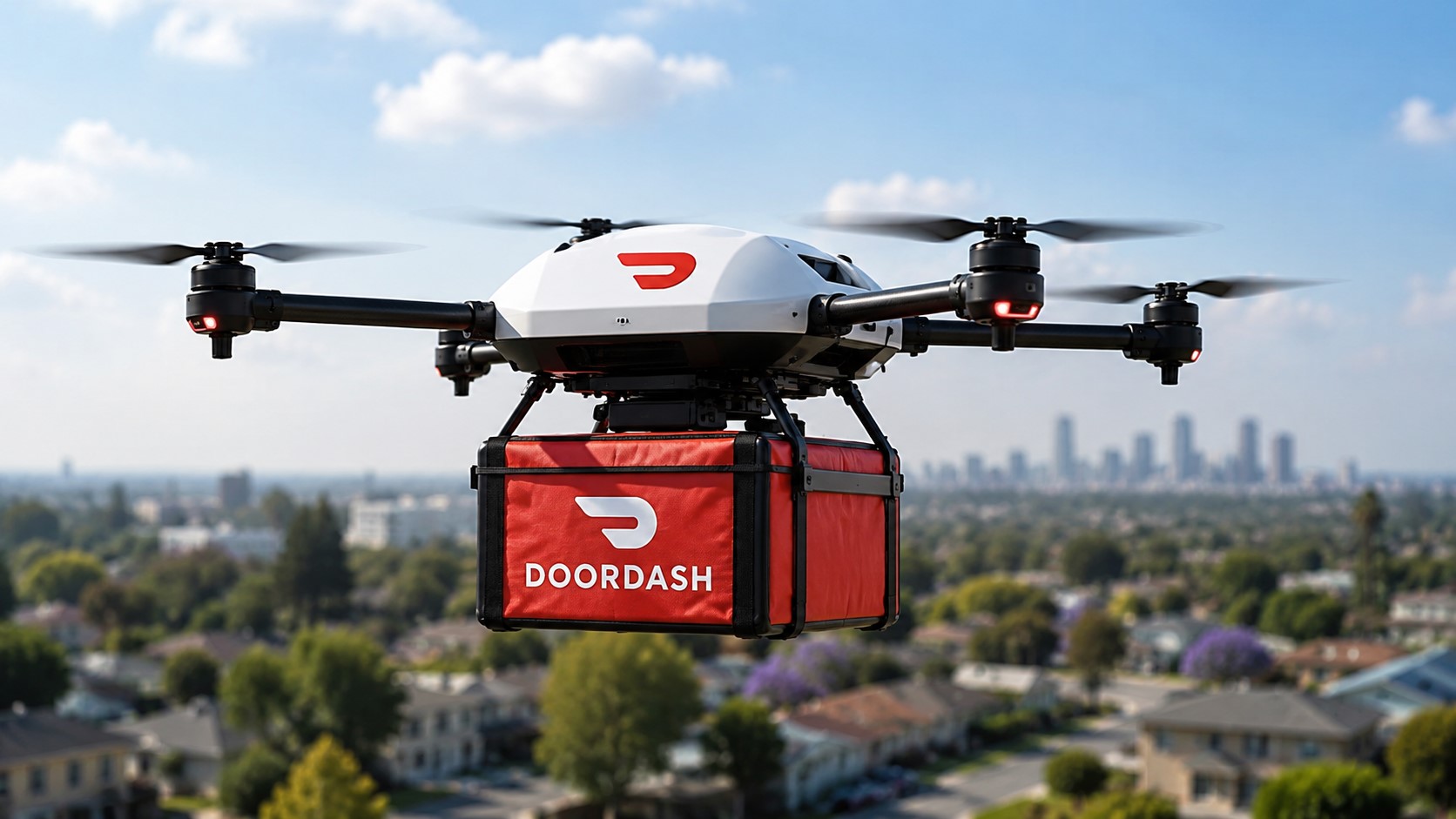
Drone delivery has been “almost here” for so long it’s starting to feel like a sequel that keeps getting delayed — perpetually announced, never shipped. On July 29, 2026, DoorDash made a concrete move: the company unveiled DoorDash Air, an in-house drone delivery program backed by FAA Part 135 air carrier certification. This isn’t a partnership announcement or a concept video. DoorDash is building its own aircraft, its own infrastructure, and its own operational stack through DoorDash Labs, the robotics team it established back in 2018.
What’s Actually on the Table
The certification is real, but the fine print matters more than the headline.
Here’s what the FAA greenlight does and doesn’t cover:
- Part 135 certification authorizes commercial drone operations in the U.S. — a genuine regulatory milestone.
- Initial deployments will be limited pilots, with drones staying within visual line of sight of human operators.
- Beyond visual line of sight (BVLOS) flights require separate FAA approval. DoorDash doesn’t have it yet. Amazon, Wing, and Zipline have already pursued that additional clearance.
- Existing partnerships with Wing and Flytrex remain active — DoorDash isn’t burning bridges.
- Wing-powered drone deliveries already hit roughly 30 minutes or less in the U.S. and 15 minutes or less in Australia.
Stanley Tang, DoorDash co-founder and chief product officer, said the company is solving “the actual customer problem that needs to be solved” rather than chasing the flashiest technology. The platform Tang described coordinates human Dashers, Dot sidewalk robots — currently operating in Phoenix-area suburbs and Fremont, California — and soon drones, selecting the best delivery mode in real time.
The Gap Between Certification and Your Front Door
Owning the hardware is a strategically sound move, but BVLOS approval is the remaining regulatory threshold that determines whether any of this reaches you at scale.
The app integration model already works at small scale, and DoorDash has receipts. Wing-powered drone orders in Dallas-Fort Worth and Christiansburg, Virginia launched in 2024, following Australian pilots in 2022. Customers selected drone delivery at checkout as easily as toggling a preference.
Building in-house gives DoorDash direct control over hardware, routing, and cost structure. That matters strategically. But safety, reliability, and regulatory compliance at scale remain unproven. DoorDash has not provided a detailed rollout timeline — and without BVLOS clearance, every flight still needs a human operator watching from below.
The certification is genuine progress. Without BVLOS approval, though, the operational ceiling stays low — literally. If DoorDash clears that hurdle and moves past limited pilots, drone delivery stops being a tech demo and starts appearing as a real checkout option the next time you order.