Some analysts project the global AI market could approach $600 billion by 2026, though forecasts vary widely by methodology. What’s clear is that technology is moving beyond being a mere tool and becoming a true partner. These innovations promise tangible outcomes, fundamentally reshaping how you live, work, and play. This curated selection highlights breakthroughs ready to move from lab concepts into your daily world. From collaborative AI robots to immersive augmented reality and ambitious space endeavors, prepare to explore the tools rewriting tomorrow’s rules.
13. Samsung Micro RGB 130-inch TV

When your wall becomes the entire theater.
The average American living room TV sits at about 55 inches, but the Samsung Micro RGB changes the game entirely. This 130-inch diagonal display redefines home entertainment, transforming your wall into a canvas for films and games. It uses a microLED-based large-format design with microscopic red, green, and blue LEDs to deliver precise color control, deep contrast, and unparalleled brightness.
Forget bulky setups. Its gallery-style minimalist form factor blends into any modern interior as a sleek, unassuming monolith until you power it on. The AI-driven picture processing continuously adapts color, contrast, and upscaling in real time, ensuring optimal quality regardless of content or ambient light. Watching the next big blockbuster feels less like viewing and more like stepping through a portal. This massive screen delivers an immersive entertainment experience that pushes the boundaries of what home cinema can truly be.
12. Gene01 humanoid robot

Physical AI that actually understands the room.
Humanoid robots will step out of simulations and directly into your physical world, a bold assertion made tangible by Generative Bionics’ Gene01 platform. This Italian startup has engineered a humanoid robot platform that embodies “physical AI,” which means AI models control the robot’s body to understand and interact with its environment in real-time. It’s like having a new hire who actually understands the unspoken cues, not just the checklist.
A full-body tactile sensing skin on Gene01 lets it register touch and pressure across its entire surface. This allows the robot to “feel” its way through tasks, handling delicate objects with the careful precision of a bomb squad tech. Its high-performance computing hardware processes data instantly, enabling safe, collaborative use alongside humans in manufacturing and healthcare. This means you won’t have to worry about a robot operating like a glitchy NPC from a 90s video game.
11. Max Space Thunderbird Station
Stretching out in orbit, not cramming in like sardines.
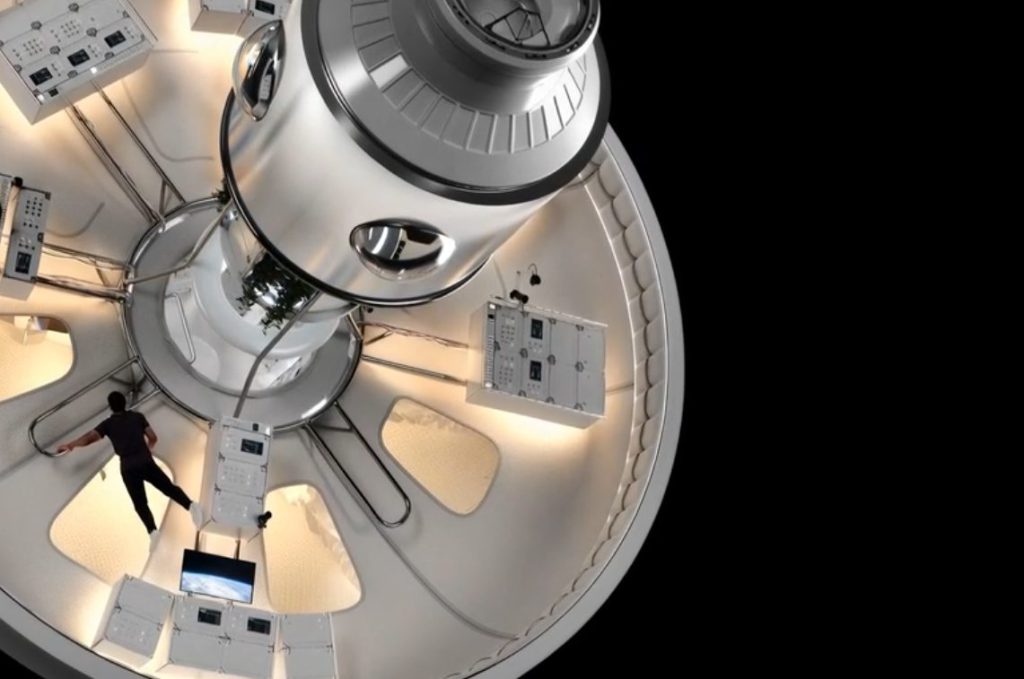
Future space travelers won’t be crammed into a sardine can for months; they’ll stretch out in habitats like the Max Space Thunderbird Station. This expandable orbital habitat launches compact and then expands in orbit. This clever trick minimizes launch volume and mass while maximizing interior space. The station’s ample interior supports scientific research, commercial manufacturing, and private space activities, aligning with the broader trend toward commercial orbital stations.
Its design integrates large windows and private crew areas for psychological well-being, because even in space, a bit of privacy and a good view can prevent that endless flight feeling. The concept follows expandable structure principles that maximize comfort while keeping launch costs practical. When the alternative is claustrophobic quarters for months on end, this kind of spatial innovation becomes essential for long-duration missions.
10. Roborock SOS Rover
Finally, a vacuum that doesn’t fear your stairs.
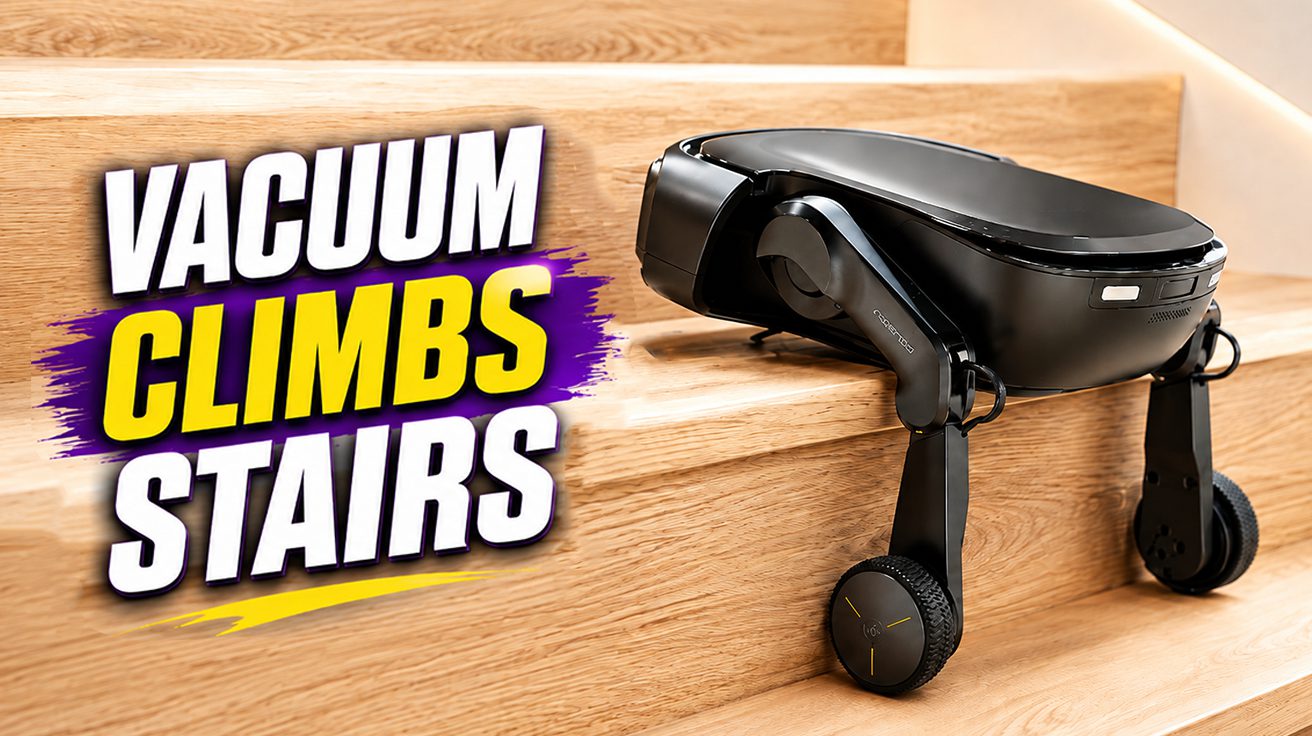
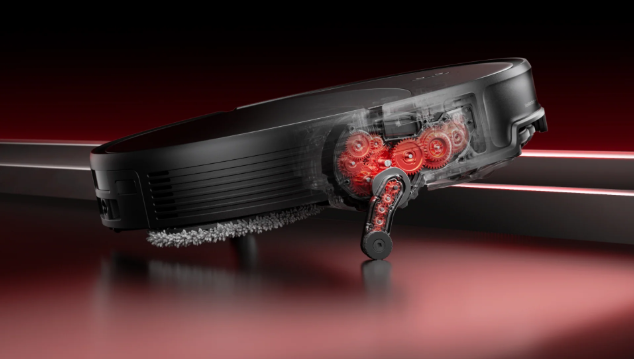
Most robot vacuums operate under the unspoken agreement that your home exists on a single, perfectly flat plane. The Roborock SOS Rover dismisses this notion entirely. Its unique hybrid wheel/lift design allows the unit to seamlessly raise and balance its body, effortlessly traversing stairs, uneven surfaces, and multi-level layouts autonomously. It moves like a seasoned parkour athlete, unburdened by architectural impediments.
Leveraging intelligent sensors and 3D spatial mapping, this robot constructs real-time blueprints of your entire living space, plotting precise cleaning paths. Anyone whose current bot beaches itself on a transition strip, requiring rescue like a stranded sea turtle, will appreciate the difference. The SOS Rover aims for fully autonomous whole-home cleaning, advancing capable household robotics that tackle your home’s entire topography, not just the easy bits.
9. SwitchBot Onero H1 home assistant robot
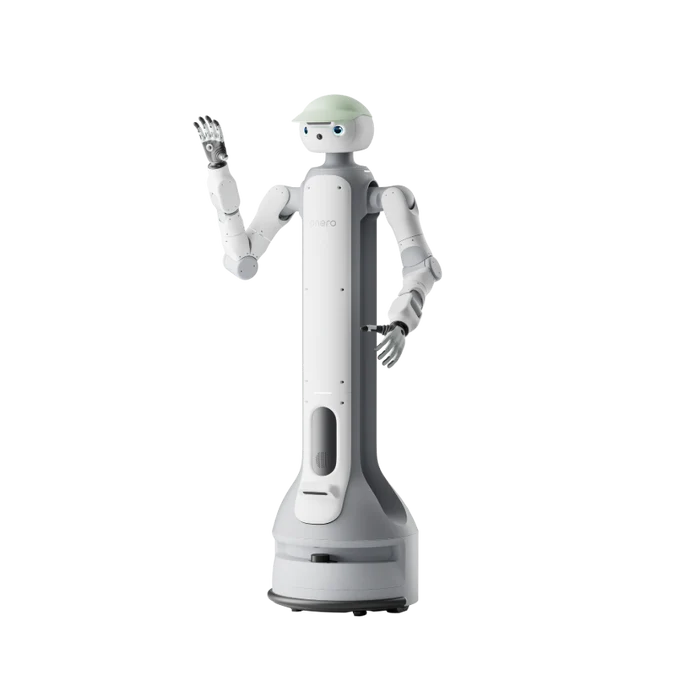
Hands that actually fetch the remote instead of just talking about it.
The vision of a truly interactive home assistant is taking physical form with the SwitchBot Onero H1. This mobile smart home robot maneuvers around your house on a wheeled base, moving beyond a mere voice. Its articulated arms and hands enable direct physical interaction, allowing it to pick up objects or press buttons that resist smart home integration.
Its intelligence allows it to perceive, understand, and learn, moving past simple actuation. It uses AI perception for object recognition, depth understanding, and scene analysis, processing its surroundings with surprising competence. This robot learns from daily use, coordinating with your existing SwitchBot products. Such convergence of embodied AI and domestic robotics means it might actually retrieve that rogue TV remote without requiring a detailed map of your couch cushions.
8. Pickle One “Soul Computer” AR glasses

Your life, archived and searchable, perched on your nose.
Wearable technology is quickly moving from basic fitness trackers to integrated cognitive assistants. The Pickle One “Soul Computer” AR glasses, at just 68 grams, offer a new vision for personal AI. These glasses feature a full-color binocular AR display and spatial audio, subtly enhancing your reality. Its Picolo S operating system gathers information, organizing it into searchable “memory bubbles.” You gain a real-time, context-aware archive of your experiences.
These glasses deliver spatial audio prompts. It’s like a discreet whisper reminding you of an upcoming appointment as you approach its location. This means no more missed reminders or frantic phone searches. The system offers helpful suggestions without explicit commands. Pre-orders are set around $799, positioning the device as a mid-range investment for those serious about augmented memory. The system emphasizes privacy by enabling cryptographic key-based deletion of stored memories, addressing the obvious concerns about always-on recording.
7. Hyundai MobED (Mobile Eccentric Droid)
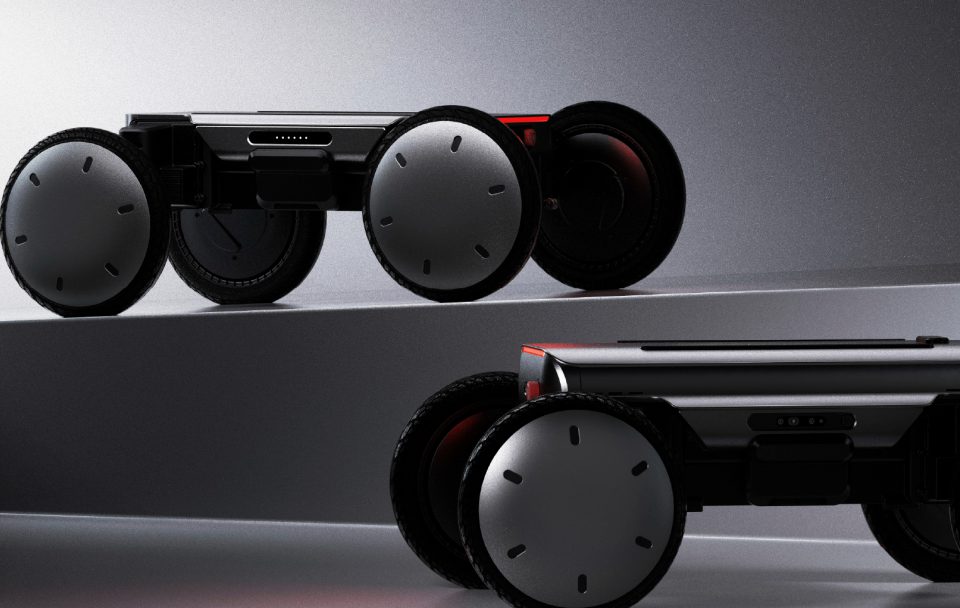
A steady platform that treats rough terrain like a yoga mat.
Robotics that once thrived in controlled environments now confront chaotic, dynamic realities. Hyundai’s MobED (Mobile Eccentric Droid) emerges as an autonomous mobility platform, using four wheels on eccentric arms. This design allows it to navigate slopes, rough terrain, and obstacles while maintaining a stable platform, much like a steady-cam rig on a skateboard.
The anxiety of transporting anything fragile over bumpy roads disappears; this droid ensures delicate payloads arrive perfectly intact across challenging ground. Built as a modular base, MobED leverages AI-powered navigation, cameras, and sensors for diverse applications, from specialized delivery to professional filming. This signifies a broader shift toward practical, adaptable mobility platforms, moving beyond single-purpose bots to foundations that can serve multiple roles.
6. Withings Body Scan 2
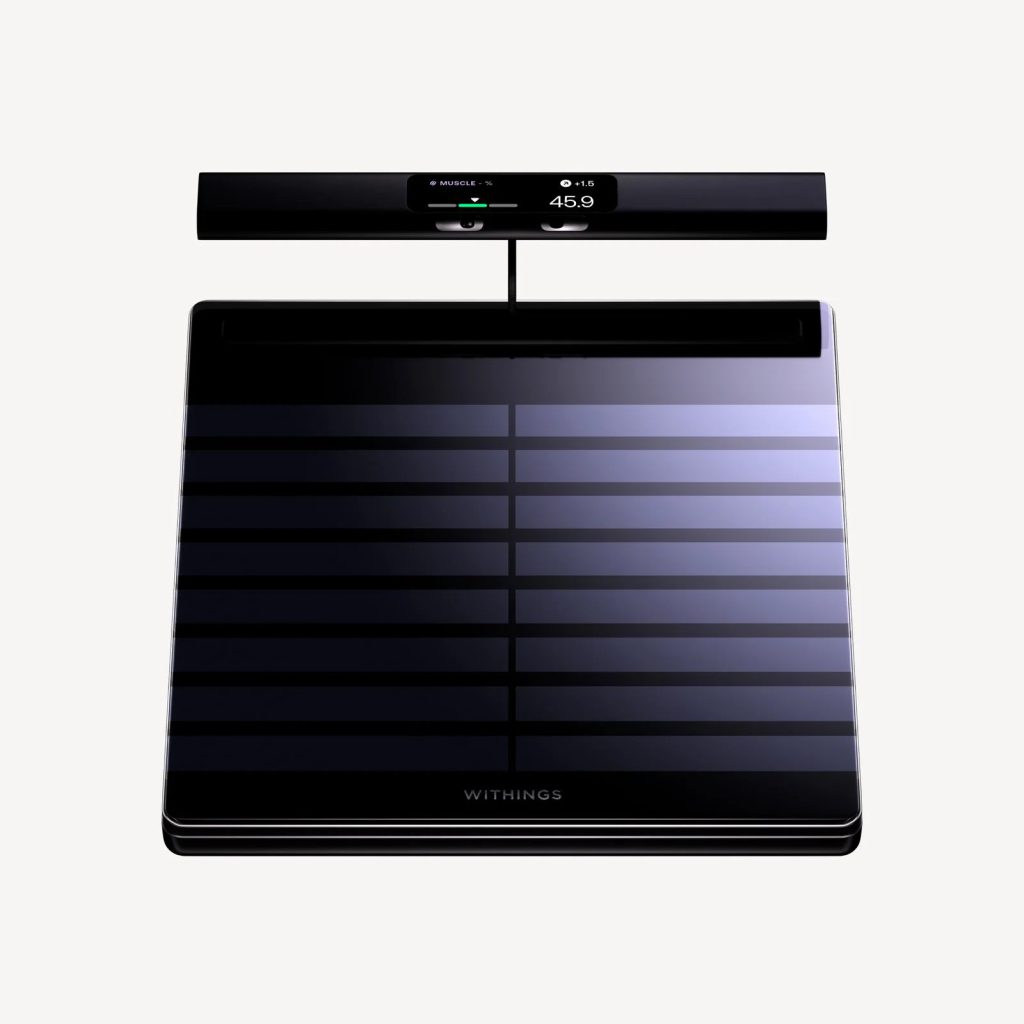
Your bathroom scale, upgraded to health command center.
If you’re serious about taking control of your health beyond a simple number on a display, the Withings Body Scan 2 offers comprehensive home monitoring. This device evolves the smart scale concept, measuring far more than just weight. It captures detailed data on your body composition (fat, muscle, water), heart function, vascular health, and metabolism in a quick daily session.
All this vital data then syncs straight to a connected health app, transforming your daily weigh-in into a critical home health checkpoint. You track trends and make informed lifestyle decisions, spotting subtle shifts in your metabolism or heart function before they escalate. This positions the Body Scan 2 firmly within remote health and telemedicine-support devices, giving you a complete health narrative rather than isolated measurements. Anyone who’s ever wondered whether their fitness routine is actually working will appreciate having medical-grade data at their fingertips.
5. Rokomo X1 LiDAR robotic lawn mower
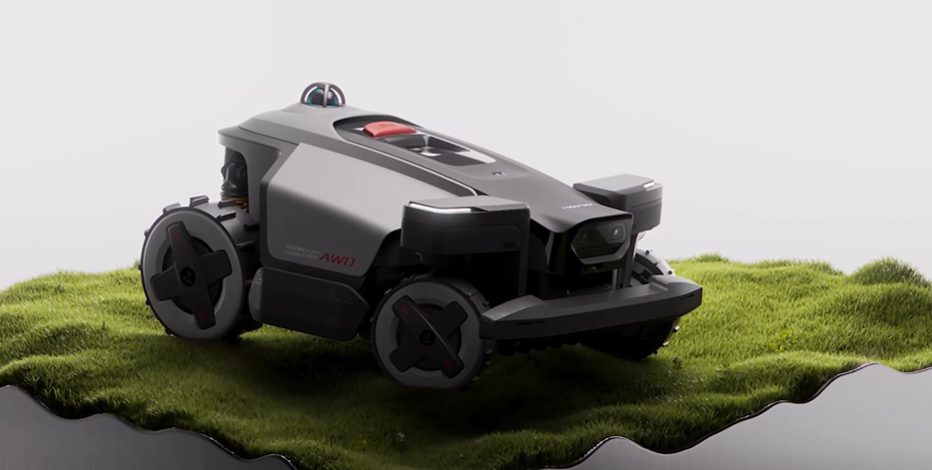
Mapping your yard with hundreds of thousands of data points per second.
Mowing your lawn manually captures only visual data at walking pace, but the Rokomo X1 LiDAR mower captures hundreds of thousands of points per second to map your property with precision. This advanced 360° LiDAR system, coupled with dual cameras and VSLAM, enables sophisticated navigation that understands terrain and identifies small obstacles.
You can virtually manage your entire outdoor domain from your phone without wrestling with a single boundary wire. Unlike struggling with a balky pull cord on a Saturday morning, the Rokomo X1’s all-wheel-drive system tackles steep slopes and small obstacles. This machine doesn’t call in sick when the weather turns sour, thanks to rain sensing and its water-resistant construction. You simply set geofenced boundaries and schedule tasks through an app, transforming what used to be a weekend chore into background noise.
4. Razer Project AVA holographic AI companion

A 3D assistant that doesn’t live in a flat rectangle.
A mere 5.5-inch fully animated 3D avatar can now transform your desktop into a living, breathing workspace. Razer’s Project AVA concept aims to shatter the flat-screen barrier, presenting a desktop holographic AI assistant that feels less like software and more like a digital colleague. This futuristic companion supports eye-tracking, facial expressions, and lip-sync, enabling natural, intuitive engagement.
This assistant transcends simple notifications, acting as both a productivity and gaming assistant. You can leverage its dynamic presence to manage schedules, analyze data, or even brainstorm complex tasks. During gaming, it provides real-time strategic guidance. The system connects seamlessly to Windows PCs via USB-C, integrating with your existing workflow for more personal digital interactions. While still in concept stage, Project AVA represents a significant step toward interfaces that feel less like tools and more like collaborators.
3. XREAL Air 1S AR glasses

A 500-inch virtual screen that fits in your jacket pocket.
A virtual screen up to about 500 inches is no longer confined to dedicated home theaters; it now fits in your pocket. The XREAL Air 1S AR glasses offer a Full HD display per eye, delivering cinematic scale on demand. With a generous 52° field of view and a 120 Hz refresh rate, you get visuals as fluid as a perfectly cued track on your playlist. The XREAL X1 spatial computing chip ensures content remains stable, anchoring your digital experience to the real world.
The Real 3D feature effortlessly converts standard 2D video into immersive stereoscopic 3D. Transforming your morning commute from a cramped bus ride into a private screening room becomes possible. These wearable AR glasses deliver that escape, allowing you to binge a new series or catch up on sports. For about $449, these glasses remove the compromise between portability and an immersive visual experience, with Bose-tuned audio and electrochromic dimming adding practical comfort.
2. Penguins Innovate White Rabbit smart home ceiling robot

Your ceiling-dwelling vibe curator that learns your moods.
A truly intelligent home isn’t just listening; it’s actively moving with you. The White Rabbit, from Penguins Innovate, travels along a ceiling-mounted airpath track, transforming your static space into a dynamically adapting environment. It bundles three functions in one device: adaptive lighting, immersive sound, and 360° panoramic video. You can boss it around with voice, gesture, and app commands, turning your living room into a personalized stage or a zen garden, all without getting up.
Beyond mere command following, this robot leverages AI to learn your habits, crafting personalized scenes that shift throughout your day. It’s like having a competent, invisible personal assistant for your home’s vibe, anticipating your needs. If you’ve ever tried to perfectly sync multiple smart devices, you know the struggle; this robot handles the heavy lifting. The product has appeared in early crowdfunding campaigns, indicating it’s in a pre-mass-market stage but highlighting a novel concept of ceiling-mounted mobile smart home companions.
1. Galaxia R1 Pro wheeled humanoid robot
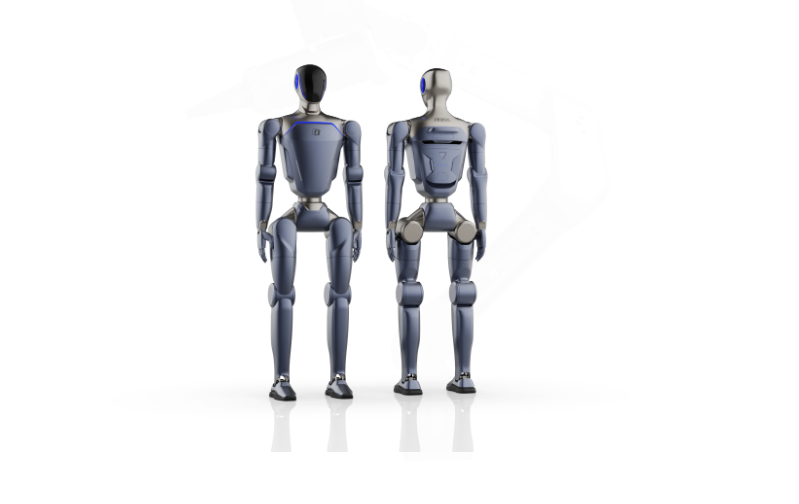
Around 200 TOPS of AI muscle for industrial precision.
A mobile platform processing around 200 TOPS of AI computing power defines the Galaxia R1 Pro wheeled humanoid robot for industrial automation. It runs on an NVIDIA Jetson AGX Orin 32 GB platform, its brain for real-time decision-making. This intelligence enables it to adapt like a seasoned chess player, anticipating moves. Anyone frustrated by sluggish systems will appreciate bottleneck-free operation.
Standing 1.7 meters tall, the R1 Pro features 26 degrees of freedom. Its dual 7-axis arms lift up to 10 kg with a 64 cm reach. Multiple cameras and 360° LiDAR map its environment, enabling precise industrial tasks in manufacturing or warehouse settings. It navigates production lines, handling components with the unwavering focus of a concert pianist. The platform also supports VR or isomorphic teleoperation in addition to autonomous workflows, offering flexibility for complex tasks.