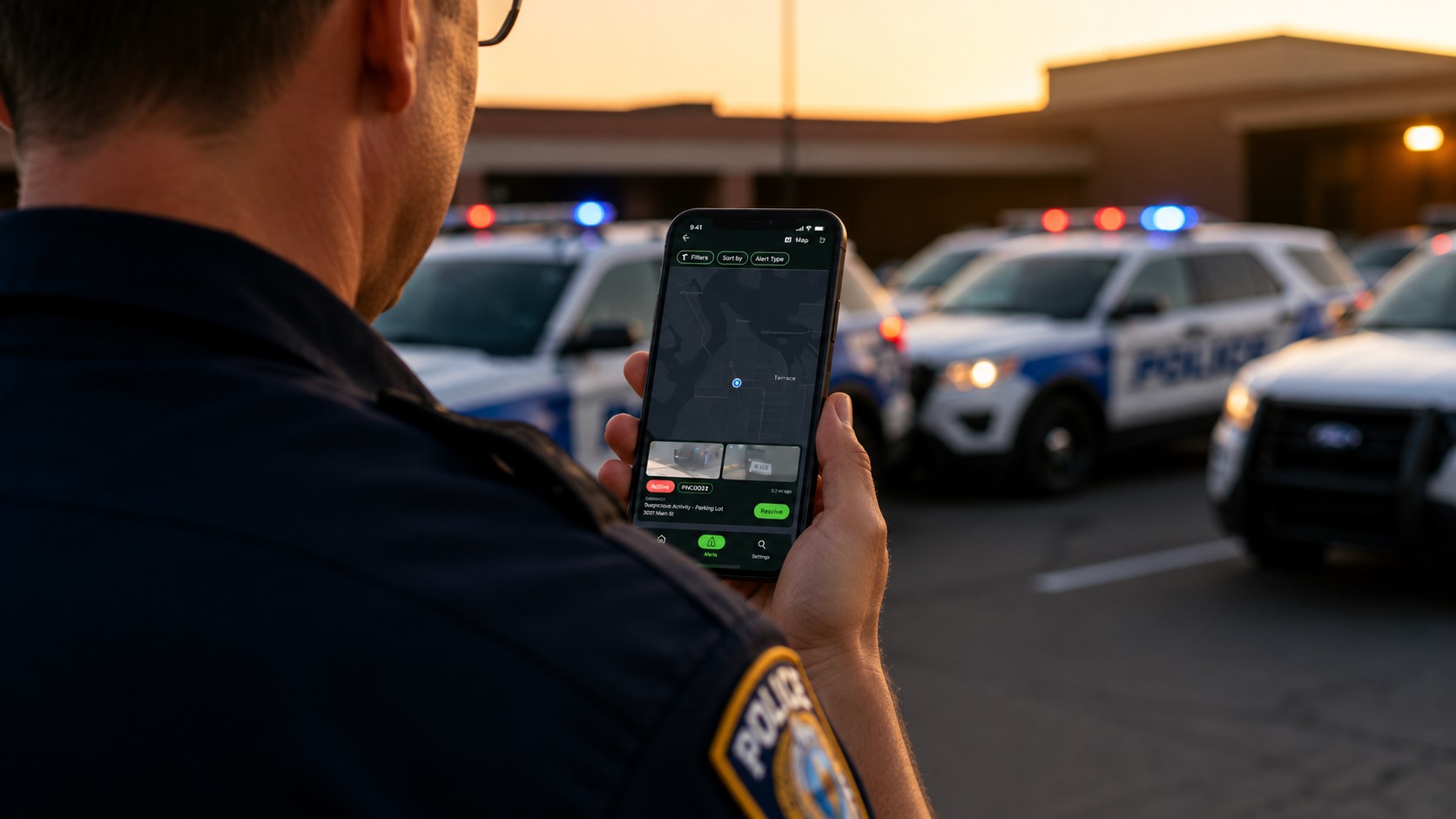
Detective Tehrangi Chapman, 51, spent 22 years with the Milwaukee Police Department. His job in Internal Affairs was straightforward: investigate officers who break the rules. According to prosecutors, he was breaking the same ones.
Chapman now faces felony misconduct in public office and misuse of a GPS device charges after allegedly running 20 unauthorized searches on Flock Safety’s license plate reader network between January 2024 and January 2025. Seventeen searches targeted one person’s plate. Three targeted another’s. His logged justification, according to the criminal complaint: “training” or “test.”
Flock cameras photograph your license plate, timestamp it, and log your location into a searchable database. No warrant needed. An officer types in a plate number, adds a reason, and gets your movement history. The entire barrier between legitimate police work and personal stalking is a single text field.
Chapman allegedly went further. Prosecutors say he secretly attached a physical GPS tracker to one victim’s car. The victim found it. A subpoena traced the purchase back to Chapman. He reportedly confessed to using both tools for personal reasons.
The institutional irony here is almost mechanical: Chapman was the detective assigned to investigate Officer Josue Ayala for doing essentially the same thing. Ayala allegedly ran 170 to 180 Flock searches in two months to track a woman he was dating and her ex, logging each as “investigation.” Ayala resigned. Chapman investigated him. Then Chapman allegedly ran his own version of the same playbook.
Wisconsin’s Pattern Goes Well Beyond Milwaukee
At least six or seven officers across the state have been charged, investigated, or found to have misused license plate surveillance in under a year.
This isn’t isolated. Across Wisconsin, multiple officers have faced consequences for similar conduct:
- In Menasha, Officer Christian Morales was arrested after his ex-girlfriend accused him of using Flock to monitor her movements.
- Kenosha County Deputy Frank McGrath resigned after investigators found he used Flock and a squad-car tracking system to surveil a deputy he’d been dating.
- Racine has its own ongoing investigations involving officers and a sheriff’s deputy.
Nationally, the Institute for Justice has documented at least 18 to 24 cases of officers using plate reader systems to track romantic partners, exes, or women they were interested in. The group warns that figure is “almost certainly an undercount,” because abuse typically surfaces only when victims report it or journalists force records requests. This isn’t a Wisconsin problem. It’s a design problem — surveillance built for stolen cars, handed to people with personal lives, protected by one-word justification fields.
Milwaukee’s post-Ayala reforms — monthly audits, user agreements, reduced access — are what ultimately caught Chapman. The controls worked. They just arrived after the victims did. The ACLU of Wisconsin has called for independent oversight, arguing departments cannot be the only entities policing their own surveillance tools. Chapman’s case makes that argument more effectively than any policy brief ever could.