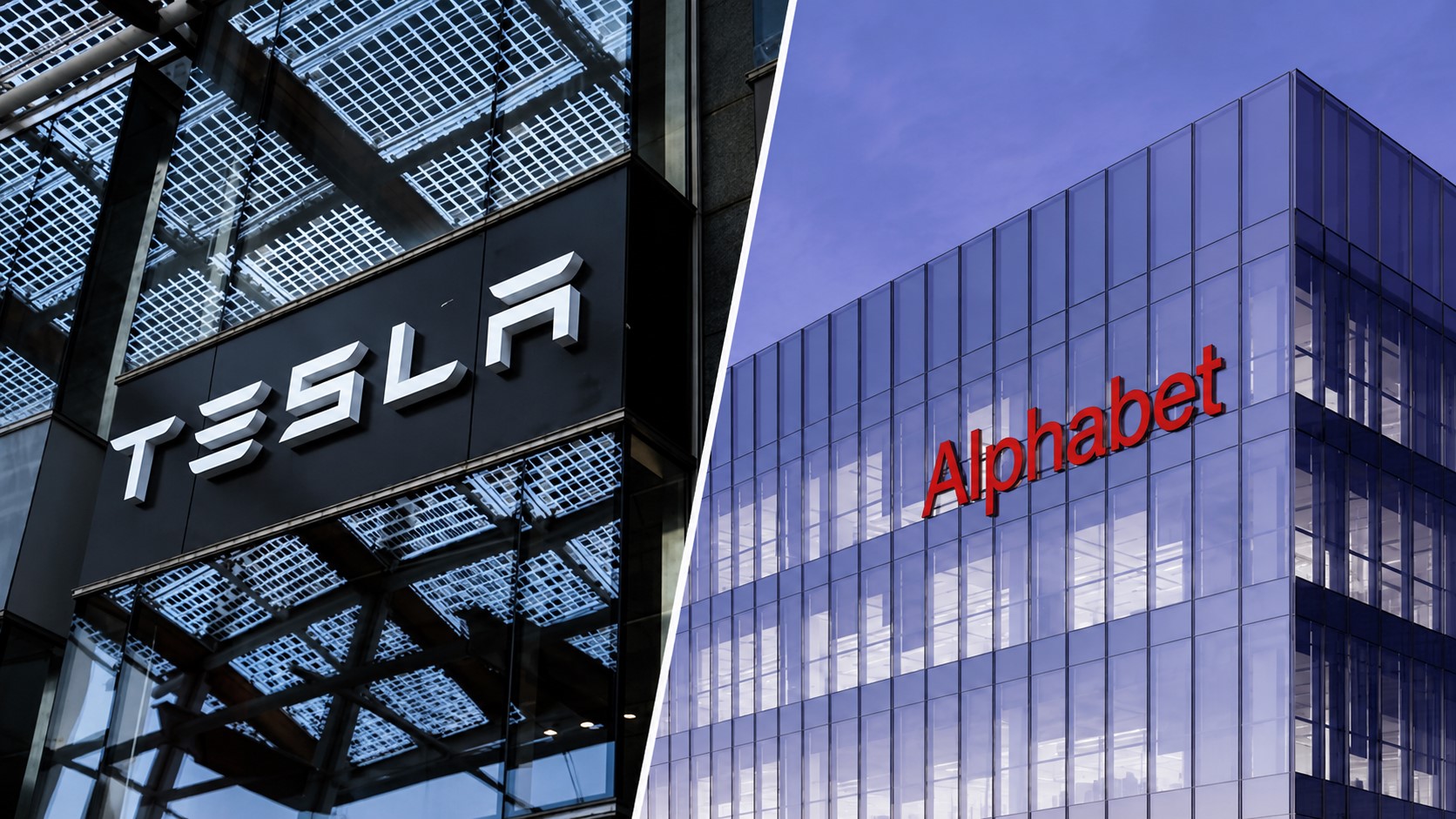
Strong revenue. Negative free cash flow. Capex guidance that made Wall Street flinch. Tesla dropped roughly 12% and Alphabet sank about 6% after Q2 2026 earnings — not because the businesses are broken, but because the AI spending plans look bottomless. Tesla burned through approximately $5.8 billion on AI initiatives in a single quarter. Alphabet raised its full-year capex outlook to $195–205 billion, more than double last year’s figure. Both companies slid into negative free cash flow. The reckoning AI hype always had coming finally arrived, and it arrived with an invoice.
The Numbers That Spooked the Market
The earnings beat the forecasts — the spending guidance did not.
- Tesla shares fell roughly 12%; Alphabet dropped approximately 6% following Q2 2026 earnings
- Both companies reported better-than-expected revenue but slipped into negative free cash flow
- Tesla’s 2026 capex target exceeds $25 billion, up from roughly $8.5 billion the prior year, according to Reuters and Business Insider
- Tesla hit negative free cash flow for the first time in approximately two years, per the LA Times; Musk signaled the company expects to remain free-cash-flow-negative through year-end
- Alphabet raised its 2026 capex outlook to $195–205 billion and separately plans to raise $80–85 billion in new equity capital, including a $10 billion private placement to Berkshire Hathaway, as reported by Reuters
Tesla’s billions are flowing into robotaxis (Cybercab), Optimus humanoid robots, and a $3 billion semiconductor research fab in Austin dubbed “Terafab.” Think of it as production hell all over again — except the product is a walking robot, not a sedan. The irony is hard to miss: Tesla capped employee AI tool usage at $200 per week as a cost-control measure while burning $5.8 billion on AI infrastructure in a single quarter. Analysts noted, according to Reuters, that the scale and timing of Tesla’s AI pivot, combined with weaker profit, is challenging investor confidence in Musk’s ability to deliver on robotaxi and robotics timelines.
The Question Neither Company Has Answered
Bulls see long-term moats; skeptics see open-ended cash burn without a clear payoff timeline.
Alphabet faces a different version of the same problem. Cloud revenue is reportedly surging — the company guided to roughly 82% year-over-year growth, though that figure stems from company guidance and details remain unclear in public filings. Even so, the spending plan now layers equity dilution on top of staggering capex. Berkshire Hathaway’s $10 billion commitment signals long-term conviction, yet retail investors are watching near-term earnings compress in real time. Analysts told CNBC that Alphabet’s capex guidance came in “far more than investors expected,” a major surprise driving the post-earnings decline. Microsoft, Amazon, and Meta are reportedly watching how markets respond to Alphabet before finalizing their own AI infrastructure spending disclosures.
Both companies have survived expensive infrastructure cycles before. Tesla endured Model 3 production chaos and Gigafactory cash burns; Alphabet’s earlier data-center buildouts eventually powered search and YouTube into cash machines. But those bets had clearer near-term products behind them. A humanoid robot and a chip fab moonshot are a harder case to make when patience is already running thin.
The market isn’t anti-AI. It’s anti-blank-check. That distinction matters to your portfolio whether you hold, fold, or wait for proof that the spending actually pays off.