
OpenAI‘s GPT-5.6 Sol scores within one point of Anthropic’s Claude Fable 5 on the Artificial Analysis Intelligence Index, yet completes tasks roughly 61% faster at about half the cost. Sol excels in complex reasoning and agentic workflows; Fable 5 dominates software engineering and deep analysis. Choosing between them resembles hiring an elite special ops team—the right expert for the mission determines success when output quality matters most. Rigorous testing across four categories reveals where each model earns its reputation.
15. GPT-5.6 Sol
OpenAI’s flagship tackles multi-agent orchestration and complex coding with relentless efficiency.
According to OpenAI, GPT-5.6 Sol scores 80 on the Artificial Analysis Coding Agent Index, outperforming Claude Fable 5 by 2.8 points while using less than half the output tokens and time. (Note: Artificial Analysis’s published index does not yet list GPT-5.6 entries; this claim reflects OpenAI’s launch messaging rather than independent verification.) Sol handles multi-step coding and agentic workflows like a digital Rottweiler chewing through problems until a solution emerges. Software projects with more moving parts than a Rube Goldberg machine meet their match.
Pricing sits at $5 input / $30 output per million tokens, positioning Sol as OpenAI’s workhorse for development teams. Analyses show its effective per-token cost runs roughly half that of Claude Fable 5, significantly cutting development time and expenses for intricate software delivery.
14. GPT-5.6 Terra
The balanced mid-tier option delivers GPT-5.5 performance at half the price.
At $2.50 input / $15 output per million tokens, GPT-5.6 Terra targets general professional use where capability and cost must align. Performance matches GPT-5.5 while costing roughly 2× less. When budgets resemble vintage skinny jeans—uncomfortably tight—Terra keeps solutions moving. This variant slightly outperforms Claude Fable 5 on certain efficiency benchmarks while operating at approximately one-sixteenth the cost.
Terra acts as the seasoned utility player in any tech stack. Not the MVP, but the reliable performer enterprises count on for consistent results across everyday workflows without budget-busting bills.
13. GPT-5.6 Luna

Purpose-built for speed and volume, Luna handles routine tasks at breakthrough pricing.
While resource-hungry models crunch complex data, GPT-5.6 Luna handles the digital equivalent of flipping burgers at a busy diner: fast, efficient, essential. Pricing stands at $1 input / $6 output per million tokens, making it the most affordable GPT-5.6 option. Benchmark coverage indicates Luna outperforms Claude Opus 4.8 on selected metrics while being significantly cheaper per token.
Luna excels where depth of reasoning takes a backseat to sheer output. Startups needing to process mountains of simple content generation or automate thousands of customer support responses daily can scale without burning venture capital. This tireless workhorse delivers results without requiring a corner office or designer coffee machine.
12. Claude Fable 5
Anthropic’s top model spots plot holes before anyone else, excelling in deep analysis and strategic design.
The Artificial Analysis Intelligence Index registers Claude Fable 5 at approximately 60, a point ahead of GPT-5.6 Sol’s 59. Fable 5 operates like the wise owl of AI, sifting through ambiguity with uncanny precision. On SWE-Bench Pro, it achieved 80.3%, substantially outperforming Opus 4.8’s 69.2%. Lead architects rely on Fable 5 to conceptualize intricate system specifications and avoid critical oversights.
This model doesn’t just process information—it thinks. Like a master chef designing a menu from scratch, Fable 5 handles user interface design and entire product visions from a blank slate. For teams where getting it right the first time matters more than speed, Fable 5’s strategic planning and creative design capabilities justify its premium positioning.
11. Claude Opus 4.8
Once a high-end workhorse, Opus 4.8 now trails newer models in performance and cost-efficiency.
Achieving 69.2% on SWE-Bench Pro, Claude Opus 4.8 once held strong as a reliable senior engineer for complex software tasks. The AI landscape evolves quickly. Fable 5 now hits 80.3% on the same benchmark. On Humanity’s Last Exam with tools, Opus 4.8’s 57.9% trails Fable 5’s 64.5% and GPT-5.5’s 52.2%.
Cost compounds the performance gap; Fable 5 can run roughly twice as expensive per token as Opus 4.8. Teams structured around Opus 4.8 face a familiar tech dilemma: weigh capable but outmatched performance against newer, pricier alternatives. Opus 4.8 remains functional, but its cutting edge has dulled.
10. Artificial Analysis Intelligence Index
A comprehensive metric reveals Sol approaches Fable 5’s intelligence at a fraction of the cost.
GPT-5.6 Sol achieved 59 on the Artificial Analysis Intelligence Index, a composite benchmark measuring broad AI intelligence across agentic work, coding, and scientific reasoning. This places Sol within one point of Claude Fable 5’s 60. Sol delivers this near-parity while performing tasks approximately 61% faster and at roughly half the estimated cost per task.
For AI researchers, these scores transcend digital bragging rights. The index becomes crucial for comparative evaluation, showing that raw “smartness” isn’t everything. Sol’s ability to approach Fable 5’s intelligence while maintaining superior speed and cost-efficiency mirrors a perfectly coded app that runs fast without draining battery.
9. Artificial Analysis Coding Agent Index

The definitive benchmark for AI coding prowess cuts through hype to reveal true capabilities.
The Artificial Analysis Coding Agent Index evaluates models as autonomous coding agents across multi-step projects and complex agentic workflows. According to OpenAI launch messaging, GPT-5.6 Sol achieved a score of 80, outperforming Claude Fable 5 by 2.8 points. (Caveat: Artificial Analysis’s currently published Coding Agent Index lists Fable 5 at 77 as the leader and shows no GPT-5.6 entry, creating a discrepancy between OpenAI’s claims and the evaluator’s public data.)
OpenAI reports Sol uses less than half the output tokens, completes tasks in less than half the time, and costs about one-third less than competitors. For software development leads selecting AI for advanced coding applications, these efficiency metrics—if validated—would represent substantial advantages.
8. GPT-5.6 Pricing (Sol, Terra, Luna)
Image: Unsplash
Tiered pricing lets teams match capability to cost across complex reasoning, daily operations, and high-volume tasks.
OpenAI’s GPT-5.6 family offers a tiered approach where a single token impacts bottom lines:
- The flagship Sol charges $5 input / $30 output per million tokens for demanding tasks requiring complex reasoning or coding. Sol acts like the high-performance sports car in any AI garage, delivering raw power; analyses show its effective per-token cost runs roughly half that of Claude Fable 5.
- Terra provides balance at $2.50 input / $15 output per million tokens—a reliable, fuel-efficient sedan perfect for enterprise workflows needing consistent performance without breaking budgets.
- Luna offers maximum affordability at $1 input / $6 output per million tokens for high-volume, simpler tasks.
This flexibility ensures teams don’t overpay for basic requests, like choosing a scooter for quick errands instead of a big rig.
7. Claude Fable 5 Cost Characteristics
Image: Unsplash
Deeper reasoning chains and longer “thinking” cycles make Fable 5 notoriously expensive per task.
Claude Fable 5 carries significantly higher list prices than predecessors, a detail that gives finance managers cold sweats. The true cost emerges after the model “thinks” through complex problems. Deeper reasoning chains consume more tokens than rate sheets suggest. Like a TikTok trend that looks effortless, behind-the-scenes effort adds up fast.
Reviews describe Fable 5 as “notoriously expensive” compared to Claude Opus 4.8, which was no budget option itself. Cost per intelligence clocks in around $2.75, starkly contrasting GPT-5.6 Sol’s more efficient $1.04. For genuine ROI, evaluate AI investments based on solved task outcomes rather than raw token rates. The sticker price is merely the cover charge.
6. Claude Mythos 5

Image: Unsplash
The less-restricted sibling offers unvarnished access for specific, demanding uses.
Anthropic states Claude Fable 5’s capabilities exceed any model they’ve generally released. Fable 5 delivers performance akin to Mythos 5 but with stringent safety guardrails for wide availability. Mythos 5, its less-restricted sibling, serves specific, demanding uses—consider it the director’s cut offering unvarnished access.
This less-restricted nature makes Mythos 5 compelling for cybersecurity experts in high-risk applications. While GPT-5.6 Sol scores 91.9% in Ultra mode on Terminal-Bench 2.1 (though evaluator METR flags serious benchmark contamination issues), Mythos 5 offers advantages when uninhibited analysis is crucial. Its controlled availability positions it as a specialized solution demanding careful use.
5. GPT-5.6 Sol Ultra Mode
A higher-reasoning, multi-agent iteration tackles the most challenging computational problems.
The future of autonomous systems relies on AI agents thinking multiple steps ahead. GPT-5.6 Sol Ultra mode offers this next-level capability as a multi-agent iteration of standard Sol. Reports show it scores approximately 91.9% on Terminal-Bench 2.1, a benchmark for real command-line workflows, outpacing standard Sol and competitors like Claude Mythos and Fable on that specific metric. (Important caveat: METR, the benchmark evaluator, warns this result is heavily contaminated and “cannot be trusted” as a clean capability measure.)
Even top-tier models have their niches. Some cybersecurity benchmarks (especially exploit-related tests) still show Claude Mythos or Fable slightly ahead. Researchers pushing autonomous systems find Sol Ultra mode valuable for complex, multi-step command-line workflows. It handles intricate tasks demanding exceptional diligence—like a digital sherpa guiding expeditions through perilous codebases.
4. GPT-5.5
The foundational predecessor illustrates AI’s relentless drive for more intelligence at less cost.
Scoring 52.2% on Humanity’s Last Exam with tools, GPT-5.5 once stood as a significant benchmark for large language models. This foundational model served as a robust workhorse, like that perfectly capable phone used until the next generation hit. While offering competitive performance with newer GPT-5.6 Terra, that successor became 2× cheaper to run. Claude Fable 5 further raised the bar, consistently outperforming GPT-5.5 on complex tasks.
Token inefficiency and slower processing speed, compared to faster, more efficient GPT-5.6 variants, underscored rapid shifts in AI development. Tech evolves so quickly that today’s marvel becomes tomorrow’s nostalgia. Despite being surpassed, GPT-5.5 remains a crucial predecessor illustrating the industry’s historical progression.
3. Codex (OpenAI Platform)
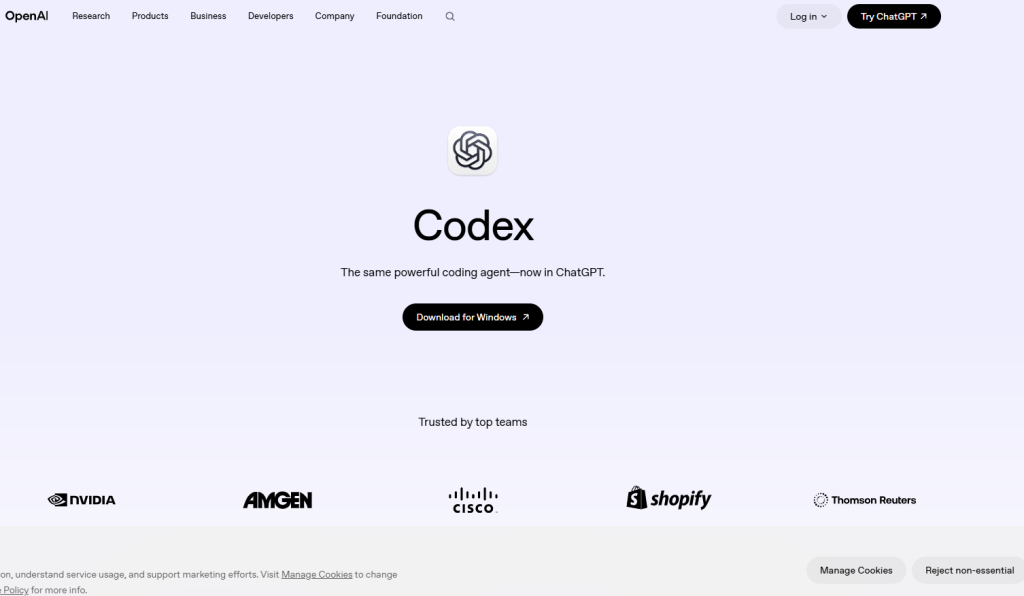
A distinct hub for OpenAI’s GPT-5.6 variants offers granular model control.
AI platforms increasingly balance integrated experiences against specialized toolsets. Codex (OpenAI Platform) commits to the latter, acting as a distinct hub for OpenAI’s GPT-5.6 variants. Users pick specific models: GPT-5.6 Terra for balanced tasks, Luna for rapid low-cost operations. Direct access for advanced modes like Sol Extra High ensures granular control over model selection.
This specialization fragments the user experience, feeling less cohesive than Claude’s integrated interface. For developers valuing direct access for “vibe coding,” however, Codex serves users seeking precise model deployment. According to OpenAI, GPT-5.6 Sol’s strong showing on the Artificial Analysis Coding Agent Index (pending independent verification) positions the platform for coding-focused workflows.
2. Chat GPT Work (OpenAI Platform)
A dedicated collaboration environment transforms how teams brainstorm, organize, and co-edit with AI assistance.
Remote team meetings often devolve into chaotic symphonies of “you’re muted” and fragmented ideas. OpenAI’s Chat GPT Work aims to cut through that noise, explicitly targeting the collaborative work market. This platform lets teams brainstorm, organize tasks, and co-edit documents in real-time with AI assistance. Its dedicated environment proves more efficient for team projects than juggling multiple tools.
For tasks like working on spreadsheets, it offers perceived advantages over Claude Co-work, acting like a skilled co-pilot navigating data. This approach transforms collective productivity from herding cats into a well-oiled machine. Active assistance pushes past the limits of traditional passive tools.
1. Claude Integrated Experience (Co-work / Code)
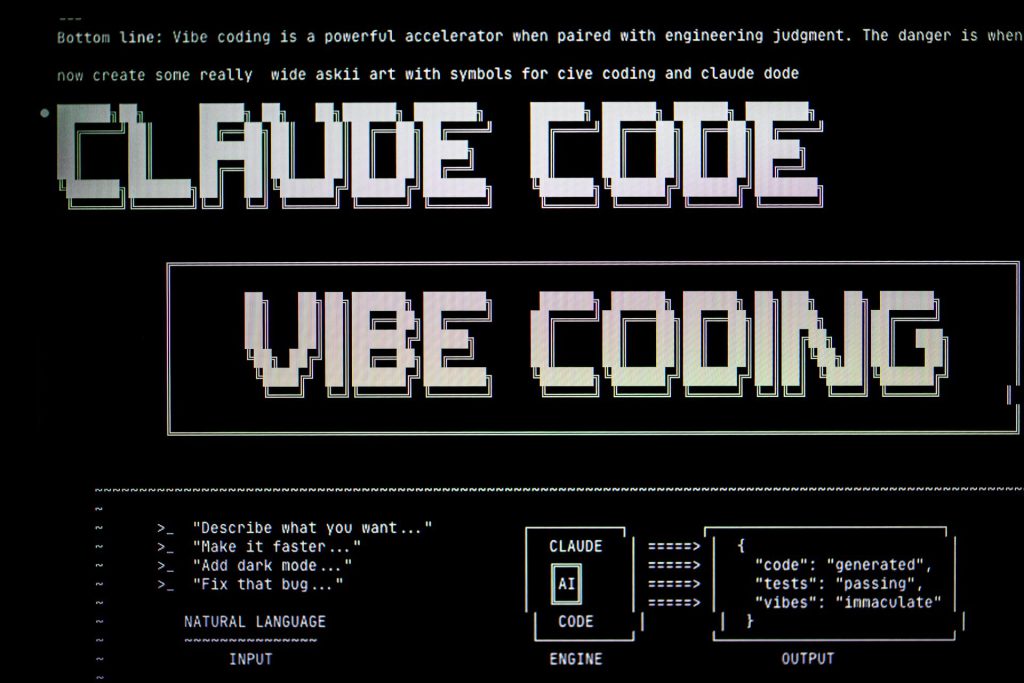
A unified workspace consolidates chat, code, and collaboration into seamless professional flow.
An integrated AI platform operates like a well-orchestrated symphony, bringing every instrument into perfect harmony. Claude’s comprehensive interface consolidates co-work features, Claude Code, and chat functions into a single pane of glass. This unified digital workspace delivers what teams need before they ask. Many users find their business systems becoming noticeably more Claude-centric—an inevitable drift when seamless integration reduces friction.
Keeping favorite apps in one folder avoids the dreaded app-switching ritual. Claude extends this principle to entire professional AI toolkits. For developers, this means fluid transitions between coding projects, team chats, and collaborative documents without the mental whiplash of context switching. This cohesive ecosystem delivers efficiency and uninterrupted flow, like a perfectly tuned engine running without a single hiccup.