
Relying solely on single-turn AI prompts often leaves complex tasks unfinished. Traditional prompt engineering, while effective for quick queries and creative ideation, treats AI like a vending machine: one input, one output. This method falls flat when an AI agent needs to tackle multi-step problems autonomously, demanding constant human oversight.
Loop engineering moves past this limitation, structuring AI agent development through iterative cycles that allow the agent to act, observe results, verify, and adapt until a goal is definitively proven complete. This ensures AI systems can manage entire projects, self-correct, and achieve complex objectives with tangible autonomy.
Understanding this crucial shift requires a closer look at the tools and concepts making true autonomous agents a reality.
10. Loop Engineering

The system-level approach that replaces manual re-prompting with self-directed AI cycles.
Traditional prompt engineering optimizes single-turn instructions. Loop engineering moves past “one-and-done” interactions. It focuses on the entire system: triggers, tools, verification, and memory, ensuring AI operates autonomously.
When an AI agent repeatedly fails a task, like fixing code, manual re-prompting wastes time. Loop engineering fixes this. The system directs the agent to act, observe, verify, and repeat until the goal is met.
This next step after prompt engineering optimizes multi-turn, self-directed systems, allowing AI to refine work until completion.
9. Claude Code Loops
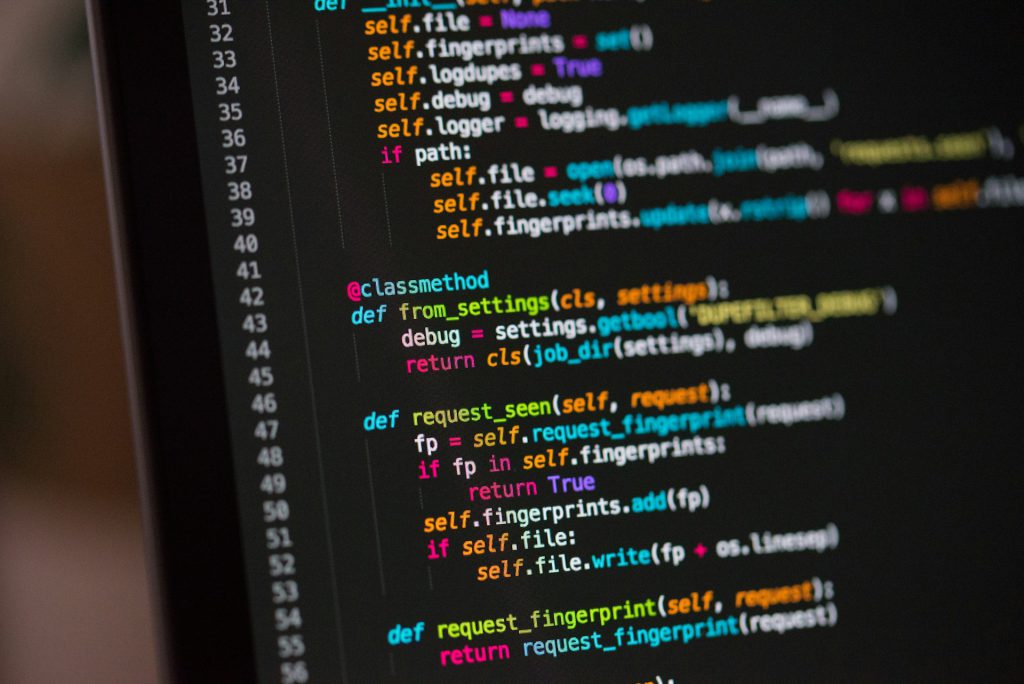
Anthropic’s native /loop command brings recurring, context-aware automation to coding sessions.
Anthropic’s Claude Code environment now integrates a /loop command, a feature significantly advancing AI-driven coding. This native capability moves beyond static, one-shot prompts, allowing developers to schedule recurring tasks that run as frequently as every minute.
The system maintains full session context, ensuring the AI builds on prior work without constant manual re-briefing. Scheduling a /loop command to monitor server logs autonomously lets the system flag anomalies and build on prior findings without manual intervention.
These loops can operate for up to around three days, centralizing conversation state and outputs within the coding session. This simplifies complex agentic workflows, cutting out external cron jobs. Agents can then manage routine tasks like job queue monitoring with unprecedented autonomy.
8. Anthropic’s Claude Code

An AI-powered environment where loops maintain persistent sessions for continuous code refinement.
Anthropic’s Claude Code has fundamentally shifted how AI assists developers. This AI-powered environment, built around Claude models, assists developers with a full suite of tasks including code reading, editing, running, debugging, and application building.
Boris Cherny, head of Claude Code, reportedly no longer writes prompts manually; he constructs loops that effectively prompt Claude Code for him, moving past the constant human intervention of earlier systems.
This iterative approach means the environment maintains a persistent session, allowing the agent to write code, execute tests, identify errors, and correct issues autonomously. Loops can be scheduled as frequently as every minute and retain context from previous iterations, enabling continuous refinement over periods up to three days.
7. Prompt Engineering

Single-turn optimization that works best for exploratory tasks requiring human judgment.
While prompt engineering excels at single-turn interactions, its reliance on constant human intervention reveals its limitations for complex, multi-step tasks. This approach optimizes a single turn: one input, one output, and one human in the chair.
It works effectively for exploratory tasks, ideation, or judgment-heavy decisions. Developers recognize this pattern: manually re-prompting an AI agent multiple times for a single code correction, each iteration demanding human review. This constant supervision creates friction.
A more efficient hybrid approach recommends using prompts when goals are unclear or need discussion, shifting to automated loops for verifiable, repetitive paths. Prompt engineering is a distinct and valuable tool for specific use cases where human oversight is genuinely essential.
6. Worktrees

Isolated environments that let multiple AI agents work in parallel without conflicts.
Worktrees provide isolated working environments, fundamentally addressing concurrency challenges when multiple AI agents operate within a single codebase. These are isolated branches or separate directories, akin to parallel Git worktrees.
This setup prevents autonomous agents from “stepping on each other,” essential when a builder sub-agent modifies code while a QA tester sub-agent validates changes. This allows dedicated sub-agents to work in parallel without direct conflicts.
This isolation dramatically reduces merge conflicts, making it significantly safer to run multiple autonomous coding agents concurrently. Worktrees underpin the stability and efficiency of complex loop-engineered systems, serving as a core structural element that keeps operations running smoothly.
5. Skills / Agent Harness

Structured playbooks that encode an agent’s responsibilities, tools, and step-by-step behaviors.
Despite advanced LLMs, explicit instructions remain vital; skills provide the foundation for an AI agent’s behavior. These structured files, often called an agent harness or playbook, encode the agent’s responsibilities, constraints, available tools, and step-by-step behaviors.
This systematic approach prevents the agent from “guessing the rules” during execution. These skills instruct the agent on how to perform tasks, detailing specific actions, tools to call, verification methods, and guardrails.
A “builder” sub-agent, for example, guided by its skill, precisely understands how to interact with the codebase and validate its changes. This guarantees consistent, reliable performance, becoming reusable design patterns for specialized sub-agents and predictable outcomes.
4. Connectors / MCPs
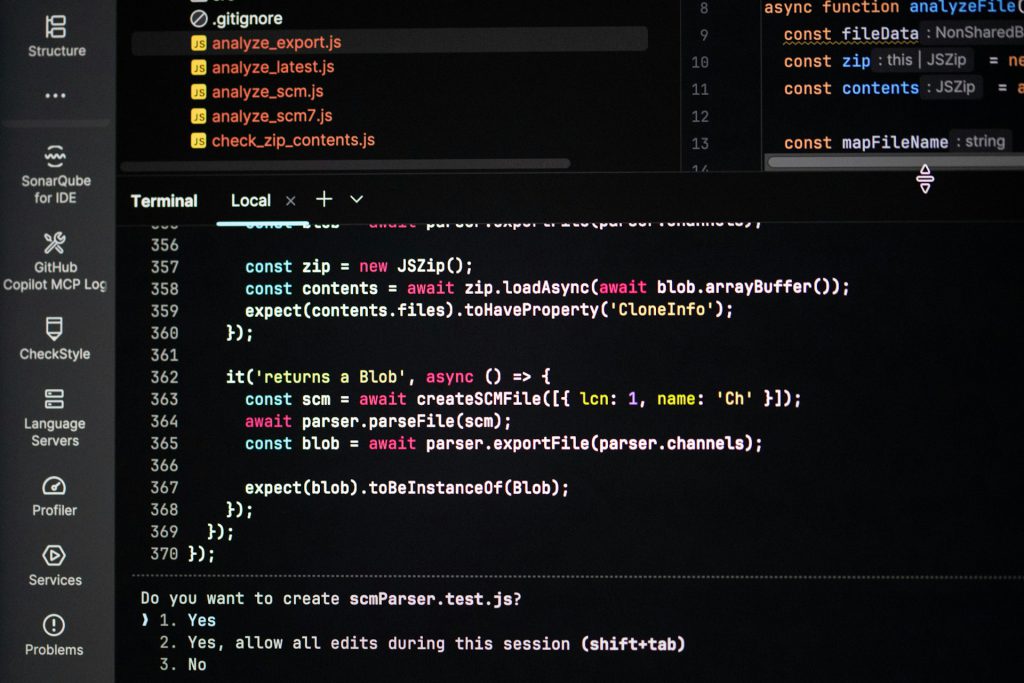
Plugins that give agents hands to interact with GitHub, Jira, Sentry, and other real-world tools.
AI agents need connectors to interact with the real world. These integrations, often known as plugins or Model Context Protocol (MCP) tools, are the agent’s digital hands, linking them directly to external systems.
An agent needs to read logs from Sentry, commit code to GitHub, or update tickets in Jira. Connectors make this possible, allowing agents to execute actions beyond their internal environment.
An agent might detect an error, log it via a connector to Sentry, and then automatically create a follow-up issue in Jira, all within its autonomous cycle. MCP-based connectors standardize API and CLI access, maintaining control over context and permissions for seamless operation.
3. Sub-agents

Specialized roles—orchestrator, builder, QA, reviewer—that separate “maker” from “checker” for reliability.
The answer to completing complex tasks reliably lies in specialized sub-agents, each with a distinct purpose within a loop-engineered system. An orchestrator sub-agent manages the overall workflow, dispatching a ‘builder’ sub-agent to write code in an isolated worktree.
After the builder’s task, the code proceeds to a ‘QA tester’ sub-agent for validation. This fundamental principle separates the “maker” and “checker” roles, since agents grading their own work tend to be less reliable.
Roles typically include orchestrator, builder, QA, and reviewer. This multi-agent structure, often operating in parallel across individual worktrees, creates a robust and efficient workflow that boosts reliability.
2. Memory / State
Persistent logs of tasks, errors, and decisions that prevent agents from repeating failed approaches.
An AI agent restarting a complex task from scratch after every single interaction demonstrates a fundamental flaw; this problem is precisely what memory and state management solve. Consider an agent tasked with refining code throughout its operational day.
Memory serves as the persistent record of its progress, logging every decision, error, and fix across iterations. In practice, this might involve using GitHub Issues, where each development task corresponds to a single issue.
Each iteration, the agent logs events, from build statuses and test results to QA feedback. If a build fails, the agent consults its memory, noting a previously attempted, unsuccessful fix to avoid wasting effort. This detailed history not only prevents redundant efforts but also provides human developers with full traceability of the loop’s actions and reasoning.
1. Loop Maker
A portable skill that scaffolds self-running loops through guided questions and best-practice validation.
Loop Maker is a portable agent skill designed to streamline the creation of self-running agentic loops, making advanced AI workflows accessible. This tool guides developers through a series of precise questions, covering crucial aspects like trigger types, stop conditions, and verification surfaces.
It addresses essential elements such as connectors to external systems, state storage for persistent memory, and critical human handoff points. A developer, navigating Loop Maker’s clean UI, answers prompts about desired loop behavior and then observes as a robust loop skeleton is generated.
This scaffold is ready for immediate invocation, validated against recommended design patterns and adhering to best practices for agentic loops. Loop Maker democratizes intricate loop engineering, providing a dependable, verified foundation for reliable AI automation.