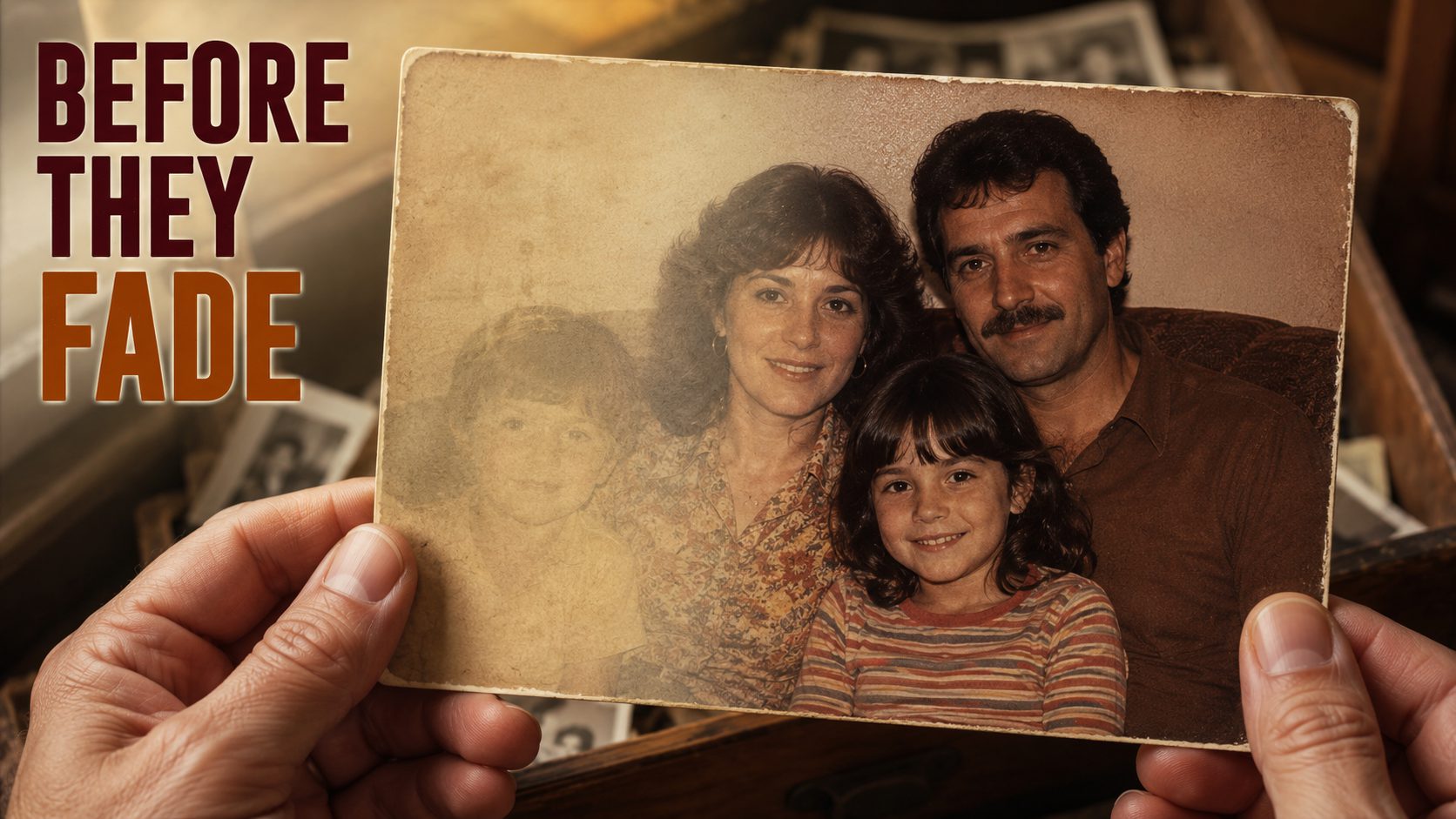
Somewhere in a drawer or a shoebox in your house is probably a photo from the 1970s or 80s that’s already starting to go, the kind where the reds have shifted orange and a face that used to be sharp now blurs into the background.
That’s happening because the dyes in a drugstore print break down on a fixed chemical timeline no matter how carefully it was stored, so it was never going to last more than 40 to 60 years even under decent conditions. A lot of the photos from the boom years of consumer photography, roughly the 1960s through the 1990s, are sitting right inside that window now, which is why they keep fading a little more every year they stay in a frame or a box.
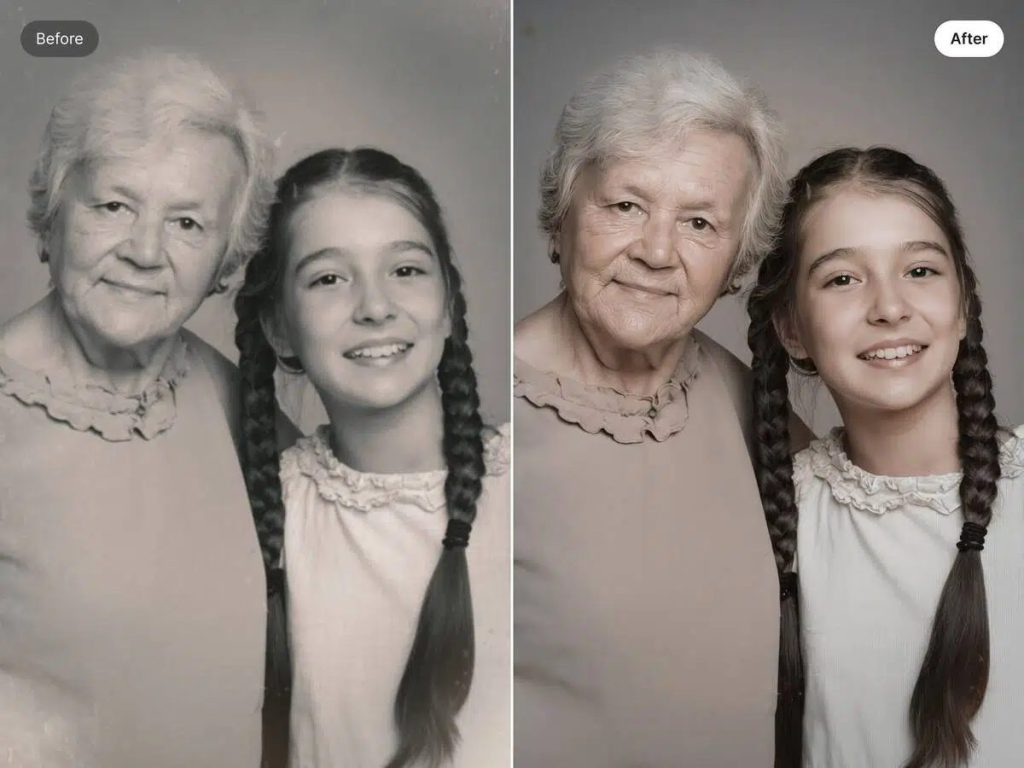
There’s No Second Copy of This Photo
A print like that usually only exists once. There’s no negative sitting in a filing cabinet somewhere, no cloud backup, nothing to reprint from if the original goes.
And for a lot of families, the person in that photo, a great-grandparent, an aunt nobody talks about anymore, is only recognizable to one living relative left who actually remembers their face well enough to say that’s her, before she got sick, or that’s the house before they added the porch. Once that photo fades past legibility, or once that relative is gone, the person in it stops being someone anyone can actually recognize. They just become a shape in an old photo.
What Separates This From a Basic Sharpen Filter
A blurry, faded photo isn’t a problem a normal sharpen tool actually solves. Sharpening treats every pixel the same way, which is why running it on an old photo usually just makes the grain and noise more obvious instead of bringing a face back.
Newer restoration tools work differently because they identify what they’re looking at first, a face, hair, fabric, the wall behind someone, and correct each of those separately, which is how a face can come back with real definition without the rest of the image turning grainy or overexposed.
Color balance gets handled the same way, correcting a washed out tint without pushing it into something too bright or artificial, and the whole process usually finishes in seconds rather than the hours a manual edit would take. Wink built its AI image enhancer around exactly this approach, aimed specifically at faded and blurry family photos.
Where the Limits Still Show Up
None of that means these tools perform miracles. Deep tears, missing sections, and heavy staining sit outside what any of them can fully recover, since the software can only guess at information that isn’t there anymore, and a guess isn’t the same as the original detail. A photo with severe enough damage comes back improved, not rescued.
Worth Trying While There’s Still Time
For a photo that’s just fading the ordinary way, though, the kind sitting in most people’s closets right now, it’s a real fix, and a fast one. Worth trying before that photo, or the last person who remembers the face in it, runs out of time.