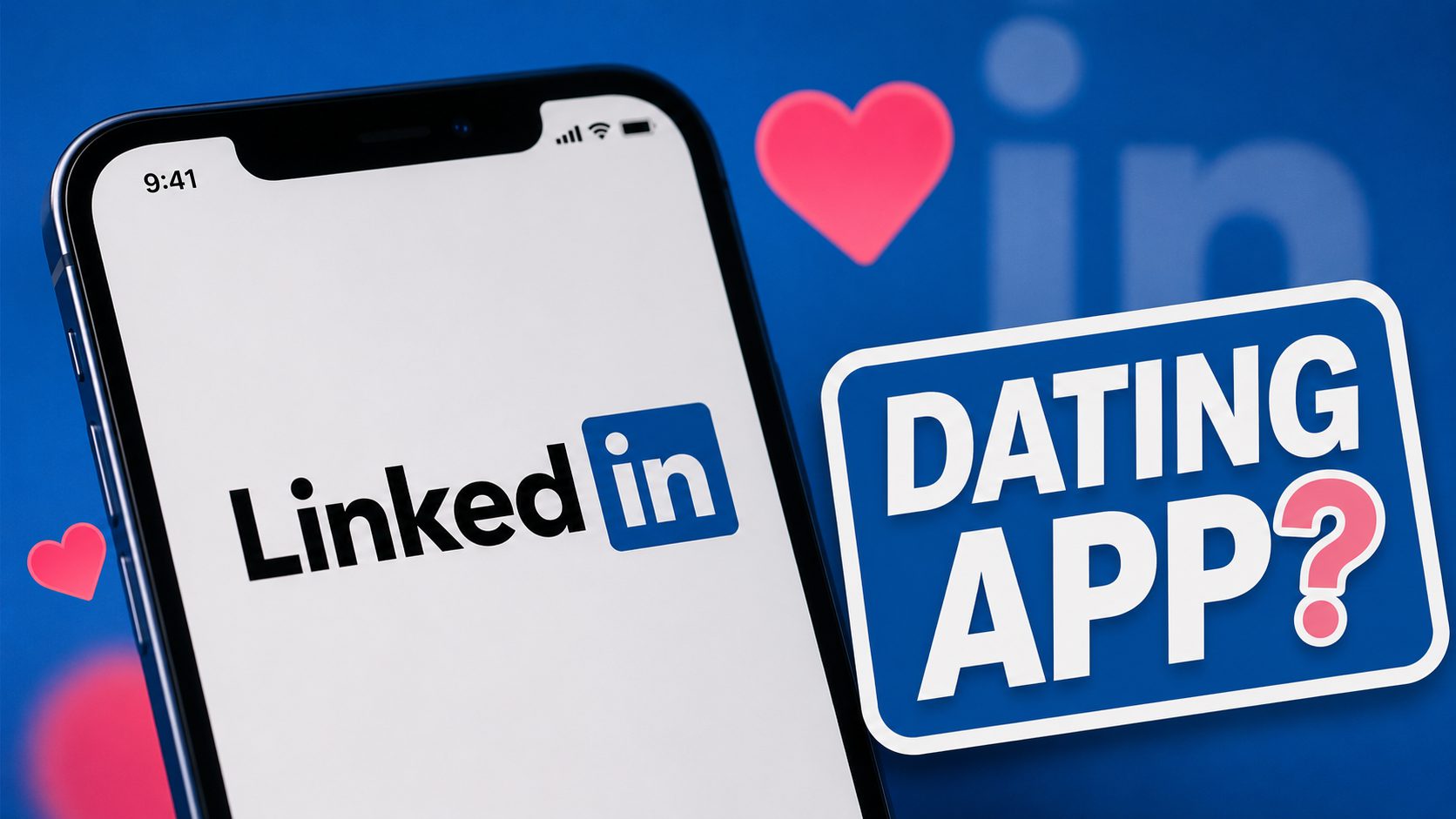
Someone, right now, is composing a LinkedIn message that has nothing to do with synergy. The connection request looks professional. The intent is not. This is the digital equivalent of getting hit on at a career fair — except 22% of U.S. workers have done it, according to Zety’s April 2025 survey of 1,023 employees. LinkedIn, a platform already infamous for ghost jobs and “humbled to announce” posts, has become a backup dating app. Not because anyone wanted it to. Because the actual dating apps broke people first.
The Blue Checkmark Nobody Asked For
Dating apps let anyone be anyone — LinkedIn makes you prove it.
The numbers behind that shift are striking. Nearly half of workers — 48% — trust LinkedIn profile information more than what appears on dating apps. That stat is less a compliment to LinkedIn than a devastating indictment of Hinge and Bumble.
Consider what LinkedIn actually offers: your name tied to real employers, real schools, and hundreds of mutual connections who can verify your existence. Zety’s report calls the platform “the blue checkmark of the dating world,” arguing that a resume and verified career history now function as indicators of stability and character in ways that a carefully filtered selfie never could.
- 1 in 8 respondents (12%) formed a romantic relationship that started on LinkedIn.
- 1 in 5 (21%) used it to background-check someone they matched with elsewhere.
- Only 16% would feel flattered by a romantic DM — but 12% found a relationship there anyway.
“LinkedIn profiles now communicate far more than someone’s job title. They offer insight into personality, values, and credibility.” — Jasmine Escalera, Zety
The generational split tells its own story. Millennials (33%) and Gen Z (27%) are most likely to vet partners on LinkedIn, per Zety’s report, compared to Gen X at 19% and boomers at 6%. Men are more than twice as likely as women to consider romantic outreach on LinkedIn acceptable — a gap that reflects broader patterns in who feels entitled to cross professional boundaries into personal ones, and who bears the reputational cost when that happens.
A Social Gamble With Your Career on the Line
Three-quarters of workers call romantic advances a professional violation — yet real relationships keep forming anyway.
Seventy-four percent of surveyed workers say romantic advances on LinkedIn cross a professional line. Sixty-five percent worry that dating via the platform could damage their professional reputation. Yet the same survey found relationships forming there regardless. A 2025 study published in Scientific Reports found LinkedIn’s credibility-focused environment “unwittingly attracts users seeking substantial and potentially romantic relationships.” Dating apps trained people to expect catfishing and ghosting. LinkedIn accidentally offered the opposite — and some users noticed.
“There is no universal agreement on where networking ends and flirting begins.” — Zety LinkedIn Romance Report
None of this is actually new behavior wearing a lanyard. Fox Business cites data showing over 60% of adults have had a workplace romance, with 43% marrying someone they worked with. LinkedIn has simply digitized an old human habit — awkwardly, publicly, and with your boss potentially watching.
LinkedIn hasn’t launched a dating feature. It doesn’t need to. Users are building one themselves because the alternatives feel like a casting call for a show nobody auditioned for. When your resume doubles as a romantic credential, that says everything about what online dating has become — and none of it is flattering to the apps that were supposed to solve this.