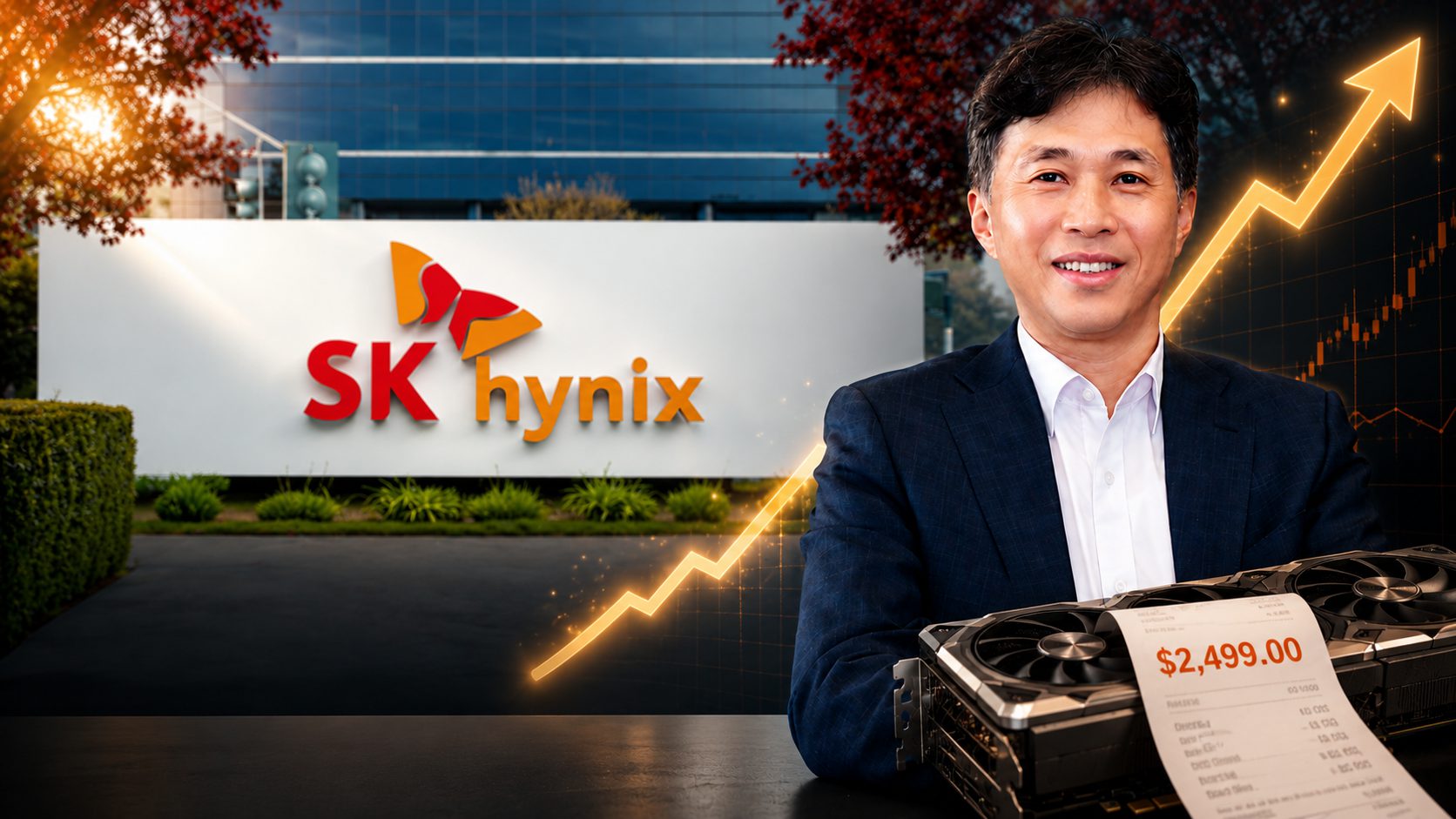
A South Korean company most people couldn’t name just raised $26.5 billion on Nasdaq — the largest U.S. debut by a foreign firm ever, blowing past Alibaba’s 2014 record, according to the Financial Times. SK Hynix makes high-bandwidth memory (HBM), the ultra-fast RAM stacked directly onto Nvidia’s AI chips that makes large-scale machine learning possible. Its American depositary receipts priced at $149 and opened at $170, per the Canadian Press. That immediate pop tells you everything about Wall Street’s appetite for the unglamorous plumbing beneath the AI boom.
The Chip Nobody Talks About — Until Now
SK Hynix quietly became Nvidia’s most critical partner while everyone else watched the GPU headlines.
When Nvidia’s AI accelerators — from current H100s to the upcoming Blackwell family — need the raw memory throughput that keeps data centers running, they rely entirely on HBM chips to deliver it. CNBC reported that SK Hynix has “established itself as a crucial supplier to AI chip powerhouse Nvidia,” with shares climbing roughly 250% year-to-date. Think of it like the Eras Tour: Nvidia sells the tickets, but SK Hynix built the stadium.
Trillion-Dollar Club, Population: Growing
When SK Hynix crossed the $1 trillion market-cap threshold in late May 2026, South Korea became the first country outside the United States with multiple trillion-dollar firms.
Crossing that milestone put SK Hynix at roughly $1.03 trillion, ranking it about 16th globally per CompaniesMarketCap — sitting alongside Samsung Electronics on Korea’s corporate trophy shelf. Memory chips stopped being a commodity story the moment AI turned them into strategic infrastructure. Wall Street banks collected around $140 million in fees from the ADR deal alone, underscoring just how seriously markets are treating this sector.
RAMageddon: What This Means for Your Devices
AI data centers are monopolising memory supply, leaving consumer device makers to compete for shrinking allocations.
Memory chip prices doubled in Q1 2026 versus the prior quarter, with forecasts of up to another 63% increase, Reuters reported. Hyperscalers are outbidding PC makers, phone OEMs, and console manufacturers for DRAM allocations. The downstream effect is already taking shape:
- fewer base-RAM upgrades at given price points
- pricier GPU kits, and spec sheets that feel stingier than they should
Three companies control this bottleneck:
| Company | Market Share |
|---|---|
| Samsung | ~38% |
| SK Hynix | 29% |
| Micron | 22% |
Per Counterpoint estimates, SK Group chairman Chey Tae-won has warned the AI-grade memory shortage could persist until around 2030. Some analysts counter that the AI trade looks overextended if supply ramps faster than expected. Both sides have a point, but right now, demand is winning decisively.
The next time you configure a laptop or price out a graphics card, the bottleneck probably won’t be the processor. It’ll be a company in Icheon, South Korea, that just became worth more than most countries’ GDP — and still doesn’t have a single consumer product with its name on the box.