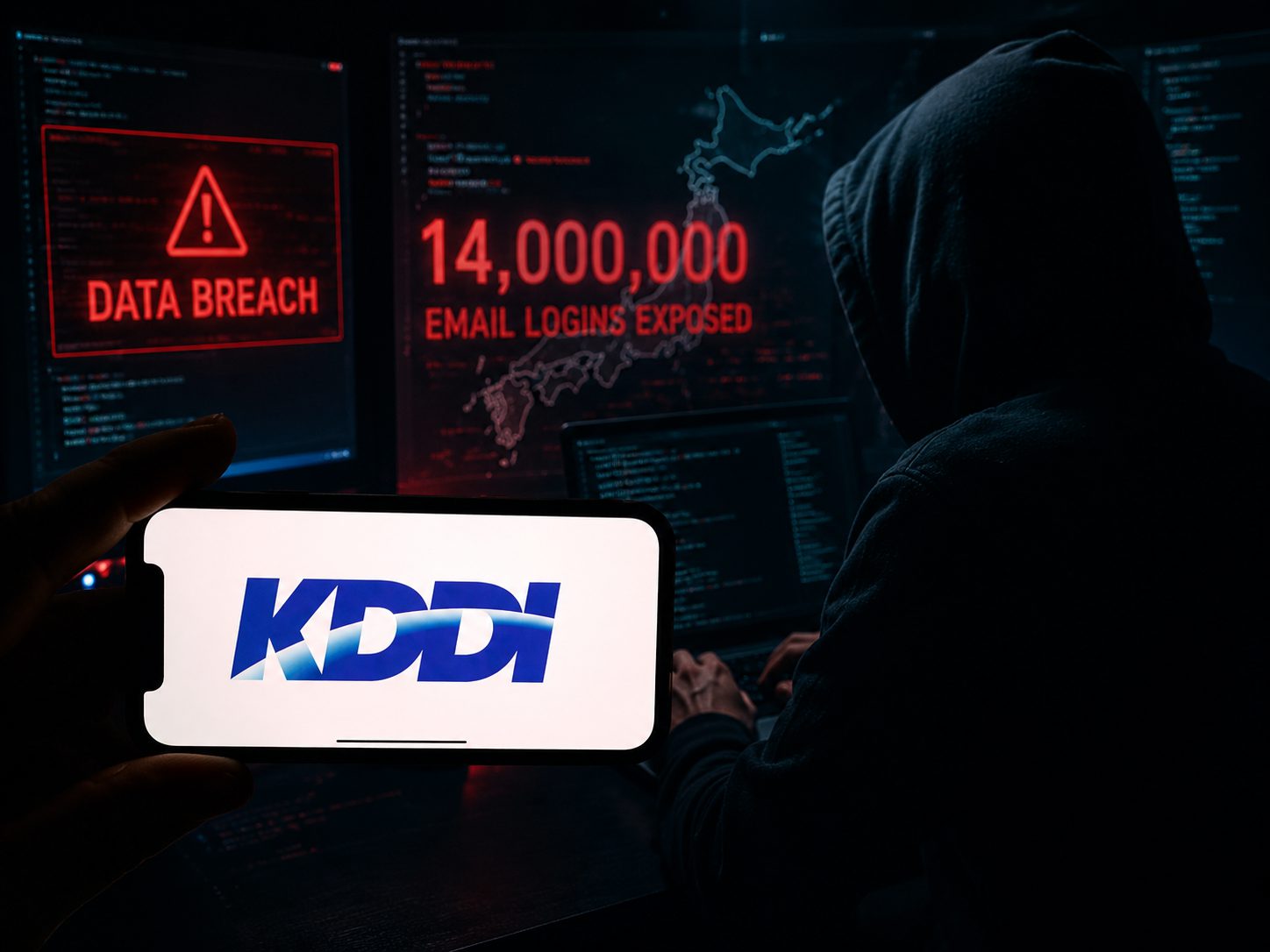
For millions of Japanese internet users, a single third-party software flaw quietly turned years of routine email logins into an open door for attackers. On June 17, 2026, KDDI Corporation detected unauthorized access to a shared email system it operates for six Japanese internet providers. Six days later, it told the public. The exposed data: email addresses and passwords — the exact credentials needed to walk straight into an inbox. One platform. Six providers. Up to 14.2 million accounts potentially compromised.
One Platform, Six Providers, Millions of Accounts
A single third-party software flaw opened the door to login data across half a dozen ISPs.
The affected providers span a wide slice of Japan’s internet landscape:
- STNet (Pikara Hikari)
- KDDI Web Communications (CPI rental servers)
- JCOM (J:COM NET)
- Chubu Telecommunications (Commufa Hikari)
- NIFTY Corporation (@nifty Mail)
- BIGLOBE Inc.
The 14.22 million figure is a worst-case estimate covering current subscribers, former customers, and dormant accounts. KDDI hasn’t named the specific third-party software or vendor responsible — a transparency gap that makes independent risk assessment essentially impossible.
KDDI says some passwords were stored in hashed or encrypted form, according to reporting by Security Affairs. That sounds reassuring until you notice what’s missing. No disclosure of which algorithms were used. No clarity on what proportion sat in plaintext. KDDI has notified Japan’s Personal Information Protection Commission and the Ministry of Internal Affairs and Communications, per Infosecurity Magazine.
“Change their passwords immediately” — KDDI’s guidance to customers of affected services, even with technical countermeasures now in place, because credentials may already have been accessed, per BleepingComputer.
The Real Problem Is the Architecture
Shared ISP email platforms running outsourced components are common worldwide — and that should make every telecom uncomfortable.
This isn’t a Japan-only story. Shared email platforms built on third-party code are everywhere, like a digital condo building where one broken lock compromises every unit. The KDDI breach reads like a smaller-scale echo of the SolarWinds supply-chain moment: one unpatched vulnerability in integrated software becomes the skeleton key for millions of accounts. Analysts note this case underlines the urgent need for patch management and rigorous vetting of outsourced components. Telecoms worldwide are running similar architectures right now.
KDDI’s silence on hashing specifics matters more than the company seems to realize. Weak hashing — think MD5 or unsalted SHA-1 — can be cracked in hours. Strong hashing buys time. Without that detail, affected users are flying blind on their actual exposure level, unable to calibrate urgency from anything KDDI has disclosed so far.
If your email touches any of those six providers, change the password now, make it unique, and enable two-factor authentication immediately — credential exposure operates on attacker timelines, not corporate disclosure schedules, and affected users cannot afford to wait for KDDI to clarify what it has yet to reveal.