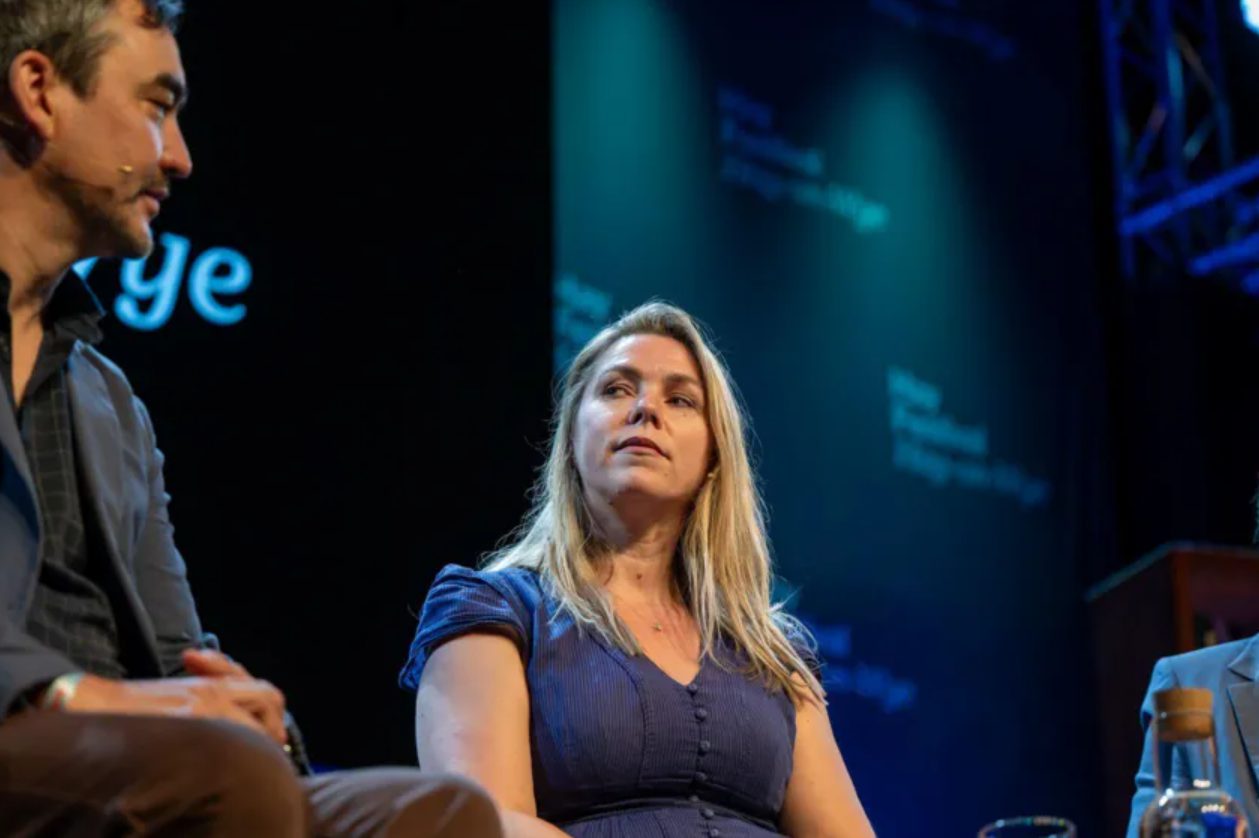
At the Hay Festival in Wales, Sarah Wynn-Williams sat onstage on a digital policy panel and said nothing. Not a word about her No. 1 New York Times bestseller. Not a syllable about the allegations inside it. Her book, Careless People, has moved over 130,000 print copies according to Circana BookScan data. Yet its author is under a gag order — issued by emergency arbitrator Nicholas Gowen in March 2025 — that bars her from making “disparaging, critical, or otherwise detrimental” statements about Meta, regardless of whether she believes them to be true. Each violation carries a $50,000 penalty. Meta has argued in arbitration that each book sold could constitute a separate breach. NDAs have become Silicon Valley’s version of omertà, and this case is the most visible test yet of whether they hold.
The Gag Order Written Behind Closed Doors
A private arbitrator restricted a published author’s speech in ways no court has yet reviewed.
The order prohibits Wynn-Williams from promoting or distributing her memoir, directs her to retract prior statements, and covers everything from Meta’s executives to “the circumstances of her employment or separation.” The mechanism is a 2017 severance agreement she alleges was signed under duress — Meta reportedly conditioned reimbursement of hundreds of thousands of dollars in pre-approved business expenses on her signature, then paid only a fraction of that amount.
Her allegations are specific and serious:
- Wynn-Williams served as Meta’s Global Public Policy Director starting in 2011, working directly with Mark Zuckerberg and Sheryl Sandberg
- She alleges sexual harassment by Joel Kaplan, Meta’s president of Global Affairs, including explicit emails, physical contact at a corporate event, and retaliation after an internal investigation
- She testified to the Senate Judiciary Committee that Meta worked “hand in glove” with the Chinese Communist Party, building censorship tools and deleting a U.S.-based dissident’s account at Beijing’s request
- Meta cleared Kaplan after interviewing more than a dozen witnesses and maintains her claims are “misleading and unfounded”
- In 2018, Meta publicly pledged to stop requiring arbitration for harassment claims; its 2022 shareholder proxy stated it does not use NDAs to prevent employees from discussing workplace conduct
“This former employee is trying to use the legal process to sell books, which an arbitrator already ruled broke the agreement she signed with the company when she accepted a large financial settlement years ago,” Meta spokesperson Andy Stone said.
The Federal Lawsuit and What Comes Next
Wynn-Williams asks a California court to void the gag order and test whether old NDAs can override new whistleblower protections.
On June 25, 2026, Wynn-Williams filed suit in the U.S. District Court for the Northern District of California. She asks the court to vacate the arbitration award and declare the non-disparagement and forced-arbitration clauses unenforceable under California’s Silenced No More Act — a 2022 law that bars employers from using severance agreements to silence discussion of unlawful workplace conduct. She also seeks damages for lost book sales and speaking fees. Her complaint further alleges that Meta monitors her public appearances and pursues sanctions even when she shows up and stays silent.
Her attorneys argue the gag order amounts to “an unconstitutional prior restraint on her First Amendment rights that no court could lawfully issue.” Legal scholars following prior-restraint doctrine note that courts have historically set an exceptionally high bar before allowing any restriction on speech before a finding of wrongdoing — a standard that makes Meta’s arbitration-backed order constitutionally contentious.
The stakes stretch well beyond one memoir. If the court sides with Wynn-Williams, legacy NDAs across the tech industry lose significant enforceability — and every current or former employee holding information about harassment, data practices, or AI gains a clearer path to speak. If Meta prevails, private arbitration can accomplish what public courts cannot: silence a published book, like hitting mute on a conversation the public didn’t know it was supposed to be having.
The book keeps selling without her voice behind it. Whether she gets that voice back is now a question for federal court.