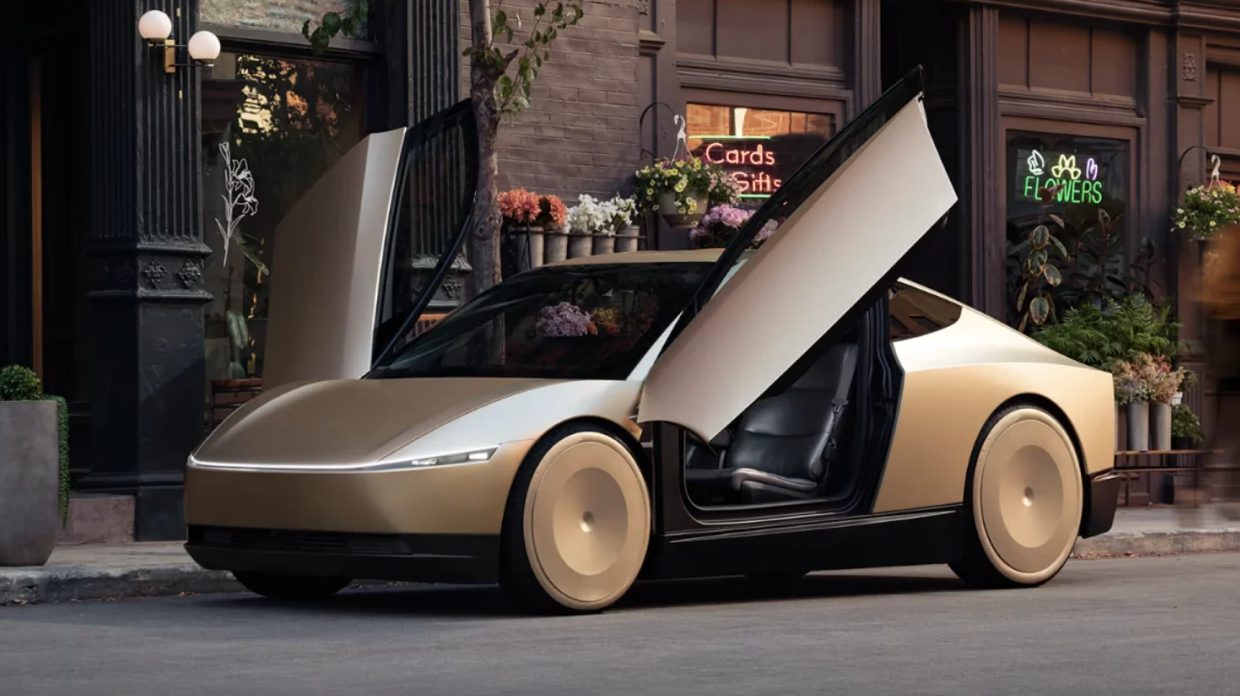
A car rolls up to your curb. No steering wheel. No brake pedal. No dashboard because there’s no driver. Until recently, selling that vehicle at scale in the United States required jumping through a regulatory hoop designed before smartphones existed. NHTSA has now proposed amending Federal Motor Vehicle Safety Standard No. 135 — the rule governing brake systems — to drop the brake-pedal mandate for vehicles designed exclusively for automated driving systems. This is a proposal, not a final rule; a 30-day public comment period follows. But for Tesla’s pedal-less Cybercab and Amazon’s Zoox shuttle, it’s the clearest signal yet that the velvet rope separating pilot programs from actual fleets is coming down.
No Pedals, No Problem — But the Brakes Still Have to Work
Rewriting the standard itself, rather than granting case-by-case waivers, is what finally breaks the scaling bottleneck for purpose-built robotaxis.
Here’s the chokepoint that’s been strangling robotaxi ambitions. Any vehicle missing required safety-standard equipment — pedals, mirrors, steering wheels — needed an individual exemption under Part 555, capped at 2,500 units per manufacturer per year. That ceiling makes a nationwide fleet mathematically impossible. Rewriting the standard lets AV makers self-certify compliance without annual waiver applications. Braking performance requirements — stopping distances, deceleration rates — remain intact, just tested through modified safety requirements.
- NHTSA’s proposal targets Federal Motor Vehicle Safety Standard No. 135 specifically; braking performance standards stay, the hardware mandate goes
- The 2,500-vehicle-per-year exemption cap has constrained every purpose-built AV deployment to date
- Tesla’s Cybercab is already running a limited Austin robotaxi pilot using remote teleoperators, not safety drivers — a fact Tesla reportedly acknowledged to NHTSA
- Zoox (Amazon) previously obtained a testing exemption; commercial scaling required yet another separate application
NHTSA’s administrator stated, according to TechCrunch, that the agency is “tearing down pointless barriers to innovative designs while strengthening the fundamental safety requirements that matter.”
Worth noting the tension here. NHTSA itself acknowledges that no consumer vehicle sold today is fully self-driving. Hardware rules are being relaxed before AV-specific behavioral performance standards are finalized — a sequencing choice that transportation-policy researchers and safety-focused observers find, at minimum, worth scrutinizing closely.
Who Actually Wins the Robotaxi Race
The proposal reshapes competition between native AV platforms built from scratch and retrofit players who already cleared the old rules.
Tesla gains the most ground. The Cybercab was engineered from scratch without human controls and has never sought a formal FMVSS exemption — essentially waiting on exactly this regulatory rewrite. Zoox benefits similarly. Waymo, which retrofits Jaguar I-Pace vehicles while retaining steering wheels and pedals, sidesteps the question entirely; its cars already comply under existing rules and don’t need this change.
Transportation Secretary Sean Duffy argued that removing outdated requirements “will reduce costs and enhance safety” for ADS-only vehicles, according to DOT statements.
Both administrations have pushed this direction — the Biden administration finalized a rule allowing AVs without steering wheels, and the Trump administration is now targeting the pedal. Whether the safety safeguards keeping pace with that hardware removal are enough to match the speed of the rewrite is the open question worth watching.