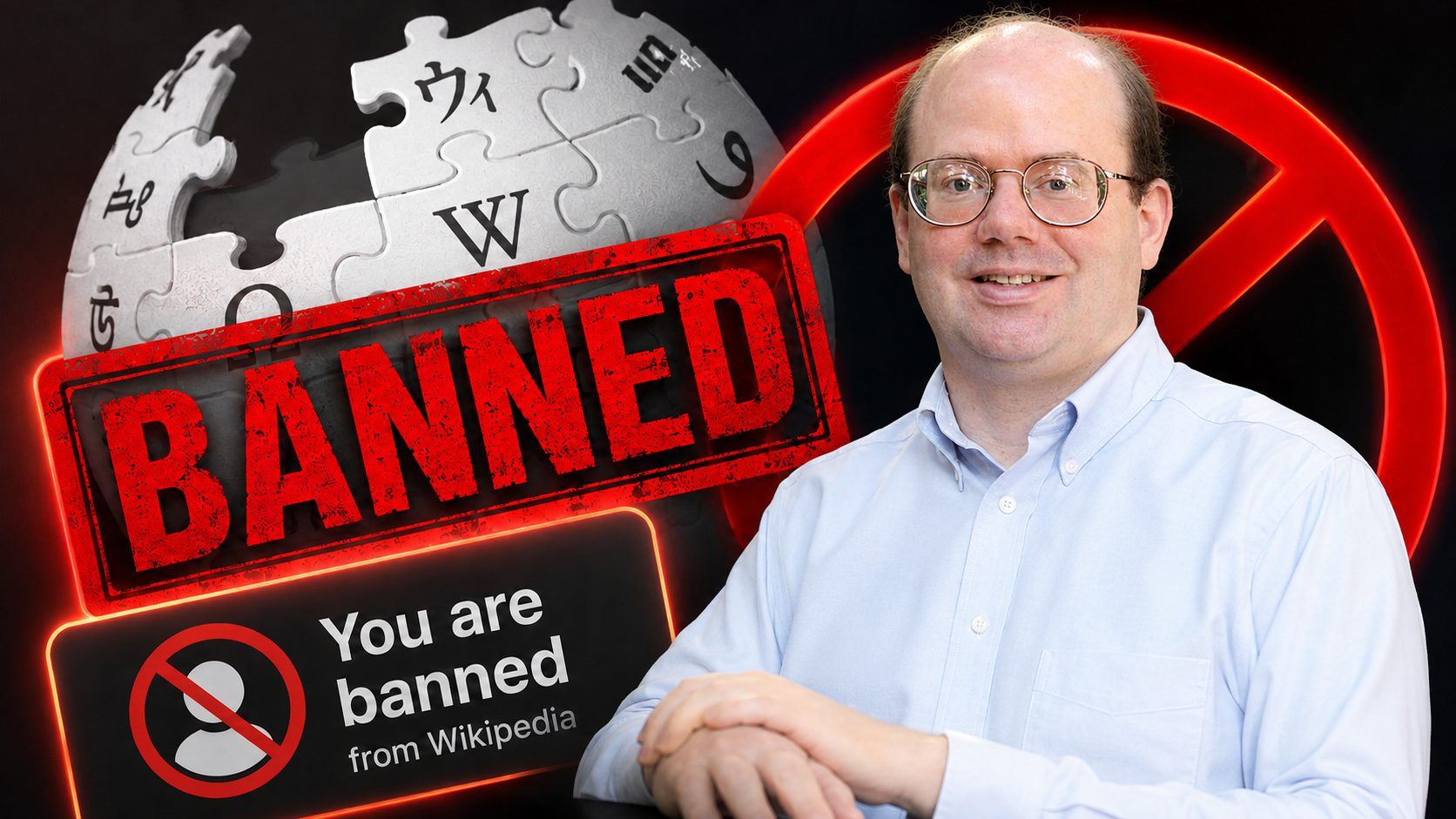
Larry Sanger helped build the world’s largest encyclopedia. Now he can’t edit a single comma on it. The Wikipedia cofounder received an indefinite block from English Wikipedia in June 2026, and the reason wasn’t his well-known criticism of the platform’s neutrality. It was canvassing.
In Wikipedia’s world, canvassing means using outside channels to recruit people into an internal discussion — essentially bringing your own audience to stuff the ballot box. Sanger had proposed a WikiProject Intellectual Diversity and promoted it to his X followers, directing them toward the on-wiki conversation about whether the project should exist. Editors flagged this as a deliberate attempt to manipulate community consensus.
The timeline got messy. An admin initially blocked Sanger, then reversed the action before the standard 72-hour discussion window closed. After the Administrators’ Noticeboard conversation wrapped with what participants described as clear consensus, the block became indefinite. A secondary concern also surfaced: possible calls for outing other editors.
Sanger called the process a “kangaroo court” and accused administrators of selective enforcement.
That framing tells you a lot about why this story refuses to stay simple.
Two Stories, One Ban
Whether this is routine policy enforcement or ideological housecleaning depends entirely on who you ask.
Wikipedia editors involved in the decision say this was straightforward rule enforcement. Off-platform mobilization undermines the consensus model regardless of who does it — founder or not. The New York Post framed it differently, casting the ban as a left-leaning platform silencing a reform-minded critic. Editors involved in the discussion dispute that characterization directly, pointing to process and community consensus rather than ideology.
Think of it like a band kicking out a founding member over a contract dispute. The music press always picks a side, but the paperwork usually tells a different story. Sanger’s criticism of Wikipedia as ideologically skewed predates this incident by years. This specific dispute, however, centers on process — not politics. Both framings contain some truth. Neither tells the whole story.
Why It Matters Beyond the Drama
The ban arrives as questions about platform trust and AI-generated misinformation converge on collaborative knowledge platforms.
The Sanger episode lands at a charged moment for Wikipedia’s credibility. AI-generated content is flooding the internet, misinformation debates are escalating, and the governance structures of collaborative platforms are getting stress-tested in real time. Whether you read this as fair enforcement or ideological gatekeeping, the underlying question is sharper than the headlines suggest: can a volunteer-run encyclopedia fairly police its most prominent critics? The answer will shape how much trust collaborative platforms can claim as arbiters of public knowledge.