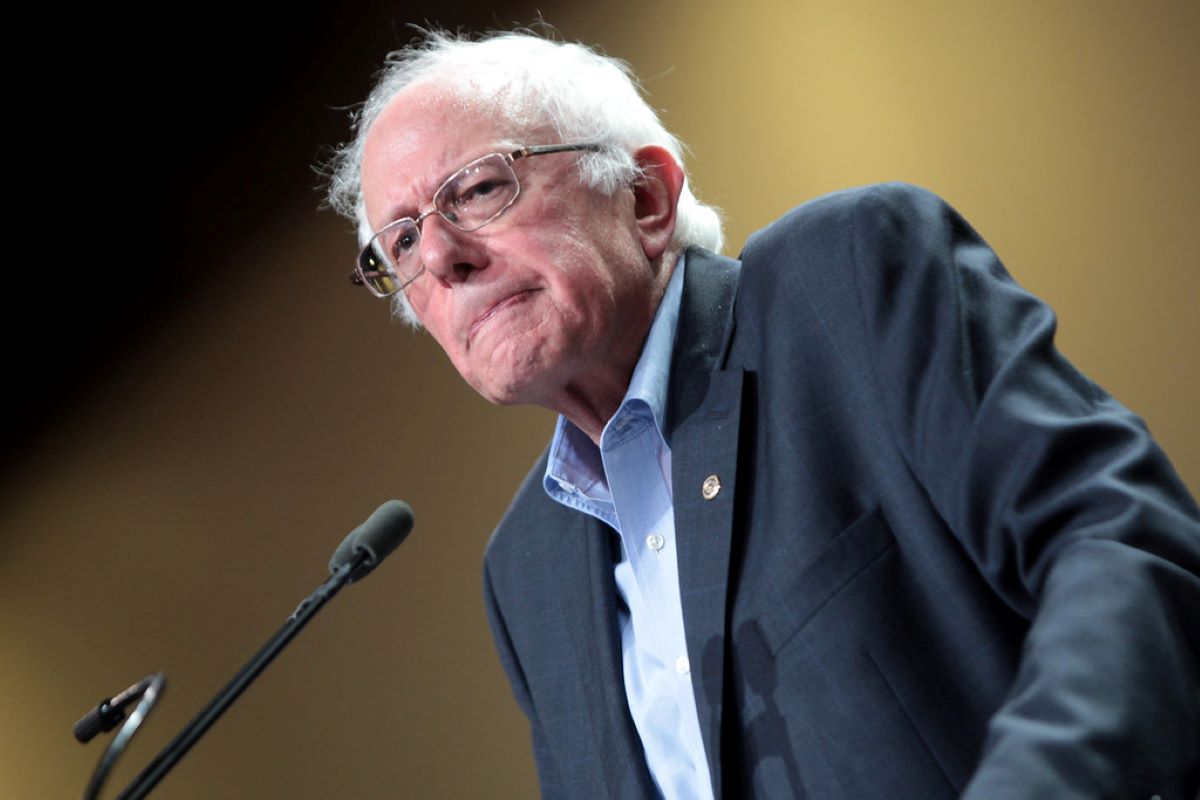
Every major AI model running today was trained on humanity’s collective output — books, code, art, and online conversations that millions of people created. The profits from that training flow almost exclusively to a handful of private companies valued in the trillions. Senator Bernie Sanders thinks that’s a problem worth fixing with legislation. His American AI Sovereign Wealth Fund Act would force the largest AI companies to hand over 50% of their equity — not as a cash tax, but as stock — into a federal fund that pays every American citizen roughly $1,000 a year. Think of it less as a government handout and more as a belated royalty check.
How the Fund Actually Works
A 50% stock transfer from AI giants would create a roughly $7 trillion public fund managed by an independent commission.
The mechanics are blunt. Any AI company pulling in $200 million or more in annual AI-related revenue surrenders half its equity to a new federal sovereign wealth fund. Sanders pegs the resulting portfolio at roughly $7 trillion, based on current valuations of firms like OpenAI, Anthropic, and xAI. A seven-member commission, presidentially appointed and Senate-confirmed, would manage the assets and wield voting rights in those companies.
- Companies earning $200M+ annually in AI revenue trigger the stock transfer
- Conglomerates must spin off non-AI operations before the stake is calculated
- The $1,000 annual payment assumes a 5% dividend from the fund
- Sanders told Gizmodo the figure “will probably go up as AI becomes more prosperous”
- Surplus revenue would fund healthcare, education, and housing programs, per the Associated Press
Alaska’s Oil Fund, But for Algorithms
Sanders frames AI as a public resource — and borrows a playbook from oil-rich states to argue the wealth should flow back to ordinary people.
The logic mirrors Alaska’s Permanent Fund, which cuts residents checks from oil revenue. Sanders argues AI deserves identical treatment. The bill states AI “derives its economic value from humanity’s collective intelligence, including our books, songs, artwork, journalism, computer code, scientific research.” As Sanders told the AP: “The benefits cannot simply go to the handful of wealthy corporations. They will be shared by the American people.”
This is technically universal basic capital, not universal basic income — citizens would own productive assets and receive dividends, rather than collect flat payments drawn from general tax revenue. The distinction matters if you care about who actually controls the underlying wealth.
The political company Sanders keeps here is genuinely strange. Elon Musk has argued governments may need to issue checks to offset AI job displacement. Donald Trump reportedly entertained direct payments funded by public equity in OpenAI. Gavin Newsom asked California officials to study similar models. Yet Sanders’ bill currently has zero named co-sponsors, and the political and legal odds remain steep.
Even if this bill dies in committee — the most likely outcome — it normalizes an idea quietly gaining traction: that AI’s gains belong partly to the public whose data made them possible. Like musicians who never saw a Spotify royalty check, the public supplied the raw material. The real question isn’t whether this specific bill passes. It’s whether some version of it eventually has to.