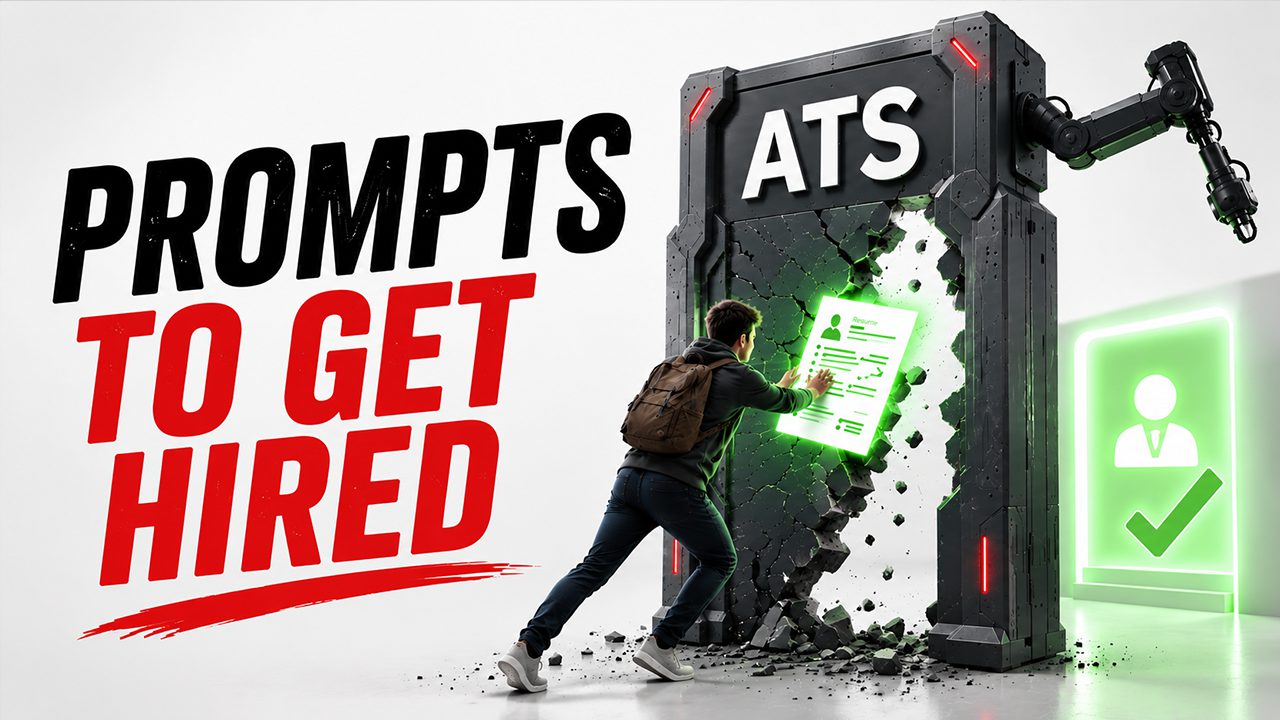
Applicant Tracking Systems act like digital bouncers at an exclusive club, and the frustration of sending dozens of resumes only to hear crickets mirrors sending a DM that sits on “read.” These six AI prompts cut through the noise, acting as a personal career strategist that ensures applications speak the specific language employers expect. This curated list transforms how job seekers prepare, making profiles impossible to ignore.
6. Extracting Keywords from the Job Description with AI

Surface the exact skills and terminology that get past automated filters.
Modern hiring processes rely heavily on Applicant Tracking Systems (ATS), which automatically scan resumes for matches against job description language. Missing key terms causes qualified applicants to be filtered out before a recruiter ever sees them. These automated gatekeepers discard candidates if resumes lack the right dialect, leaving talented professionals in digital dust.
AI becomes the linguistic secret weapon. Using a prompt like, “Analyze this job description and extract the top 10–15 key skills and keywords I should include in my resume, my LinkedIn profile, and in my job interview responses,” delivers a tailored cheat sheet. This highlights vital technical skills (project management, data analysis, specific software) plus behavioral qualifications (cross-functional collaboration, stakeholder management). The process mirrors employer expectations, boosting chances of reaching a human recruiter while reducing manual effort.
5. Tailoring a Professional Resume Summary with AI
Transform the top of the resume from generic noise into a targeted value proposition.
A resume summary sits at the top of the page and represents one of the first elements a recruiter or hiring manager reads. It should clearly communicate fit for the specific role within seconds. Bland, untailored introductions get swiped faster than a bad TikTok video, sending applications to the digital abyss. Generic summaries communicate that candidates haven’t bothered to clarify why they want this specific job.
To avoid that fate, instruct AI with this prompt: “Write a confident but natural three to four sentence professional summary for my resume. Base it on my experience and the target job description. Highlight my biggest relevant achievements without sounding salesy or robotic and keep it concise and ATS-friendly.” This crafts a summary highlighting specific achievements, impact, and key skills. An AI-tailored summary uses clear language and standard section labels while naturally incorporating important keywords, directly answering the employer’s core question: “Why should we hire you for this specific role?”
4. Turning Responsibilities into Achievement-Focused Bullet Points with AI
Convert duty lists into evidence of value that differentiates among similar candidates.
Hiring managers respond more strongly to achievement and impact statements than to lists of duties or responsibilities. The struggle of trying to make “managed social media accounts” sound like a career-defining moment often results in bland bullet points that are less achievement and more job description copy-paste. Employers prefer “Managed social media accounts, increasing engagement by 40% over 3 months” over “Responsible for managing social media accounts.” The difference between a generic task list and a compelling display of results is stark.
AI helps through a prompt like, “Rewrite my work experience section from company XYZ to be more tailored to the new position I’m applying for. Make sure the resume bullets are results-driven and include measurable impact.” This takes generic entries and injects them with purpose, uncovering metrics, strong action verbs, and clear outcomes based on what candidates actually accomplished. The transformation provides direct proof of value, ensuring resumes don’t end up in the digital trash heap like bad memes nobody wanted. Applying this process separately for each role ensures achievements selected and phrased are targeted to new position requirements.
3. Optimizing a LinkedIn Headline with AI Personal Branding Prompts
Turn the 120-character billboard into a recruiter magnet with strategic keywords.
The LinkedIn headline appears directly under the user’s name and is displayed in search results, comments, posts, and profile previews, making it one of the most visible parts of the profile. This brief digital marquee forms the first impression. Recruiters use keyword-based searches to find candidates; a headline that includes role-specific skills, functions, and expertise increases the chance of appearing in search results. Without specific terms, professionals remain invisible (an un-optimized Spotify playlist: great content, but no one finds it).
To optimize, use this AI prompt: “Act as a LinkedIn personal branding expert. Here is my current role and experience [paste]. Here are the roles I want to attract [paste]. Write five headline options that include strong keywords, my unique value, and sound natural and professional.” This crafts clear headlines like “Digital marketing specialist | SEO and content strategy | Helping brands increase organic traffic and conversions.” Effective headlines clearly communicate what the person does, who they help or what they specialize in, and the value they bring (rather than just a job title or generic phrases like “open to work”). AI quickly generates multiple headline variations that balance searchable keywords with personal differentiation, helping users choose options that feel authentic but strategically optimized.
2. Identifying Skill and Content Gaps Between a Resume and Job Description with AI
Move from guessing to systematic, evidence-based refinement that passes ATS and resonates with hiring managers.
Qualified candidates often get overlooked even when experience aligns perfectly with a role. Job seekers assume their resume is a masterpiece, yet callbacks remain elusive. The real issue often hides in subtle content gaps, missed by the human eye (finding a specific Lego brick in a massive bin). Using a prompt like, “Compare my resume to this job description and identify gaps I should address,” AI spots discrepancies. It highlights skills, experiences, or keywords from the job posting that are under-emphasized or entirely missing in the application.
Common gaps include unmentioned technical skills, missing domain-specific tools, or insufficient emphasis on key responsibilities like data analysis, stakeholder communication, or project ownership. AI-identified gaps guide targeted edits: adding or rephrasing bullets, adjusting skill sections, and better aligning candidate achievements with what the employer seeks. This systematic comparison moves applications from hopeful guesswork to strategic, evidence-based refinement, significantly boosting chances of passing ATS and landing in a recruiter’s hand.
1. Generating Likely Interview Questions Based on a Job Description and Candidate Background with AI
Practice what matters instead of generic interview prep that misses the mark.
Knowing the most critical questions tailored to a role and unique background can entirely change interview experiences. The AI prompt, “Generate five likely interview questions based on this job description and my background,” cuts through generic prep. It delivers a strategic mix of role-specific technical and behavioral questions reflecting the job’s demands (getting exam questions handed over a week early; still have to study, but at least the topics are known).
Walking into an interview and facing a single unexpected query can throw the entire flow, making candidates feel like TikTok dancers who suddenly forgot the moves. This approach focuses preparation on questions closely aligned with the actual role, rather than generic or random interview questions, leading to more relevant practice. AI typically generates a mix that reflects responsibilities and competencies emphasized in the posting. Candidates can pair this with additional prompts to run mock interviews or receive feedback on answers, improving clarity, structure, and alignment with employer expectations. Targeted preparation ensures candidates articulate value, turning potential blind spots into clear opportunities and entering interviews more confident with polished stories and examples that directly speak to the job’s needs.