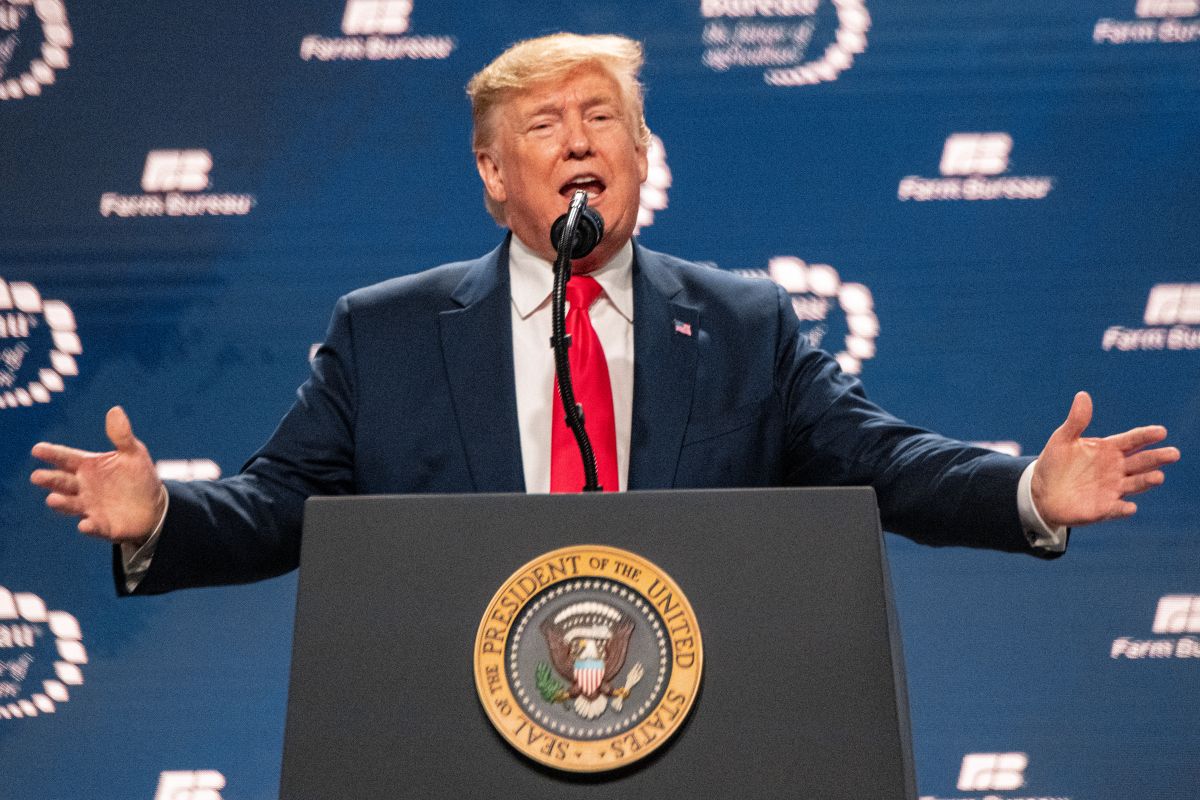
Threatening a $2 billion wine industry over a $700 million tech tax reveals the breathtaking asymmetry of modern trade warfare. President Trump just warned France he’ll slap 100% tariffs on wine and champagne imports unless President Macron scraps the country’s 3% digital services tax—timing the ultimatum perfectly before G7 talks on French soil. This isn’t diplomacy; it’s corporate muscle disguised as trade policy.
The GAFAM Tax Targets Your Daily Platforms
France’s revenue-based levy hits Google, Apple, Meta, Amazon, and Microsoft where it counts.
France’s so-called GAFAM tax doesn’t mess around with profit-shifting schemes that let Big Tech book earnings in tax havens. Instead, it takes 3% of revenue generated from French users—meaning if you’re clicking ads on Google or buying through Amazon in France, that activity triggers the tax. Companies need €25 million in French digital revenues and €750 million globally to qualify, essentially targeting the platforms dominating your screen time.
Political Reality Meets Economic Leverage
French lawmakers wanted to double the tax rate, but ministers feared Trump’s retaliation.
The French parliament recently voted to increase the digital tax from 3% to 6%, showing strong appetite for squeezing Big Tech harder. Government ministers vetoed that expansion specifically citing US reprisal risks—a prescient move given Trump’s latest threats. Sources close to Macron reportedly say removing the tax entirely is “no longer up for debate,” setting up a genuine standoff. Compare that to Canada, which folded and repealed its digital tax in 2025 under similar Trump pressure.
The Math Behind the Madness
Wine exports dwarf digital tax revenue, making this economic overkill.
Here’s the brutal arithmetic: France’s digital services tax generates roughly $700 million annually, while French wine and champagne exports to the US are worth at least $2 billion yearly. Trump’s proposed 100% tariff would essentially double retail prices for French wines, devastating producers who currently face much lower existing tariffs. It’s like using a sledgehammer to swat a mosquito—except the mosquito represents fair taxation and the sledgehammer protects Silicon Valley’s bottom line.
Pattern Recognition for Platform Protection
This follows Trump’s established playbook of weaponizing tariffs for tech interests.
Trump has consistently acted as what tech coverage calls an “attack dog for big tech,” deploying trade threats whenever countries dare tax digital giants based on local activity rather than global profits. He made similar wine and cheese threats during his first term over the same French tax. The pattern extends beyond France—US companies have reportedly encouraged the administration to retaliate against Australia’s social media policies and other digital sovereignty measures worldwide.
The G7 summit will test whether tariff diplomacy still works in an era where countries increasingly view digital taxation as sovereignty, not protectionism. For other nations considering similar tech taxes, France’s response could determine whether revenue-based digital levies become standard practice or remain geopolitically radioactive.